
Stuck on the tarmac or watching your connection slip away? The fastest fix for most LGA delays right now is checking the FAA’s live status at, where you’ll see if thunderstorms or traffic management programs are the culprit. If your flight’s already delayed, pull up your airline app immediately and look for automatic rebooking options before the gate agents get swamped.
I’ve navigated my share of LaGuardia chaos on trips back from Canada, and I can tell you that understanding what’s actually causing your delay makes all the difference between panic and productive next steps. This summer alone, LGA has seen some rough days. Back on June 17, 2026, the airport logged 112 delays and 7 cancellations in a single day thanks to FAA traffic limits cutting capacity. A few days earlier on June 12, thunderstorms triggered a Traffic Management Program that resulted in 110 cancellations and 211 delays. Even on calmer days, you might see general arrival delays of 15 minutes or less, which is honestly standard operating procedure for one of the busiest airports in the country.
The good news? Most LGA delays follow predictable patterns, and once you learn to read the signs (weather alerts, FAA ground stops, time of day), you can stay two steps ahead. In this guide, I’ll walk you through exactly how to diagnose what’s happening with your specific flight, the most common causes behind delays into LaGuardia, step-by-step fixes when you’re already stuck, and the insider prevention tactics I use every time I route through New York on my way to Toronto or Montreal. You’ll learn when to rebook versus wait it out, how to spot a delay before the airline announces it, and what to do if your connection is now impossible.
Is Your LGA Flight Actually Delayed? How to Check Right Now
Look, your phone buzzes with a notification about your flight, or you glance up at the departure board and see a new time. Before you panic or start replanning your entire trip to Toronto, let’s figure out what you’re actually dealing with. Not every delay is created equal, and knowing the difference between a minor hiccup and a serious disruption will determine your next move.
First things first: grab your flight number and check U.S. flight delays using official sources rather than relying on your airline app alone. The FAA considers anything under the 15 minutes delay threshold as basically on time. These minor delays happen constantly at LaGuardia and rarely cascade into bigger problems. You might lose a few minutes, but your connection is probably fine.
When delays stretch past 30 minutes, you’re in different territory. This is when you need real-time information from the source. The FAA’s Air Traffic Report gives you the most accurate picture of what’s happening right now at LGA, whether it’s thunderstorms like the ones that hit on August 11, 2026, or traffic management programs limiting capacity.
Major disruptions, like the 112 delays LaGuardia saw on June 17, 2026, usually show a pattern across multiple flights. If the airport status page shows ground stops or widespread arrival delays, you’re looking at a systemic issue that won’t clear up quickly. That’s your signal to start exploring backup plans rather than waiting it out at the gate.
The Main Culprits: Why LaGuardia Has So Many Flight Delays
Weather-Related Delays
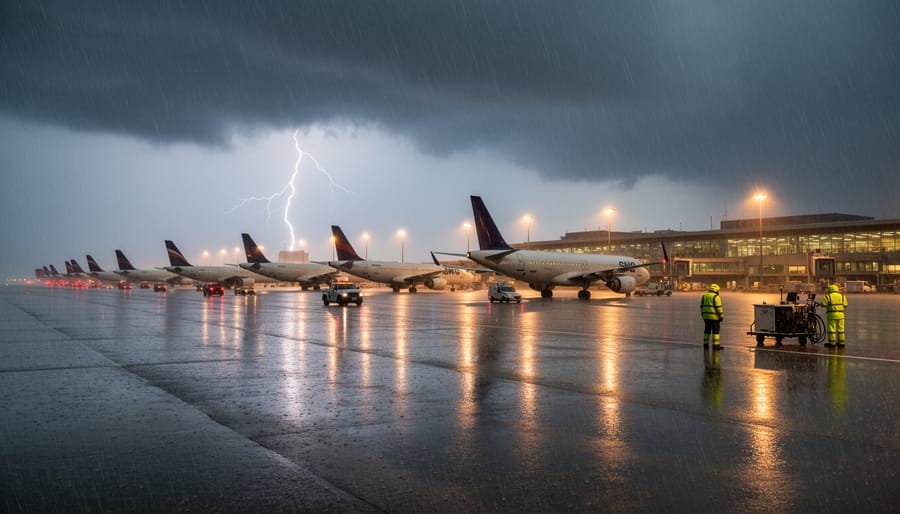
Weather sits at the top of the delay leaderboard at LaGuardia, and thunderstorms are the biggest troublemaker. LGA’s location, squeezed between two rivers with limited airspace, makes it especially vulnerable when storms roll through the New York area. You can’t simply reroute around bad weather here the way you might at airports with more breathing room.
June 12, 2026 showed just how disruptive summer thunderstorms can be: the FAA activated a Traffic Management Program that day, resulting in 110 cancellations and 211 delays at LaGuardia. Two months later, on August 11, the FAA warned that thunderstorms could delay flights across New York, including LGA. These aren’t rare events, summer afternoon thunderstorms are practically a weekly occurrence from June through August.
The ripple effect is what catches most travelers off guard. A storm doesn’t need to be overhead to cause delays; weather hundreds of miles away can impact your LGA flight if it affects aircraft routing or crew schedules along the East Coast corridor.
FAA Traffic Management and Capacity Constraints
LaGuardia’s runway configuration and limited space make it particularly vulnerable to FAA-imposed traffic limits. When demand exceeds the airport’s safe handling capacity, air traffic controllers activate Traffic Management Programs to slow the flow of incoming aircraft. This happened dramatically on June 17, 2026, when FAA traffic limits caused 112 delays and 7 cancellations in a single day, the airport simply couldn’t process all the scheduled arrivals safely.
Think of it like a highway bottleneck: even without weather, only so many planes can land per hour at LGA. The FAA uses ground delay programs and arrival spacing to prevent overcrowding in New York airspace, which means your flight might sit on the tarmac at your departure airport rather than circling over Queens waiting for a landing slot. It’s frustrating, but it’s actually safer than the alternative, cramming too many aircraft into limited approach corridors and taxiways.
What to Do When Your Flight Is Delayed: A Step-by-Step Action Plan
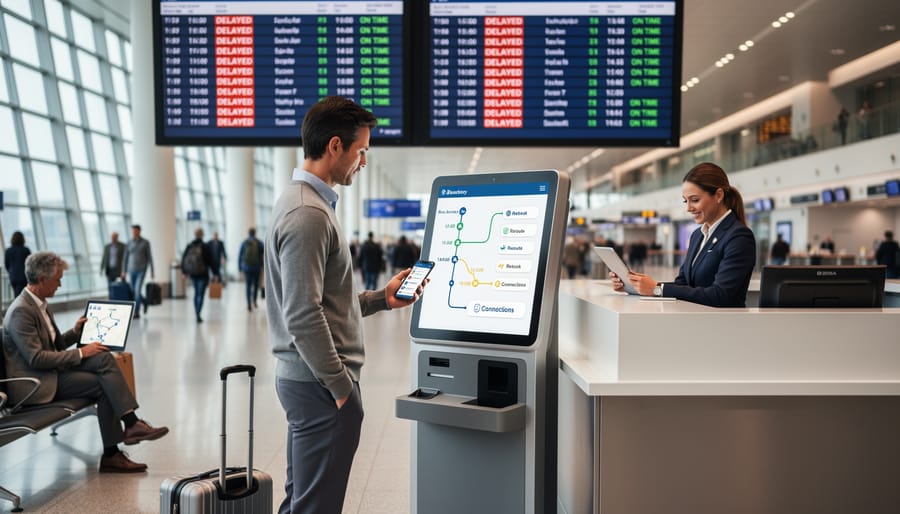
Immediate Actions (First 30 Minutes)
The first half-hour after learning about a delay determines how smoothly the rest of your journey goes. Here’s what to tackle immediately.
Check the FAA’s official Air Traffic Report at first, it’s the most reliable real-time source for what’s actually happening at LGA right now. The FAA updates this continuously throughout the day, and I’ve found it cuts through the noise when airline apps lag behind reality. Follow @FAANews on X for instant alerts, especially during active weather events (like the thunderstorms that hit New York on August 11, 2026, causing widespread delays).
Contact your airline directly through their app or customer service line before you join the gate agent’s inevitably growing queue. If you’re quick, you might snag a same-day rebooking option that disappears once everyone else catches on. Screenshot your boarding pass and reservation code, you’ll need them handy.
Assess your delay severity honestly. The FAA considers 15 minutes or less a minor hiccup, but anything stretching past 30 minutes signals it’s time to explore alternatives. This is when you should know your rights regarding compensation and rebooking, particularly if you’re connecting to a Canadian destination where timing matters for border crossings.
Don’t wait to see what happens, take control now.
If Your Delay Stretches Longer
When your delay hits the two-hour mark, it’s time to shift from waiting to acting. Head straight to the gate agent or airline customer service desk and ask about rebooking options. I learned this the hard way during a Toronto trip when my LGA connection stretched from one hour to four. Airlines often have more flexibility than they initially let on, especially if there are open seats on partner carriers.
Don’t wait for the airline to volunteer compensation information. If your delay exceeds three hours on a domestic flight or you’re eventually bumped, you may be entitled to meal vouchers, hotel accommodations, or even cash compensation under certain circumstances. Keep all receipts for food and necessities purchased during the delay. Download your airline’s app if you haven’t already, as mobile rebooking is often faster than standing in line with frustrated fellow passengers.
For alternative routing, check if you can fly into Newark or JFK instead, then arrange ground transport to your original destination. When my LaGuardia flight was cancelled during a Montreal weekend getaway, switching to Newark got me airborne three hours sooner. Ask about routing through different hub cities too. Sometimes a Philadelphia or Boston connection beats waiting for LGA to clear.
Special Considerations for International Travelers
If you’re connecting through LGA to reach Canada, a delay can trigger complications beyond just a missed connection. Your biggest worry should be tight immigration windows, Canadian customs can take 45 minutes to an hour during peak times, and if your delay means you land close to closing time at smaller border crossings or miss a connecting flight with your passport control appointment, you’ll scramble to rebook.
Check your airline’s policy on protected connections. Most carriers automatically rebook you if they caused the delay, but you’ll want confirmation in writing. If your delay stems from weather or FAA traffic limits (common at LGA), compensation rules get murky. Air Canada passengers have specific entitlements depending on the cause, understanding what you’re owed helps you push back when agents claim nothing’s available.
Double-check any eTA or visa expiration dates. A delay that pushes your arrival to the next calendar day could invalidate time-sensitive travel authorizations. Keep digital copies of all your entry documents accessible on your phone. And refresh yourself on current entry requirements before your Canada trip rules can shift, and a delay gives you unexpected time to verify you’re compliant.
How to Avoid LGA Flight Delays (Or at Least Minimize the Pain)
You can’t completely eliminate the risk of LGA delays, thunderstorms and traffic constraints are part of the New York airspace reality, but you can stack the odds in your favor with smarter booking choices and realistic planning.
Choose Your Flight Time Wisely
Early morning departures, typically before 8 AM, face fewer delays because the airport starts fresh before weather builds and cascading knock-on effects accumulate. Summer afternoons are when thunderstorms typically roll through the New York area, as we saw on August 11, 2026, when the FAA warned of thunderstorm-related delays. If you’re flying between June and September, avoid booking flights scheduled between 2 PM and 6 PM when possible. That’s when weather patterns intensify and delays ripple through the system most aggressively.
Winter brings its own challenges, but sudden weather disruptions are generally more predictable than the pop-up thunderstorms that plague summer operations.
Strategic Booking Moves
Here are practical steps to minimize your exposure to LGA delays:
- Book the first flight of the day when aircraft are already positioned overnight and haven’t accumulated delays
- Avoid peak thunderstorm hours (early to mid-afternoon) during summer months, especially June through August
- Research which airlines have better on-time records at LaGuardia and consider paying slightly more for reliability
- Build in at least three hours of buffer time for critical connections, particularly if you’re heading to international destinations
- Sign up for FAA alerts through and follow @FAANews on X to monitor traffic management programs before your travel day
Plan for Canadian Connections with Extra Cushion
If your LGA arrival connects to a Canadian-bound flight, buffer time becomes even more critical. Immigration processing adds complexity, and missing your connection because of a delay can cascade into visa timing issues or lost accommodations. I always recommend arriving the day before an important international connection when flying through LGA during busy periods. Similar Toronto delay causes can compound LGA disruptions, so understanding both airports’ patterns helps you plan smarter.
Check the FAA’s Air Traffic Report the night before and again the morning of your flight. It’s reliable for planning purposes and covers ground stoppages and airport closures, giving you advance warning to adjust plans before you’re stuck at the gate.
Understanding the LGA Delay Landscape: What the 2026 Data Tells Us
Looking at what actually happened at LaGuardia this year gives you a much better sense of what “delayed” really means in practice. Most of the time, we’re talking about minor hiccups. On a typical day like August 12, 2026, the FAA reported general arrival and departure delays of just 15 minutes or less, the kind of wait that’s annoying but won’t derail your entire travel plan. That’s the everyday reality at LGA, where small delays are baked into the operation.
But then there are the days when everything goes sideways. June 12, 2026 showed what a serious weather event looks like: thunderstorms forced the FAA to activate a Traffic Management Program, resulting in 110 cancellations and 211 delays. That’s the kind of disruption that affects thousands of travelers and cascades through the system for hours. Two weeks later, on June 17, FAA traffic limits reduced the airport’s capacity, causing 112 delays and 7 cancellations in a single day.
The pattern here is pretty clear. When conditions are normal, expect minor delays that add a few minutes to your travel time. When thunderstorms roll through, like the ones forecasted for August 11, or when air traffic control needs to throttle capacity, you’re looking at a completely different scenario. I’ve learned to check the weather forecast and FAA alerts before heading to LGA, especially during summer thunderstorm season. It’s the difference between bringing a magazine for a short wait and having a full contingency plan ready.
At-a-Glance Details
Here’s a quick-reference table to help you assess and respond to LGA delays without hunting through multiple sources:
| Delay Type | Typical Duration | Most Common Cause | Your Best Move |
|---|---|---|---|
| Minor Arrival/Departure | 15 minutes or less | Normal traffic flow management | Stay at gate, monitor updates |
| Moderate Weather Delay | 30-90 minutes | Thunderstorms, Traffic Management Program | Check airline app for rebooking options, grab food |
| Major Disruption | 2+ hours or cancellation | Severe weather, FAA capacity limits | Rebook immediately, consider alternative airports (JFK, EWR) |
| Mass Event (100+ flights) | Variable, often all day | Thunderstorms combined with traffic restrictions | Contact airline proactively, explore hotel vouchers if overnight |
For real-time status updates, bookmark and follow @FAANews on X for immediate alerts from the FAA’s Weather Squad. The FAA’s Air Traffic Report updates regularly and covers arrival/departure delays, ground stops, and closures at LGA, making it more reliable than third-party flight trackers when you need to make quick decisions about rebooking or heading to the airport.
Your LGA Delay Questions Answered
Flying into LaGuardia can be stressful when delays strike, and I’ve fielded plenty of frantic texts from friends asking the same questions before their Canada trips. Here are the answers to what travelers ask most often about LGA delays.
Why does LaGuardia have so many flight delays?
LaGuardia’s delays stem primarily from thunderstorms, FAA traffic management programs that reduce capacity, and the airport’s geographic constraints in one of the world’s busiest airspaces. On June 17, 2026, for instance, FAA traffic limits caused 112 delays in a single day.
How long are typical delays at LaGuardia?
Most LGA delays are relatively short, typically 15 minutes or less for both arrivals and departures during normal operations. However, during weather events or traffic programs, delays can stretch much longer, the June 12, 2026 thunderstorms caused 211 delays alongside 110 cancellations.
Where can I check real-time LaGuardia delay information?
The FAA’s official site at provides up-to-the-minute air traffic operations information, and you can follow @FAANews on X for live alerts and weather updates. Your airline’s app or website will also show your specific flight status.
Am I entitled to compensation for an LGA delay?
U.S. airlines aren’t legally required to compensate passengers for weather or air traffic control delays, though many will rebook you for free. If the delay stems from the airline’s fault (like maintenance issues), you may be entitled to meal vouchers or hotel accommodations depending on the carrier’s policies and delay length.
One thing I’ve learned from years of navigating airport chaos is that knowing your rights makes a huge difference in how you handle disruptions. Airlines won’t always volunteer what they’ll cover, so asking directly about rebooking options, meal vouchers, or hotel stays can sometimes yield surprising results. The FAA’s Air Traffic Report remains your most reliable planning tool, giving you the big picture of what’s happening across the airport rather than just your individual flight.
LaGuardia delays are frustrating, especially when you’ve got a connecting flight to Toronto or Montreal waiting on the other end. But here’s what I’ve learned from years of navigating these hiccups: staying informed and flexible turns a stressful situation into a manageable inconvenience. Check before you even leave for the airport, follow @FAANews for real-time updates, and always have a backup plan tucked in your mental carry-on.
The truth is, delays happen. Thunderstorms roll through, air traffic gets congested, and sometimes the airport’s just plain overwhelmed. What matters is how you respond. I’ve missed connections, rebooked on the fly, and spent more time than I’d like in terminal chairs, but each delay taught me something valuable about patience and preparation.
Whether you’re heading to Vancouver for a mountain adventure or visiting family in Halifax, understanding why delays happen and knowing your options makes all the difference. Stay flexible, keep your sense of humor intact, and remember that even the most delayed journey eventually gets you where you’re going. Safe travels, and may your next LGA experience be refreshingly smooth.