
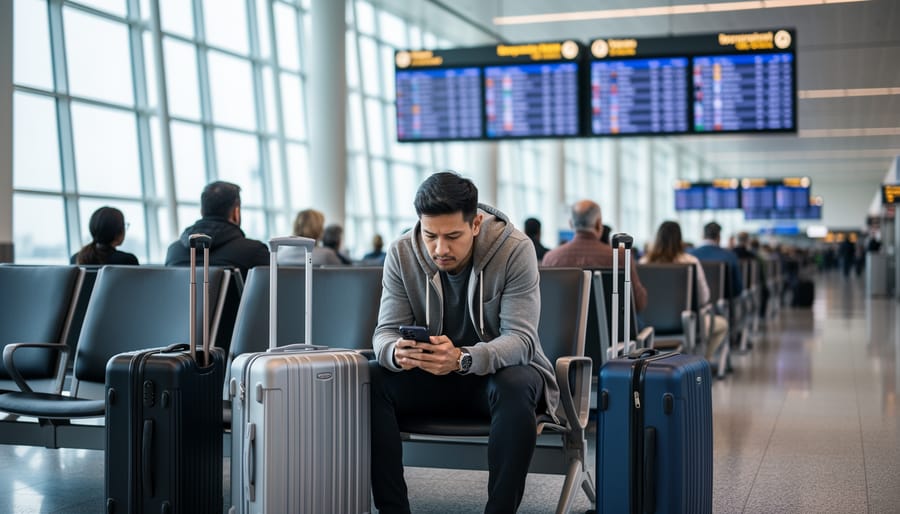
Stuck at Pearson or Billy Bishop staring at a “Delayed” sign? The first thing to do is open your airline app or head straight to the gate agent and ask whether the delay is within the airline’s control. That single question determines your rights under Canadian law and whether you’re entitled to meals, hotel vouchers, or cash compensation up to $1,000.
I’ve spent more hours than I’d like to admit in Toronto airports waiting for weather to clear or mechanical issues to resolve, and I’ve learned the hard way that knowing your passenger rights makes all the difference between sleeping on a terminal bench and getting a hotel room on the airline’s dime. Most travelers have no idea they can claim compensation for delays as short as two hours if the cause is in the airline’s control, like crew shortages or maintenance problems.
Toronto airports face unique delay triggers: winter ice storms that shut down runways, summer thunderstorms rolling in off Lake Ontario, and high traffic volumes at Pearson that create ripple effects across the country. Air Canada notes that if you’re denied boarding or your flight is cancelled or delayed for at least two hours, you may be entitled to certain standards of treatment, and the Canadian Transportation Agency lays out exactly what airlines owe you.
This guide walks you through the exact steps to take the moment you see that delay notice, how to identify whether your delay qualifies for compensation, what to demand from the airline right now, and how to file a successful claim later. You’ll also get my insider tips for avoiding delays in the first place and what to pack in your carry-on to survive the wait comfortably.
Understanding Why Your Toronto Flight Is Delayed
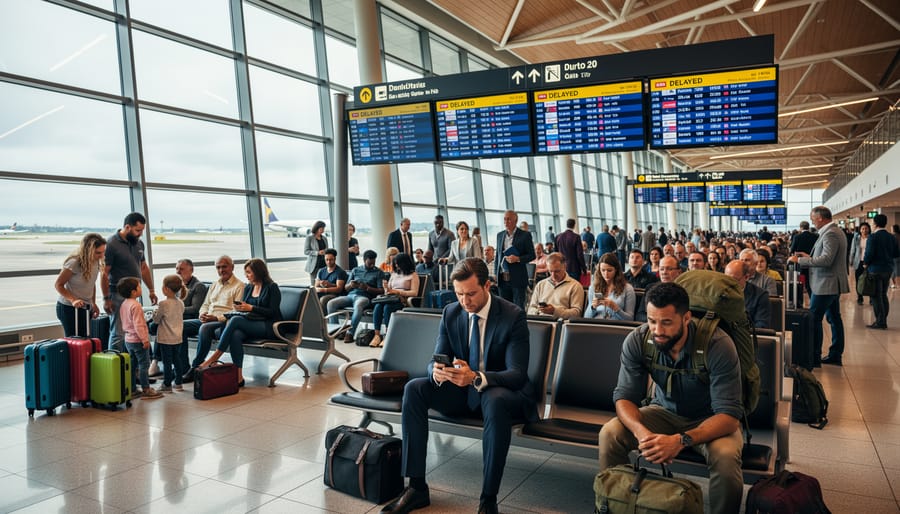
You’re standing at the gate, staring at the departure board, and that dreaded word “DELAYED” has appeared next to your flight number. Before you start panic-texting your connection or your waiting ride, take a breath. Identifying why your flight is delayed helps you understand your options and whether you’re entitled to compensation under Canadian law.
Toronto flight delays generally fall into a few distinct categories, each with different implications for your rights:
- Weather-related delays caused by snow, ice, fog, or summer thunderstorms
- Airline operational issues including scheduling conflicts or previous flight delays creating a domino effect
- Crew shortages when pilots or flight attendants aren’t available due to duty-hour regulations
- Air traffic control restrictions managing the flow of aircraft through busy airspace
- Mechanical problems requiring repairs or aircraft swaps before departure
- Passenger-related delays from late check-ins, security incidents, or missing connecting travelers
The distinction matters because airlines have different responsibilities depending on whether the delay is within their control. A mechanical issue? That’s on them, and compensation might be in play. A blizzard shutting down the airport? That’s considered outside their control, which changes what you’re owed.
Start by checking your airline’s app or the airport monitors for any explanation. Sometimes gate agents will announce the reason, though they’re not always forthcoming with details. If you’re delayed at least two hours, you may be entitled to certain standards of treatment from your airline, regardless of the cause. That’s where knowing the category becomes your advantage.
Common Causes Behind Toronto Flight Delays
Weather and Seasonal Factors
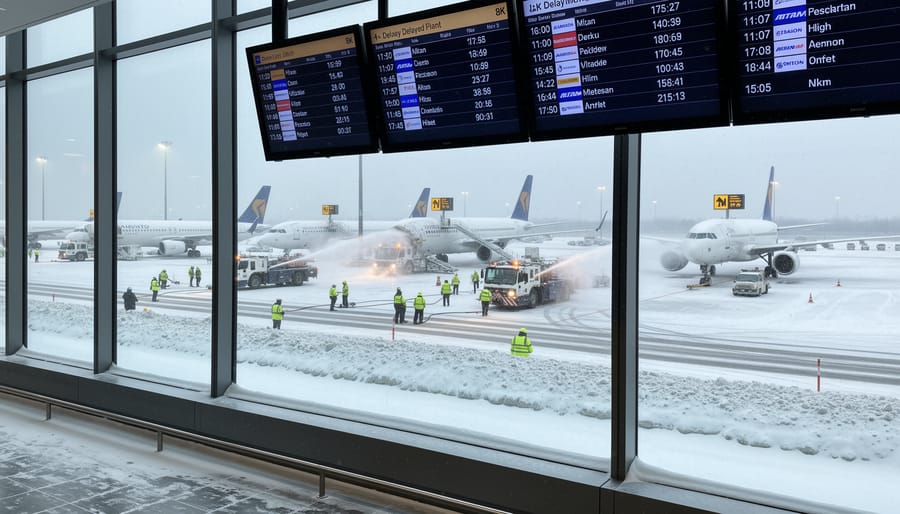
Toronto’s weather throws curveballs year-round, and I learned this the hard way during a February departure when ice accumulation forced de-icing delays that snowballed into a three-hour wait. Canadian winters bring freezing rain, heavy snow, and temperatures that require careful aircraft de-icing before takeoff, a process that can’t be rushed. Even a light snowfall can cascade through the entire flight schedule at Pearson, backing up gates and ground crews.
Summer isn’t much better. Thunderstorms roll across Lake Ontario with little warning, grounding flights until cells pass. I’ve watched July storms shut down operations for 90 minutes, stranding entire planeloads between terminals.
And then there’s fog. Toronto’s position on the lake creates dense morning fog, especially in spring and fall, reducing visibility below safe landing minimums. When conditions shift unexpectedly, airlines check your flight status constantly, but Mother Nature sets the schedule. Understanding these seasonal patterns helps you anticipate potential trouble and pack patience accordingly.
Airline Operations and Staffing
Toronto’s role as Air Canada’s primary hub means operational hiccups here can ripple across the entire network. When crew members “time out” due to duty hour regulations or when an aircraft arrives late from another city, your Toronto departure often bears the brunt. I’ve watched gates change three times in an hour because the incoming plane was repositioning from Montreal and hit weather delays there first.
Staffing shortages hit harder at major hubs. During peak travel periods, airlines sometimes run tight on pilots, flight attendants, and ground crew, especially for connections to smaller Canadian cities. Aircraft positioning matters too: if your plane spent the night in Calgary and morning fog delayed its departure, that lost time follows it to Toronto and affects your afternoon flight. Unlike mechanical issues that ground one aircraft, these operational challenges create domino effects throughout the day, which is why a 9 a.m. delay can still impact your 6 p.m. boarding.
Air Traffic and Airport Capacity
Toronto Pearson handles over 50 million passengers annually, making it Canada’s largest and busiest aviation hub. That sheer volume means runway slots are tightly scheduled, and when one aircraft misses its takeoff window, whether due to a late arrival, mechanical check, or ground crew delay, it creates a domino effect. I’ve watched departure boards flip from green to amber in waves as a single weather hold ripples through the schedule. The airport operates near capacity during peak hours, so there’s little slack to absorb disruptions. Add in international customs processing and connections from smaller Canadian cities funneling through Pearson, and you’ve got a system where minor hiccups become major headaches. The Guide on airport congestion explains how infrastructure limits affect passenger rights when these capacity issues cause delays beyond airline control.
What to Do When Your Flight Is Delayed: Step-by-Step
Check Your Flight Status and Notifications
Before you do anything else, check if your flight is actually delayed, and by how much. Pull up your airline’s app or website right now. Air Canada passengers can use the Flight Notification Service, which texts or emails you updates as soon as the airline knows something’s changed. I’ve found this more reliable than staring at the departure board, since gate agents sometimes get the news a few minutes later.
Beyond your airline’s tools, check the airport’s official site, both Toronto Pearson and Billy Bishop post live departure boards that update every few minutes. If you’re already at the airport, scan the departure monitors, but don’t trust them alone. I once watched my gate change twice while the board still showed the original one. Cross-reference everything, and if the delay looks serious, screenshot the notifications. You’ll want that timestamped proof later if you’re filing for compensation.
Contact Your Airline Immediately
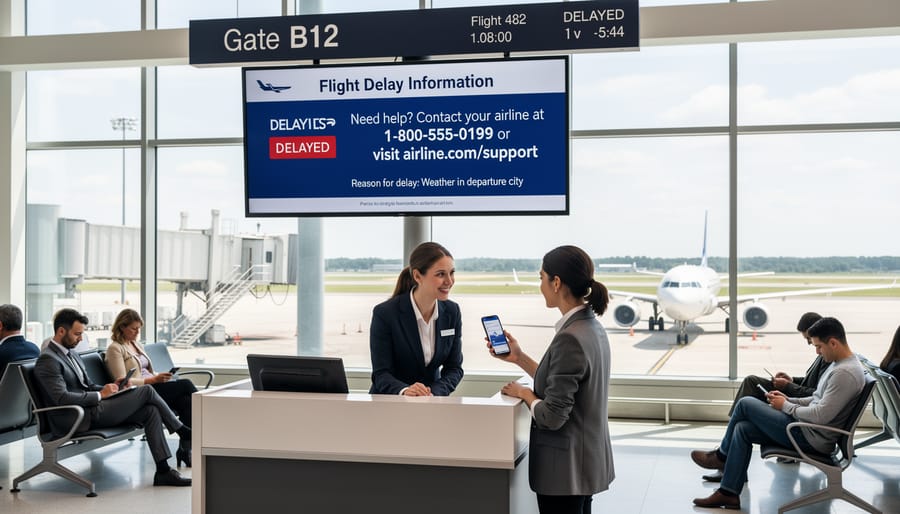
As soon as you realize your Toronto flight is delayed, don’t just stand at the gate hoping for updates, take action. Head straight to the nearest airline counter or gate agent, where staff can provide real-time information and rebooking options before the lines grow unbearable. At Pearson, you’ll find airline counters on the departure level, though I’ve learned the hard way that gate agents often have more flexibility and shorter queues during peak disruption times.
Download your airline’s app if you haven’t already, Air Canada’s app, for instance, lets you chat with customer service and rebook yourself without waiting on hold. If you’re stuck in a phone queue, keep browsing the app simultaneously; I’ve nabbed alternative flights through the app while still waiting to speak with someone.
When you do reach an agent, ask three critical questions: What caused the delay? How long is it expected to last? And based on what you’re owed under Canadian passenger protection rules, what assistance is the airline providing right now? Request a written explanation of the delay reason, this documentation becomes essential if you later file a compensation claim, and airlines are required to provide it.
Document Everything
Here’s my delay story that changed how I travel: I once lost a compensation claim because I couldn’t prove the airline’s reason for my three-hour Toronto delay. Now I document obsessively, and it’s paid off twice.
Snap photos of every departure board showing your flight and the delay notice. Save all push notifications, emails, and text alerts from your airline, don’t just read and delete them. Keep your boarding pass, even if digital (screenshot it). If airline staff give you meal vouchers or hotel accommodations, photograph those too.
The game-changer? Ask gate agents or customer service reps to note the delay reason in writing. A simple “Can you write down why we’re delayed?” often gets you a timestamped explanation on airline letterhead. Collect receipts for any expenses you incur, that airport lunch, the taxi to your hotel, the toiletries you had to buy.
This paper trail becomes gold when filing a compensation claim weeks later, especially when airlines claim the delay was weather-related (which exempts them from paying). Your contemporaneous records can dispute vague explanations and prove you’re entitled to compensation under Canadian passenger protection rules.
Explore Your Rebooking and Alternative Options
When you’re stuck with a delay, your first priority is exploring rebooking options, and you’ve got more flexibility than you might think. Head straight to your airline’s customer service desk or app and ask to be moved to the next available flight to your destination. If the delay is lengthy, don’t be shy about requesting rebooking on a partner airline; while airlines aren’t always obligated to do this, I’ve found that politely asking, especially when the delay is their fault, can sometimes get you on a competitor’s flight at no extra charge.
If all flights are fully booked or the delay stretches overnight, ask the airline about accommodation. Under Canadian regulations, if your delay is within the airline’s control and requires an overnight stay, they should provide a hotel voucher. Even if they don’t offer immediately, request it, airlines sometimes wait for passengers to ask. Get the hotel arrangement in writing, along with meal vouchers if applicable.
Can’t get rebooked quickly? Consider whether driving to your destination or catching a train makes sense, or if flying out of Hamilton or Buffalo offers faster alternatives. Just check your ticket’s terms first, some fares don’t allow changes without penalties. Keep every email, text, and receipt; you’ll need this documentation if you decide to pursue compensation later.
Your Rights as a Passenger: Canadian Air Passenger Protection Regulations
Standards of Treatment During Delays
When your Toronto flight is delayed for at least two hours, Canadian airlines have specific obligations under federal law. You’re entitled to standards of treatment that escalate based on how long you’re stuck waiting.
At the two-hour mark, the airline must provide food and drink in reasonable quantities. That usually means meal vouchers if you’re delayed through a mealtime, not just a bottle of water. If your delay stretches past midnight or extends into the next day, the airline must also arrange overnight accommodation at no cost to you, plus transportation between the airport and the hotel.
Accommodation and refreshments are required regardless of whether the delay is the airline’s fault or caused by something outside their control, like weather. This is separate from compensation, you get these standards of treatment either way.
The catch? Airlines aren’t always proactive about offering what you’re owed. Gate agents won’t necessarily announce meal voucher availability. I’ve watched fellow passengers wait hours at Pearson without realizing they qualified for a hotel. Don’t wait for someone to offer, ask the airline representative directly what you’re entitled to based on your delay length.
When You’re Entitled to Compensation
Understanding when you’re eligible for compensation can make all the difference in recouping costs after a Toronto flight disruption. Under Canadian Air Passenger Protection Regulations, airlines must compensate you when they’re responsible for the delay or cancellation, but there are important conditions.
If your flight is delayed by three hours or more at arrival, cancelled, or you’re denied boarding due to overbooking, you may qualify for compensation ranging from $400 to $1,000 depending on the delay length and your ticket price. The key factor is whether the disruption was within the airline’s control. Mechanical issues, crew scheduling problems, and most operational hiccups fall into this category, making them compensable.
However, compensation isn’t automatic. You must file a claim with your airline, and the disruption can’t be due to safety reasons (like required maintenance) or situations outside the airline’s control. The compensation structure is tiered: delays of three to six hours trigger lower amounts, while delays over nine hours qualify for maximum payouts.
One crucial detail many Toronto travelers miss: the airline determines initial eligibility, but if you disagree with their decision, you can escalate your complaint to the Canadian Transportation Agency for review. Don’t assume a denial is final, I’ve seen passengers successfully appeal after understanding these rules.
Exceptions: When Airlines Don’t Have to Pay
Not all delays trigger compensation, and understanding when airlines are off the hook saves you time and frustration. Under Canadian regulations, airlines don’t have to pay if the disruption stems from what’s called a “safety” situation or an event outside their control. Weather is the big one: that January ice storm that shuts down Pearson or the summer thunderstorm that grounds flights across eastern Canada falls into this category. Security threats, air traffic control decisions, medical emergencies, and political instability also exempt airlines from compensation obligations.
Here’s the tricky part I’ve learned through experience: airlines must still prove the delay was genuinely outside their control. A snowstorm qualifies, but if your flight is delayed because the crew couldn’t get to work due to poor planning during predictable winter weather, that’s on the airline. The key is whether the situation was reasonably preventable. If you’re denied compensation and disagree with the airline’s reasoning, you can escalate to the Canadian Transportation Agency, which reviews these disputes. Keep all your documentation, sometimes what looks like a weather delay has operational issues layered underneath that do qualify for payment.
How to Claim Your Compensation
Filing a claim for compensation after a Toronto flight delay can feel daunting, but the process is straightforward once you know the steps. Airlines have 30 days to respond to your claim under Canadian regulations, so start as soon as possible.
The Claim Process
- Gather your documentation: boarding passes, booking confirmations, delay notifications from the airline, receipts for expenses incurred (meals, accommodation, transportation), and any written explanations from airline staff about the delay cause.
- Submit your claim directly to the airline: Most carriers including Air Canada have online claim forms on their websites. Clearly state your flight details, the length of delay, and what compensation you’re requesting based on the regulations. Attach all supporting documents.
- Wait for the airline’s response: The airline has 30 days to acknowledge your claim and explain their decision. They must provide reasons if they deny compensation.
- Escalate to the Canadian Transportation Agency if needed: If the airline denies your claim and you disagree, or if they don’t respond within 30 days, file a complaint with the CTA. Their process is free and they’ll review whether the airline followed the rules.
Keep copies of everything you submit. I learned this lesson the hard way during a delay returning from Vancouver, having a paper trail makes all the difference when airlines push back.
Be specific in your claim. Don’t just say “my flight was delayed.” State exactly how long, reference the Air Passenger Protection Regulations, and cite the compensation amount you’re entitled to. This shows you know your rights and aren’t guessing.
If the delay wasn’t the airline’s fault (severe weather, for example), compensation won’t apply, but you should still have received proper treatment during the delay. Among essential Canada travel tips understanding the difference between compensation and standards of treatment ranks high, you might not get cash, but you deserved that meal voucher.
Stay polite but persistent. Airlines sometimes deny legitimate claims hoping passengers will give up. Don’t.
Making the Most of Your Delay in Toronto
I learned this lesson during a six-hour winter delay at Pearson: you can either stew in frustration or treat it like an unexpected mini-adventure in Toronto. Once I accepted the situation and stopped refreshing the departure board every thirty seconds, I discovered the airport actually offers more than overpriced food courts and uncomfortable gate seating.
If you’ve got lounge access through your credit card or airline status, now’s the time to use it. Air Canada’s Maple Leaf Lounges at Pearson offer comfortable seating, complimentary food and drinks, Wi-Fi, and showers, game-changers during extended delays. Even if you don’t have membership, you can often purchase day passes at the door, and trust me, the peace and quiet alone might be worth the cost when you’re facing hours of waiting.
For delays stretching beyond a few hours, you have options beyond the terminal. If you have at least four to five hours and it’s during daylight, consider a quick trip into the city. The Union Pearson Express whisks you downtown in just twenty-five minutes, and you could grab a proper meal in the Distillery District or take a walk along the waterfront. Just keep close tabs on your flight status and give yourself plenty of buffer time to clear security again. Billy Bishop passengers have it even easier, you’re already steps from the harbourfront and Toronto Islands.
Here’s what I recommend based on your delay length and energy level:
- Short delays (1-2 hours): Explore the airport’s retail area, grab a decent coffee at Balzac’s or Tim Hortons, or catch up on work in a quiet gate area
- Medium delays (3-4 hours): Spring for lounge access, enjoy a sit-down meal at one of Pearson’s better restaurants like Fetta, or browse the impressive selection of Canadian-themed shops for last-minute gifts
- Long delays (5+ hours): Consider leaving the airport for a quick downtown excursion, book a day room at the nearby Sheraton Gateway if you need rest, or treat yourself to a spa service at Terminal 1’s Be Relax
- Overnight delays: If the airline isn’t providing accommodation, hotels within walking distance of Pearson offer shuttle services and reasonable rates, sometimes you need actual sleep more than you need to camp at the gate
I’ve also found that attitude makes an enormous difference. During that winter delay, I grabbed my laptop, found a quiet corner with outlets, and knocked out work I’d been avoiding for weeks. By the time we finally boarded, I felt oddly productive rather than just annoyed.
If you’re a first-time visitor experiencing a delay, you’re actually getting extra time in one of Canada’s most vibrant cities. Weather permitting, this might be your chance to see a bit more than you planned, delays don’t care about the best time to visit so you might as well make the most of whenever you’re here. Download a meditation app, call that friend you’ve been meaning to catch up with, or simply people-watch and remind yourself that everyone around you is in the same boat. Sometimes the unexpected pause is exactly what travel-frazzled nerves need.
How to Prevent Future Delay Headaches
Smart Booking Strategies
I’ve learned through experience that a few smart choices at booking time can dramatically reduce your odds of being stuck at Pearson or Billy Bishop. Morning flights, especially the first departure of the day, face fewer cascading delays because they haven’t inherited problems from earlier flights. Your aircraft is likely already at the gate, rested crew are ready, and you’re beating the afternoon weather build-up that Toronto often sees in summer.
Give yourself breathing room on connections. I never book anything tighter than 90 minutes domestically or two hours for international transfers at Pearson anymore, not after missing a connection by eight minutes once. Toronto’s sheer size and congestion mean things take longer than you’d expect, and a minor hiccup becomes a missed flight when you’re cutting it close.
Consider Billy Bishop for downtown destinations when possible. It’s smaller, closer to the city, and generally handles delays more smoothly than Pearson’s controlled chaos. Hamilton’s airport is another option if you’re flexible, fewer flights mean fewer opportunities for the kind of gridlock that turns a small delay into an all-day nightmare.
Travel Insurance and Protection
Travel insurance can be a lifesaver when Toronto delays cascade into bigger problems. Look for policies that specifically cover trip interruption, missed connections, and additional accommodation costs, not just basic trip cancellation. I learned this the hard way during a winter delay at Pearson that turned into a three-day ordeal requiring hotel stays and meal expenses.
The sweet spot for insurance is when you’re booking expensive tickets, traveling during Toronto’s notorious winter months, or connecting through for important events like weddings or cruises. If you’re just hopping between Canadian cities on a cheap fare, you might skip it. Read the fine print carefully: many policies won’t cover “known events” like forecast storms, and some exclude compensation you’re already entitled to under Canadian passenger rights. The best policies complement what airlines must provide, filling gaps like rental cars or activities you miss at your destination.
Build Buffer Time Into Your Plans
I learned this lesson the hard way during a December trip to visit family in Halifax. I’d booked a tight 90-minute connection through Toronto Pearson, confident I could make it work. Winter weather had other plans, my inbound flight sat on the tarmac for an extra hour, and I watched my connection board without me.
Now I build at least three hours between flights at Toronto, especially in winter or during peak travel seasons. For crucial events like weddings or business meetings, I arrive a day early whenever possible. Sure, you might spend a night in Toronto you hadn’t planned on, but that beats missing the reason you’re traveling in the first place. Consider morning departures for important trips, they’re less likely to suffer from cascading delays that build throughout the day, and if something goes wrong, you’ve got more rebooking options ahead of you.
Frequently Asked Questions
What should I do first if my Toronto flight is delayed?
Check your flight status through your airline’s app or the Flight Notification Service, then contact the airline immediately to understand the delay cause and explore your options. Document everything, save notifications, keep your boarding pass, and get written explanations from airline staff.
What are airlines required to provide during a delay?
If your flight is delayed for at least two hours, you may be entitled to certain standards of treatment including food, drinks, and communication facilities. For overnight delays, airlines typically must provide hotel accommodation and transportation, though exceptions apply for situations outside their control.
Can I get compensation if weather caused my Toronto flight delay?
Generally no, weather events are considered outside the airline’s control, which means you’re entitled to standards of treatment but not financial compensation. However, you still deserve rebooking assistance and care during the delay, so don’t hesitate to ask what the airline can offer.
How long do I have to file a compensation claim?
You typically have one year from the date of the disruption to file a claim with the airline. I always recommend submitting your claim as soon as possible while the details are fresh and you have all your documentation organized.
These questions come up constantly when I’m chatting with fellow travelers stuck at Pearson, and understanding the answers beforehand takes so much stress out of the situation. I’ve learned that knowing your rights doesn’t just help you get what you’re entitled to, it also gives you confidence when negotiating with airline staff during those frustrating delay moments.
The Flight Notification Service that Air Canada offers is something I wish I’d signed up for years earlier. It sends you real-time updates about your flight status directly to your phone or email, which means you’re not constantly refreshing the departures board or guessing whether that “slight delay” has turned into something more serious. During a December snowstorm delay, those notifications gave me enough advance warning to grab a proper meal instead of panic-buying overpriced airport snacks.
Remember that the Canadian Transportation Agency publishes detailed guidance on flight delays and cancellations, and it’s worth reviewing their resources if you’re facing a complex situation or the airline isn’t being helpful. I’ve found that simply mentioning you’re familiar with the regulations can change the tone of a conversation with customer service, suddenly they’re more eager to find solutions.
Toronto Flight Delayed Terms to Know
Navigating flight delay conversations means understanding the language airlines and regulators use. Here are the essential terms you’ll encounter when dealing with Toronto flight disruptions:
- Standards of Treatment
- The mandatory assistance airlines must provide during delays, including food, drink, and accommodation for overnight disruptions, separate from any financial compensation you might receive.
- Controllable Delay
- A disruption within the airline’s control (mechanical issues, crew scheduling problems, overbooking) that triggers compensation eligibility under Canadian regulations.
- Uncontrollable Delay
- Disruptions caused by factors outside the airline’s control, such as severe weather, security threats, or air traffic restrictions, which typically exempt carriers from paying compensation.
- Denied Boarding
- When an airline refuses to let you board despite having a valid ticket and arriving on time, often due to overbooking, this carries the strongest compensation protections.
- Rebooking
- The process of securing an alternate flight when your original departure is significantly delayed or cancelled, which the airline must arrange at no additional cost to you.
- Large Carrier
- Airlines that transported at least two million passengers globally in each of the two preceding calendar years, which face stricter compensation requirements under Canadian law.
Knowing these terms helps you communicate clearly with airline staff and understand your rights documentation. When you’re stuck at Pearson during a three-hour weather delay, for instance, recognizing it as “uncontrollable” explains why compensation might not apply, but standards of treatment still do, meaning the airline should provide meal vouchers regardless.
At-a-Glance Details
Toronto flight delays can escalate quickly from minor inconvenience to major disruption. Here’s what you need to know at a glance to navigate the situation effectively and understand your options when things go wrong at Pearson or Billy Bishop.
| Delay Duration | Airline Must Provide | Possible Compensation |
|---|---|---|
| 2+ hours | Food and drink in reasonable quantities | Varies by delay cause and length |
| Overnight delay | Hotel accommodation and transportation | Plus standards of treatment |
| 3+ hours (controllable) | All standards of treatment | $400-$1,000 depending on length |
| Weather/safety issue | Rebooking assistance only | None (outside airline control) |
The key distinction is whether your delay stems from something within the airline’s control, like crew scheduling or mechanical issues, versus external factors such as winter storms or security incidents. Controllable delays trigger compensation eligibility, while weather-related disruptions typically don’t, though airlines still owe you rebooking help and communication. Keep your boarding pass and any written explanations from airline staff, because you’ll need that documentation when filing a claim later.