
Yes, Canada is safe to travel to in 2026. As someone who’s crossed the border more times than I can count, I can tell you that Canada consistently ranks among the safest countries in the world for visitors. Whether you’re planning a family trip to the Rockies or a solo adventure through Quebec City, you’ll find low crime rates, excellent healthcare infrastructure, and welcoming communities from coast to coast.
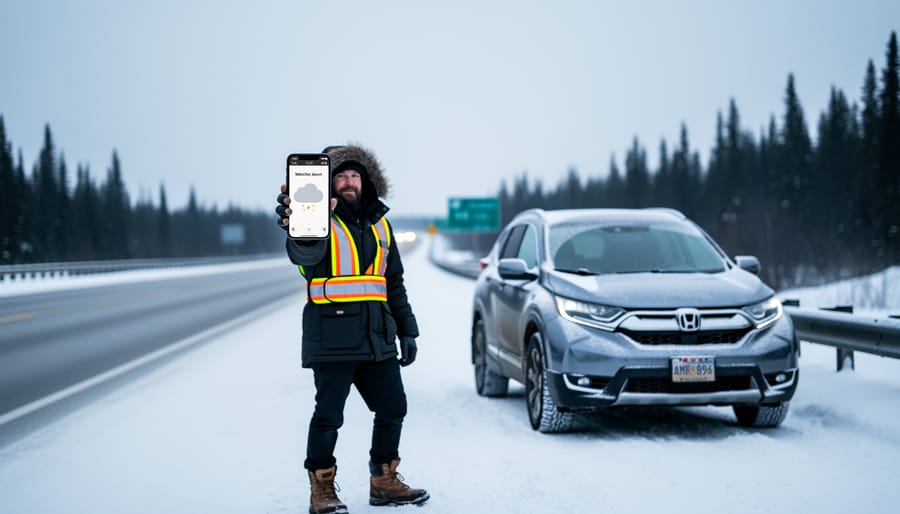
But here’s the thing: safe doesn’t mean risk-free. I learned this the hard way during my first winter road trip through the Prairies when I didn’t check weather conditions and ended up stranded for six hours. The most common safety issues travelers face in Canada aren’t about crime, they’re about underestimating Mother Nature, skipping travel insurance, and not preparing for the country’s vast distances and variable weather conditions.
That’s exactly why I’ve put together this practical guide. You’ll learn how to prepare before you leave, what documentation you need, how to stay safe in different seasons, and which travel mistakes to avoid that could turn your dream trip into a headache. I’ll share insider tips on everything from navigating Canadian winters to understanding local wildlife safety, plus how to access emergency services if you need them.
The bottom line? With the right preparation, traveling to Canada is not just safe, it’s one of the most rewarding experiences you can have. Let’s make sure you’re ready to explore this beautiful country confidently and safely.
What You’ll Need Before Your Trip
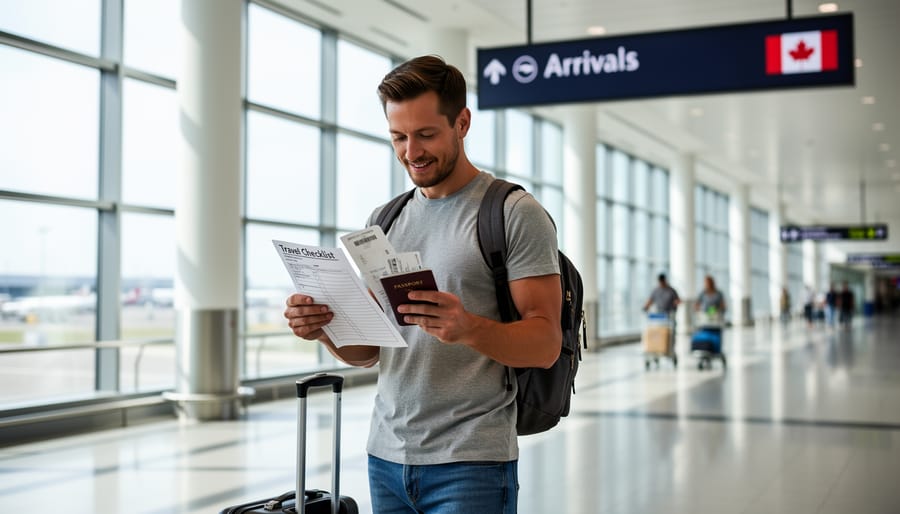
Let me tell you about the time I saved a few bucks by skipping travel insurance on what I thought would be a quick weekend in Montreal. Everything was fine until I slipped on some black ice near the Old Port and needed X-rays at the emergency room. That “savings” cost me over $800 out of pocket. I learned my lesson: cutting corners on safety prep isn’t worth it.
The good news? Getting ready for safe travel to Canada doesn’t require an overwhelming amount of stuff. You just need the right essentials organized before you leave home.
Start with comprehensive travel insurance that covers medical emergencies and trip interruptions. I can’t stress this enough after my Montreal mishap. Canadian healthcare is excellent, but visitors pay full price for services, and even minor incidents can run into thousands of dollars. Look for a policy that includes emergency medical coverage of at least $50,000, plus evacuation coverage if you’re heading to remote areas. I keep mine accessible both as a physical card in my wallet and a PDF on my phone.
Here’s your core safety toolkit for Canada:
- Valid passport with at least six months of validity remaining
- Electronic Travel Authorization (eTA) or appropriate visa if required for your nationality
- Travel insurance policy documents with 24-hour emergency contact numbers
- Digital and physical copies of all important documents stored separately
- Offline maps downloaded for your destination regions
- Emergency contact list including your country’s embassy or consulate in Canada
- Prescription medications in original packaging with doctor’s notes if needed
- Basic first-aid supplies for minor issues
Set up a simple system for your documents before you pack. I photograph everything, upload copies to secure cloud storage, and email myself a backup. Then I keep physical copies separate from the originals in my luggage. Sounds paranoid until you’re the person who loses their wallet and actually has a backup plan.
Download offline maps for the Canadian regions you’re visiting while you still have wifi. Cell service can be spotty outside major cities, and winter weather sometimes knocks out connectivity when you need navigation most. I learned this the hard way driving between small towns in New Brunswick during a snowstorm.
Know Before You Go: Safety Considerations
Canada is one of the safest countries to visit in the world, but nature doesn’t read tourist brochures. The real safety considerations here aren’t about crime or political instability, they’re about respecting the sheer scale and power of the Canadian environment. I learned this the hard way during my first prairie winter when I confidently ventured out in what I thought was adequate clothing, only to experience -40°C windchill that literally hurt to breathe.
Weather extremes are your primary safety consideration, and they vary dramatically by season and region. Canadian winters bring bone-chilling cold to most of the country, with temperatures regularly dropping below -20°C in the prairies and inland areas. Frostbite can occur in minutes under these conditions, and hypothermia is a real risk if you’re unprepared or stranded. Conversely, summer brings its own hazards: wildfires have become increasingly common across British Columbia, Alberta, and parts of Ontario, sometimes closing highways, affecting air quality hundreds of kilometers away, and forcing evacuations. Heat waves in cities like Toronto and Montreal can push temperatures above 35°C with humidity that feels even hotter.
Wildlife encounters are another uniquely Canadian consideration. Bears (both black and grizzly), moose, cougars, and even smaller animals can be dangerous when you’re in their territory. A moose on a highway is a collision waiting to happen, and surprising a bear on a trail can turn deadly. Parks Canada and provincial authorities provide excellent guidelines for wildlife safety, but the responsibility is yours to follow them.
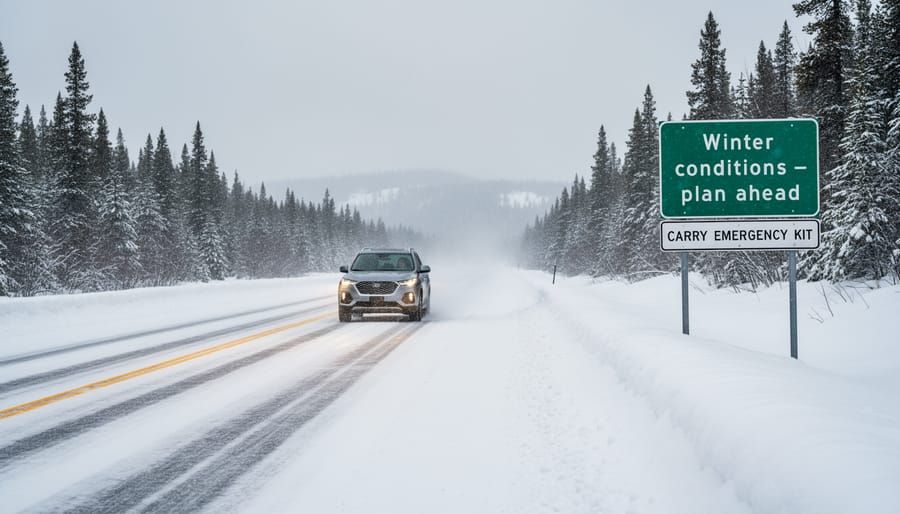
Remote areas present special risks that catch unprepared travelers off guard. Cell service disappears quickly outside cities, and distances between services can be vast. Breaking down on a northern highway in winter isn’t an inconvenience, it’s a survival situation. Even popular national parks have areas where rescue can take hours or days.
The good news? These risks are entirely manageable with awareness and preparation. Check advisories regularly (conditions genuinely do change), respect weather forecasts, carry proper gear for your destination and season, and never underestimate Canadian wilderness. The country is safe, but it demands your respect.
Your Step-by-Step Safety Preparation Process
Step 1: Check Official Travel Resources
Your first stop? Government travel advisory pages. Here’s what most people don’t realize: Canada’s official travel advice site is designed for Canadians heading abroad, not for visitors coming to Canada. Still, it’s worth a quick look to understand how the Canadian government assesses travel risks generally.
What you really need is your own country’s advisory about Canada. If you’re from the US, check the State Department’s travel page. UK travelers, hit the Foreign Office site. Australian? Look up Smartraveller. These resources tell you if there are any current concerns about traveling to Canada from your government’s perspective, though honestly, you’ll rarely find anything beyond standard precautions.
More importantly, visit Canada’s official border services page to confirm entry requirements. This is where you’ll find current visa rules, eTA needs, and documentation standards that actually apply to you.
My insider tip? Set up email alerts if your government offers them. I learned this after a wildfire season created unexpected travel disruptions in British Columbia. Having those updates land in your inbox means you won’t miss critical changes between booking and departure. The Canadian government’s site lets you check travel advisories often and subscribe to daily alerts, which is handy if you’re monitoring conditions before your trip.
Step 2: Understand Entry Requirements and Documentation
Getting turned away at the Canadian border because of a documentation mistake is one of the fastest ways to derail your trip. I’ve seen travelers stuck at the airport, their carefully planned itineraries in ruins, all because they didn’t realize their passport needed six months’ validity or they skipped the electronic authorization step.
Start by checking your passport’s expiration date, right now, before you book anything. Canada doesn’t require the full six-month validity rule that some countries do, but your passport must be valid for the entire duration of your stay. If it expires three days before your return flight, you’re not getting in.
Next, determine what entry authorization you need. Most visitors require either a visa or an Electronic Travel Authorization (eTA), depending on their citizenship. Citizens of visa-exempt countries traveling by air need an eTA, which costs a few dollars and takes minutes to apply online, but you should do it weeks before departure because processing can occasionally take longer. If you’re driving or arriving by cruise ship, you typically don’t need an eTA, just your passport and any required visa.
Double-check these requirements on Canada’s official immigration website for your specific citizenship, don’t rely on outdated blog posts or assumptions. Requirements change, and showing up without the right paperwork means you’re going home, not to Canada.
Step 3: Arrange Health and Emergency Coverage
Here’s the hard truth about Canadian healthcare: our excellent public system doesn’t extend to visitors. When my cousin broke her wrist snowboarding in Whistler, what should have been a $200 inconvenience turned into a $3,800 hospital bill, paid upfront, in full, before they’d even look at the X-rays. Her travel insurance reimbursed every penny within two weeks.
Never skip travel insurance when visiting Canada. A single emergency room visit can cost thousands, and medevac from remote areas can run into tens of thousands. Look for policies covering medical emergencies, trip interruption, and evacuation. Read the fine print on adventure activities if you’re skiing, hiking, or doing anything beyond city touring.
Set up your emergency contacts before you leave. Program 911 into your phone (it works throughout Canada), save your country’s embassy contact, and share your insurance policy number and provider’s hotline with someone back home. Download your insurance company’s app if they have one, many now let you file claims and reach assistance directly through your phone.
Keep both digital and physical copies of your insurance card. Take a photo, email it to yourself, and tuck a printed copy in your wallet separate from your passport. When you need it, you really need it accessible.
Step 4: Plan for Regional Safety Factors
Canada’s safety profile changes dramatically depending on where you’re headed and when you visit. A January trip to the Rockies requires completely different prep than a July visit to Toronto, so tailor your planning to your actual itinerary.
For major cities like Vancouver, Montreal, and Toronto, focus on standard urban awareness. Research your neighborhoods beforehand, especially if you’re arriving late or staying outside the downtown core. Most Canadian cities are walkable and safe, but like any metropolis, certain areas see more petty theft or require extra caution after dark.
Heading into wilderness? That’s where regional homework becomes critical. If you’re visiting Canada national parks check current wildlife activity reports and trail conditions before you go. Bears are active spring through fall in many parks, and proper food storage isn’t optional. When you book Parks Canada campsites read the safety briefings that come with your reservation confirmation.
Seasonal hazards deserve serious attention. Winter means black ice on roads and sidewalks from November through March. Summer brings wildfire risk to BC and parts of Alberta, so check air quality indexes and fire ban status. I once had to reroute an entire BC road trip because smoke from wildfires closed highways I’d planned to use.
For transportation safety, winter driving is the big one. If you’re renting a car between October and April, verify it has winter tires and understand that highways can close with little notice during storms.
Step 5: Set Up Communication and Navigation
Staying connected isn’t just about posting travel photos, it’s your safety lifeline. Before you leave home, sort out how you’ll communicate and navigate once you’re in Canada.
Your phone situation matters more than you might think. If your current plan doesn’t include Canadian coverage, grab a local SIM card at the airport (major carriers like Rogers, Bell, and Telus have kiosks), use an eSIM service, or arrange an international roaming package before departure. Yes, it costs a bit, but being able to call for help or access maps beats saving twenty dollars.
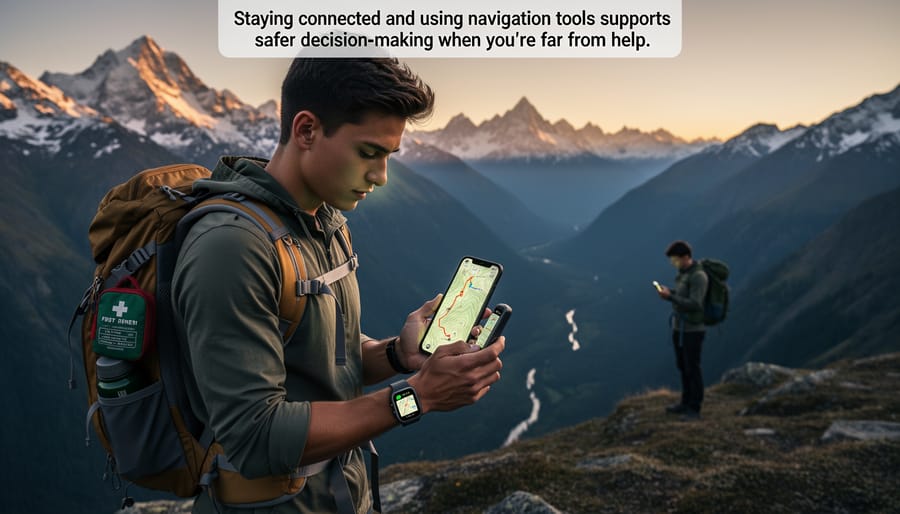
Download offline maps for your destinations through Google Maps or a similar app while you still have Wi-Fi. I learned this the hard way driving through rural Alberta when my data cut out and my GPS became useless. Offline maps work even when you have zero signal.
Share your complete itinerary with someone back home, hotel names, addresses, dates, and contact numbers. Check in regularly, even if it’s just a quick text. If something goes wrong, someone knows where you should be.
Finally, save 911 in your phone and know that it works throughout Canada for police, fire, and medical emergencies. In remote areas with no cell service, satellite communicators become essential safety tools.
How to Know You’re Ready: Your Safety Verification Checklist
You’ve booked your flights, arranged your insurance, and researched your destinations. Now comes the moment of truth: making sure everything is actually ready to go. I always go through this final safety verification 48 hours before I fly, and again the morning of departure. It has saved me from discovering missing documents at the airport more than once.
Start with your pre-departure verification. This is your last chance to catch anything you’ve overlooked:
- Confirm all travel documents are packed together: passport (valid for your entire stay), eTA or visa confirmation, insurance policy numbers, and emergency contact cards
- Check that you have both digital and physical copies of critical documents stored separately from the originals
- Verify your phone will work in Canada, whether through an international plan or a Canadian SIM card you’ve already arranged
- Review the weather forecast for your arrival city and first few destinations, adjusting your packing if conditions have changed
- Double-check that someone back home has your complete itinerary, accommodation details, and a scheduled check-in plan with you
- Download offline maps for your destination cities in case you lose connectivity
- Confirm your first night’s accommodation and know the address and check-in process
When you land in Canada, take a few minutes to get oriented before rushing off. Connect to WiFi and let your emergency contact know you’ve arrived safely. Save 911 into your phone if you haven’t already. Check if your accommodation has sent any arrival instructions or local safety information.
Throughout your trip, maintain basic situational awareness. Notice where exits are when you enter a new building or transit station. Keep an eye on local news or your travel advisory app for any developing weather or safety situations. Trust your instincts. Canada is remarkably safe, but staying alert never hurts.
Your preparation is now working for you. Enjoy your adventure knowing you’ve covered the important bases.
Common Safety Questions Answered
I’ve fielded dozens of messages from nervous first-time visitors asking the same handful of questions before their trips. Here are the answers I give every time, drawn from years of roaming this country solo, with family, and everything in between.
Is it safe to travel alone in Canada?
Absolutely. I’ve traveled solo across Canada countless times, and it’s one of the safest countries for independent travel. Cities are walkable and well-lit, public transit is reliable, and Canadians are genuinely helpful if you need directions or assistance.
What about wildlife encounters, should I be worried?
Wildlife exists, but encounters are rare if you follow basic precautions. In national parks, stay on marked trails, make noise while hiking, and store food properly. I’ve hiked hundreds of kilometers in bear country and never had a problem because I respected the rules.
Are Canadian cities safe at night?
Yes, major cities like Toronto, Vancouver, and Montreal are generally safe after dark. Use common sense, stick to well-lit areas, keep your belongings close on transit, and trust your instincts. I’ve walked home from late dinners in these cities more times than I can count without incident.
How safe is winter driving in Canada?
Winter driving requires preparation and caution, but it’s manageable. Rent a vehicle with winter tires, drive slower than you think necessary, and check road conditions before departing. My rule: if locals are saying conditions are rough, reschedule your drive.
The medical concern comes up constantly too. If you get sick or injured, Canada has excellent healthcare, but you’ll pay out-of-pocket without insurance. A simple clinic visit can run a few hundred dollars, while an emergency room visit or hospital stay can cost thousands. That’s why travel insurance isn’t optional, it’s the single smartest investment you’ll make. Keep your policy details on your phone and know how to contact them for pre-approval on medical care.
One practical safety note that often gets overlooked: if your trip involves flights within Canada, know your flight delay rights. Weather cancellations happen, especially in winter, and understanding when you can get compensation reduces stress when plans change unexpectedly.
The pattern I’ve noticed over years of answering these questions is simple: people worry before they arrive, then wonder why they worried once they’re here. Canada’s safety reputation isn’t hype, it’s earned through infrastructure, healthcare, low crime rates, and a culture that looks out for visitors. Your preparation matters more than any risk you’ll actually face.
The Bottom Line on Canadian Travel Safety
Canada has earned its reputation as one of the world’s safest travel destinations, and that reputation is well-deserved. With thoughtful preparation and the smart planning steps we’ve covered, you can focus on what really matters: experiencing everything this incredible country has to offer. The difference between a worry-free Canadian adventure and avoidable travel mistakes isn’t luck, it’s simply taking the time to prepare properly before you go.
I’ve traveled across Canada countless times, and the pattern I’ve noticed is clear: travelers who arrive prepared have amazing experiences, while those who wing it run into preventable headaches. The good news? You’re already ahead of the game by reading this guide. Now it’s time to put these steps into action, pack your bags, and get ready to explore the mountains, cities, coastlines, and wilderness that make Canada such a special place to visit.
Keep checking back here for more insider tips and practical Canadian travel guidance. Your adventure awaits, and you’re ready for it. Safe travels, eh?