
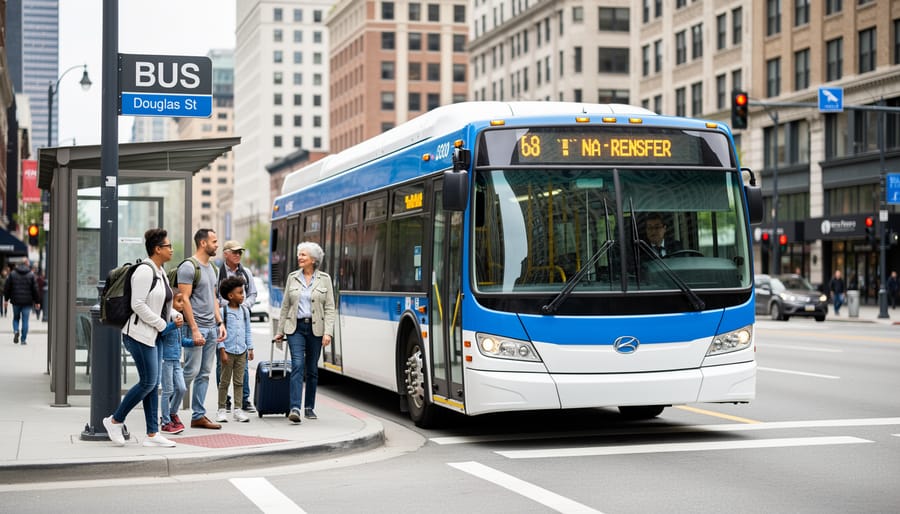
Getting around Victoria is straightforward and affordable: adults pay just $3 for a single ride or $6 for a full DayPASS that covers unlimited trips across the city. The BC Transit system connects downtown, neighborhoods, and attractions through clearly marked bus routes that run from early morning until late evening, making it the most budget-friendly way to explore the capital whether you’re visiting for a weekend or settling in for a few months.
I’ll admit, the first time I visited Victoria, I assumed I’d need a rental car to see everything. What a relief when I discovered how well the transit system actually works here. The buses are clean, punctual, and reach nearly every corner you’d want to explore, from the Inner Harbour to the beaches in Oak Bay. For families traveling on a budget, this is a game-changer (yes, kids 12 and under ride free with a paying adult).
The beauty of Victoria’s transit system lies in its simplicity. You don’t need to master complicated zone systems or worry about surge pricing. A single fare gets you where you need to go, and if you’re planning multiple stops in one day, that $6 DayPASS pays for itself after just two rides. Seniors 65 and up enjoy the same single-ride and day-pass rates, with an even better deal on monthly passes at $45 compared to the standard $85 adult pass.
What really sold me was how stress-free the experience turned out to be. Clear route numbers, friendly drivers who actually help tourists figure out their stops, and real-time arrival information at major hubs made navigating a new city feel effortless.
What You Need to Get Started
Before you hop on your first Victoria bus, let’s make sure you’re set up for success. Trust me, a little preparation goes a long way, I learned this the hard way during my first visit when I stood at a bus stop with no idea which route I needed and only a $20 bill in my pocket.
Here’s what you’ll want to have ready:
- A smartphone with the BC Transit app downloaded (available free for iOS and Android)
- Payment method ready: exact cash fare or a payment card
- Your destination address or landmark name
- A backup route planning option like Google Maps, which integrates Victoria transit schedules
The BC Transit app is your best friend for navigating Victoria’s system. It shows real-time bus locations, arrival times, and lets you plan trips from anywhere in the city. I always download it before I even leave home, there’s nothing worse than trying to figure out transit while standing in the rain at an unfamiliar stop.
If you prefer old-school methods or your phone battery is low, physical route maps are posted at major terminals like Downtown Transit Exchange. These show the full network and can help you understand how routes connect across Victoria and surrounding areas like Saanich and Oak Bay.
Knowing your destination is crucial. Whether it’s “Butchart Gardens,” “Inner Harbour,” or a specific street address, having this information ready makes route planning straightforward. The trip planner tools work best when you can tell them exactly where you’re going, not just a general neighborhood.
Understanding Victoria Transit Fares and Passes
Choosing the Right Fare Product for Your Trip
Here’s how to decide which fare product makes the most sense for your Victoria visit. The math is straightforward: a single ride costs $3, so if you’re taking three or more trips in one day, grab the DayPASS for $6. You’ll break even on your third ride and save money on anything beyond that.
When my family spent a week exploring Victoria, we did the calculations each morning. On days we planned to visit Butchart Gardens and then head downtown for dinner, the DayPASS was a no-brainer, we’d easily make four or five trips. But on our slower museum day with just a round trip downtown, we paid cash for single rides and saved the extra dollars.
For extended stays, monthly passes deliver serious value if you’re riding regularly. The 30 Day Adult Pass runs $85, which pays for itself after just 29 single rides. We’re big believers in applying money-saving travel tips like this, they free up your budget for experiences instead of transportation overhead.
Think about your actual itinerary rather than guessing. Count your planned bus trips for each day, factor in spontaneous exploring, and choose accordingly.
Important Things to Know Before You Board
Before you hop on your first Victoria bus, there are a few important things that’ll make your journey smooth and stress-free. Think of these as helpful Canada travel tips that’ll save you from any awkward moments at the fare box.
If you’re paying the $3 cash fare, have your exact coins ready before boarding. I learned this the hard way on my second trip when I handed over a $5 bill and received an apologetic shrug from the driver.
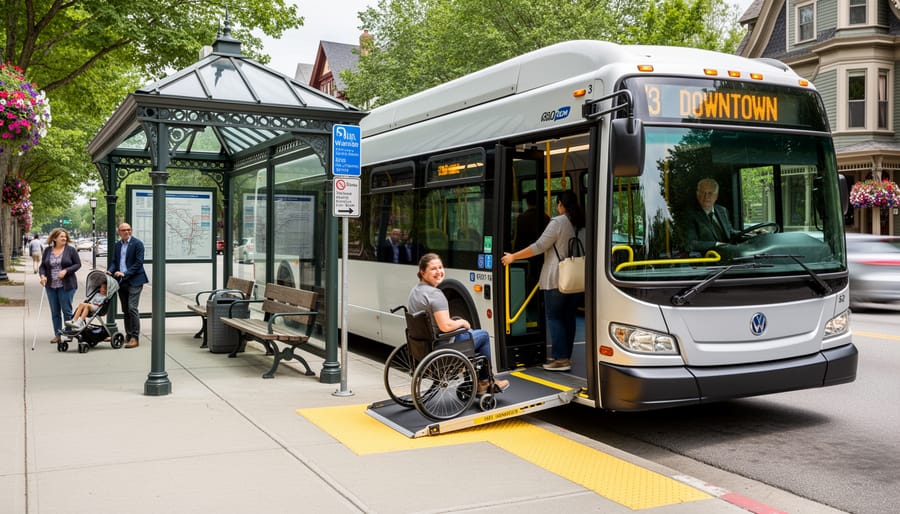
When you pay your fare, you’ll receive a transfer that’s valid for up to 90 minutes, allowing you to connect between routes without paying again. Just hold onto that slip of paper and show it to the next driver when you board. Victoria’s buses are fully accessible, with low-floor designs, priority seating near the front, and designated spaces for wheelchairs and strollers. Drivers are genuinely helpful if you need assistance securing mobility devices.
Peak travel times run weekday mornings from 7:30 to 9:00 and afternoons from 4:00 to 6:00, when buses fill up with commuters heading downtown or returning home. If you’re traveling with luggage or prefer a seat, plan around these windows when possible.
Missed your stop? Don’t panic. Pull the cord or press the stop button at the next safe stop, exit through the rear doors, and either walk back or wait for a return bus. Most routes run frequently enough that you won’t be stranded.
Step-by-Step: Riding Victoria Transit from Start to Finish
Step 1: Plan Your Route
Before you head to the bus stop, you’ll want to figure out exactly which bus gets you where you’re going. We always start with the BC Transit Trip Planner on their website or app, it’s designed specifically for Victoria’s system and gives you the most accurate route options. Just enter your starting point and destination, and it’ll show you which buses to catch, where to transfer if needed, and how long the journey takes.
Google Maps works brilliantly too, especially if you’re already using it to explore Victoria. The transit directions integrate seamlessly with BC Transit’s real-time data, so you’ll see the same route information.
Here’s an insider tip we learned after our first confusing wait at a bus stop: always check the real-time arrival information before you leave. Both the BC Transit app and Google Maps show live bus locations and updated arrival times. Victoria’s buses generally run on schedule, but construction or traffic happens. Knowing your bus is three minutes away versus thirteen minutes away changes whether you grab a coffee first.
Pay attention to route numbers, they’re displayed prominently on the front of every bus alongside the destination. Route 70, for instance, heads to different areas than Route 6, so double-checking that number before boarding saves you from an unplanned neighbourhood tour.
Step 2: Prepare Your Fare
Before you step onto the bus, you’ll want to have your payment sorted out, it makes boarding smooth and stress-free. Victoria Transit accepts cash and contactless payment options, so decide which works best for you before reaching the stop.
If you’re paying cash, here’s the golden rule: have exact change ready. A single ride costs $3, and a DayPASS is $6, so carry the right bills and coins because drivers can’t make change. I learned this the hard way during my first Victoria visit when I handed the driver a $10 bill for a single ride, awkward moment aside, he was kind enough to explain the policy while the coins I’d been carrying in my backpack suddenly became my new best friends.
Contactless payment is increasingly available, making life easier if you’ve got a tap-enabled credit or debit card. Just tap when you board, and you’re set.
Whichever method you choose, have it in hand as you approach the bus. Digging through your bag while people wait behind you isn’t fun for anyone, and Victoria’s friendly transit vibe is much easier to enjoy when you’re prepared and confident.
Step 3: Board the Bus
When your bus approaches, make yourself visible at the stop so the driver knows you want to board. A simple step forward or raised hand works perfectly. Once the bus pulls up, board through the front door right next to the driver.
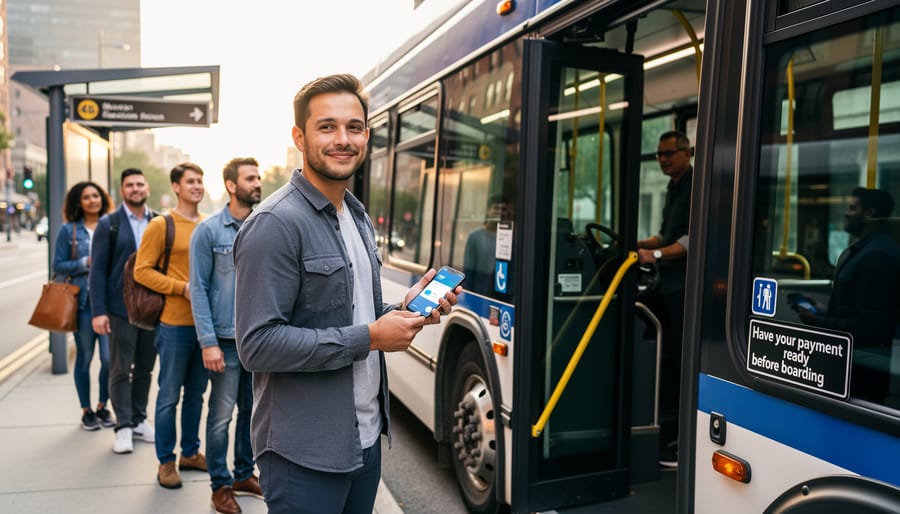
As you step on, greet the driver and have your payment ready. If you’re using cash, deposit exactly $3 into the fare box (remember, drivers don’t carry change). The machine accepts coins and bills. If you’re using a pass or card, tap it on the card reader near the driver. The system will beep or flash green to confirm your payment.
After paying, the driver will hand you a transfer slip if you’ve paid a single ride fare. Grab this, it’s your proof of payment and allows you to board connecting buses within the transfer window, usually 90 minutes. Tuck it somewhere safe because you might need to show it later.
I’ll never forget my first Victoria bus ride when the driver noticed my confused look at the fare box and patiently walked me through the exact process, even pointing out where I’d catch my connecting bus downtown. That warmth is typical here, Victoria drivers genuinely want to help you reach your destination.
Step 4: During Your Ride
Once you’re on board, settle into a seat near the front if you’re new to the route, it makes it easier to see street signs and ask questions. BC Transit buses display the next stop on electronic signs at the front, and many announce stops audibly, but I’ve learned not to rely solely on these. Instead, I keep an eye on the streets we’re passing and watch Google Maps on my phone to track our progress.
About a block before your stop, press the yellow strip along the windows or one of the red stop buttons. You’ll hear a chime and see a “Stop Requested” sign light up, that tells the driver you want to get off at the next stop. Press once; repeated presses won’t speed things up and the drivers find it annoying.
If you’re unsure where you are, don’t hesitate to ask the driver for help when you boarded, or catch their attention at a red light. Most Victoria drivers genuinely enjoy helping visitors and will often call out your stop for you. I’ve had drivers point out landmarks and even suggest better routes for my return trip, it’s that kind of city.
Stay relaxed and enjoy the ride. Victoria buses move through some beautiful neighborhoods, and watching the city pass by beats staring at your phone the whole time.
Step 5: Exit and Reach Your Destination
As we approach your stop, get ready to move toward the rear doors, these are your exit points on Victoria buses. Press the yellow tape or grab the overhead cord to signal you’re getting off (if you haven’t already), and watch for the bus to come to a complete stop. The rear doors typically open automatically, or you might need to push them gently. Step down carefully, especially on rainy days when surfaces can be slick.
Missed your stop? Don’t panic. Stay seated and get off at the next stop, then check your map app to see if you can walk back or if it’s easier to catch the return bus. Victoria blocks are pretty short downtown, so you’re usually not far from where you needed to be. I once rode three stops past my destination while absorbed in the harbor views, it gave me an excuse to explore a new neighborhood on foot.
Once you’ve stepped off, take a moment to orient yourself. Look for familiar landmarks you spotted during route planning, check your phone’s map to confirm your position, and note where the nearest return bus stop is located for your trip back. If you’re planning to explore for a few hours before returning, snap a quick photo of the bus stop sign and double-check the route number you’ll need, it saves fumbling with your phone later when you’re ready to head home.
Navigating Popular Victoria Routes and Destinations
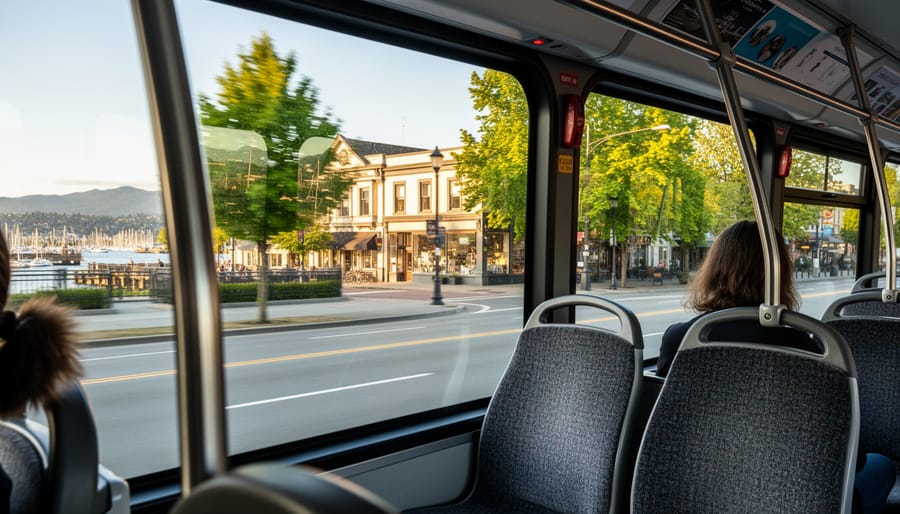
During my visits to Victoria, I’ve discovered that certain routes become your best friends depending on where you want to explore. The downtown core is incredibly well-served, with multiple routes converging along Douglas Street and Government Street, making it easy to hop between Inner Harbour attractions, shopping districts, and restaurants without consulting your phone every five minutes.
If you’re heading to the Butchart Gardens area in Brentwood Bay, you’ll need to plan for a slightly longer journey since it’s outside the downtown core. The trip planner will show you the current route options and any necessary transfers. I recommend checking the schedule in advance for this trip, as service frequency varies throughout the day.
For ferry connections to Swartz Bay, transit service runs regularly from downtown, though travel time is about an hour. Build in extra time if you’re catching a ferry, especially during summer when traffic can slow things down. The terminal stop is well-marked, and drivers are familiar with helping visitors with luggage.
Beach lovers should explore routes heading to Willows Beach, Cadboro Bay, and Gonzales Bay. These coastal routes offer stunning water views that make the journey itself part of the experience. I’ve found these trips particularly worthwhile on sunny afternoons when you can watch the city transition from urban core to residential waterfront neighborhoods.
For those exploring broader Western Canada attractions Victoria’s transit system connects many regional points of interest. My personal favorite for scenery is any route heading through Fairfield and Oak Bay, where heritage homes and ocean glimpses create a postcard-worthy commute. The specific route numbers serving these areas are easy to find using the trip planning tools we discussed earlier, ensuring you always have current information regardless of seasonal schedule adjustments.
How to Know Your Transit Trip Was Successful
You’ll know you’ve nailed your Victoria transit experience when you step off the bus exactly where you intended to go. Success isn’t just about arrival, though. It’s that moment when you realize you paid the right fare without confusion, navigated the route without anxiety, and actually enjoyed the journey. If you checked the route beforehand, had your $3 ready, and confidently pulled the stop signal at the right time, you’ve mastered the basics.
The real measure of success? Feeling ready to do it again tomorrow. When you can picture yourself hopping on that same bus line or trying a different route without checking these transit travel tips again, you’ve crossed from nervous visitor to confident explorer. Maybe you even chatted with a local during the ride or discovered a shortcut to your hotel.
Each successful trip builds your comfort level. Soon you’ll be planning full days around transit connections, venturing to neighborhoods you’d never have driven to, and appreciating how much money you’re saving compared to taxis or rental cars. That confidence opens up all of Victoria for authentic exploration.
Common Questions About Victoria Transit
I’ve fielded plenty of questions from friends visiting Victoria for the first time, and they all tend to worry about the same things before their first bus ride. Here are the answers to help you feel ready.
Can I use a credit card on Victoria buses?
Payment options on board are currently evolving, so it’s safest to have exact cash fare ready, $3 for a single adult ride. Check the BC Transit website or app for the latest contactless payment availability before your trip.
Do children ride free on Victoria transit?
Children ages 12 and under ride free when accompanied by a fare-paying adult. Youth ages 13 to 18 pay $3 for a single ride or $6 for a DayPASS.
What are the operating hours for Victoria buses?
Most routes run from early morning until late evening, typically starting around 6 AM and ending between 10 PM and midnight depending on the route. Weekend and holiday schedules vary, so check your specific route in the BC Transit trip planner.
Can I bring luggage or bikes on the bus?
You can bring luggage that fits in your lap or under your seat without blocking the aisle. All buses have front-mounted bike racks that hold two bikes on a first-come basis, they’re free to use and surprisingly easy to load once you’ve done it once.
If you get lost or miss your stop, don’t panic. Pull the stop request cord at the next stop, exit through the rear doors, and cross the street to catch the same route number going the opposite direction. Victoria drivers are genuinely helpful, I’ve watched them give detailed directions countless times.
Transfers work simply: when you pay your fare, ask for a transfer if you’re switching routes. You’ll receive a paper slip valid for 90 minutes that lets you board another bus without paying again. Keep it handy because you’ll need to show it to the next driver. This system makes exploring different neighborhoods incredibly affordable, especially when you’re hopping between downtown and attractions like Fisherman’s Wharf or Beacon Hill Park.
You’ve now got everything you need to confidently navigate Victoria’s public transit system. For just $3 per ride, or $6 for unlimited daily travel, you can explore this beautiful capital city affordably while leaving the rental car hassles behind. There’s something genuinely special about experiencing Victoria the way locals do, watching the neighborhoods unfold from a bus window as you head from downtown to the ocean or up into the residential hills.
My favorite transit memory? Riding the bus to Beacon Hill Park on a sunny morning, chatting with a retired teacher who shared her favorite hidden picnic spots. That’s the kind of connection you make when you slow down and travel sustainably through a city.
Victoria’s transit system isn’t just practical, it’s an invitation to explore with curiosity rather than stress. As you continue discovering Canada, you’ll find that mastering local transit opens doors to authentic experiences everywhere you go. Check out our other transit guides across Canadian cities, and enjoy every journey through this remarkable country. Safe travels!