Big Bend National Park is open right now, but confusing news about road closures has left many travelers wondering if the trip is still worth it.
Here’s what’s actually happening: a temporary closure order took effect August 10, 2026, restricting all vehicle traffic on Old Ore Road and Black Gap Road due to unsafe conditions from flash flooding. These are remote backcountry routes most visitors never use anyway. The park’s main attractions, including the Chisos Basin, popular hiking trails, and primary scenic drives, remain fully accessible.
If you’re planning a visit from Canada, this is welcome news. The closure doesn’t affect your ability to explore the park’s iconic landscapes, camp under brilliant desert skies, or hike to the South Rim. You’ll still need to make the long journey through Texas, but the core Big Bend experience is intact.
The real question is whether partial road closures change the value proposition for Canadian travelers making a 20-plus hour drive. I’ve made this trip myself, and I can tell you the answer depends on what you’re hoping to see. The park’s most celebrated features are untouched by the current restrictions. You can still drive the Ross Maxwell Scenic Drive to Santa Elena Canyon, explore the Hot Springs Historic District, and access trailheads throughout the Chisos Mountains.
Before you finalize plans, brush up on general Canadian travel tips for crossing into the United States. Entry is straightforward: all vehicles pay an entrance fee by credit or debit card only (no cash accepted), and there’s no reservation system or daily visitor cap to worry about.
What’s Actually Closed at Big Bend (And What’s Still Open)
When I first saw the headline about Big Bend closures, I’ll admit my heart sank a bit. I’d experienced something similar a few years back when news about Yosemite closures made it sound like the entire park was off-limits, only to discover the actual restrictions were limited to one valley area. That taught me to dig deeper before canceling travel plans.
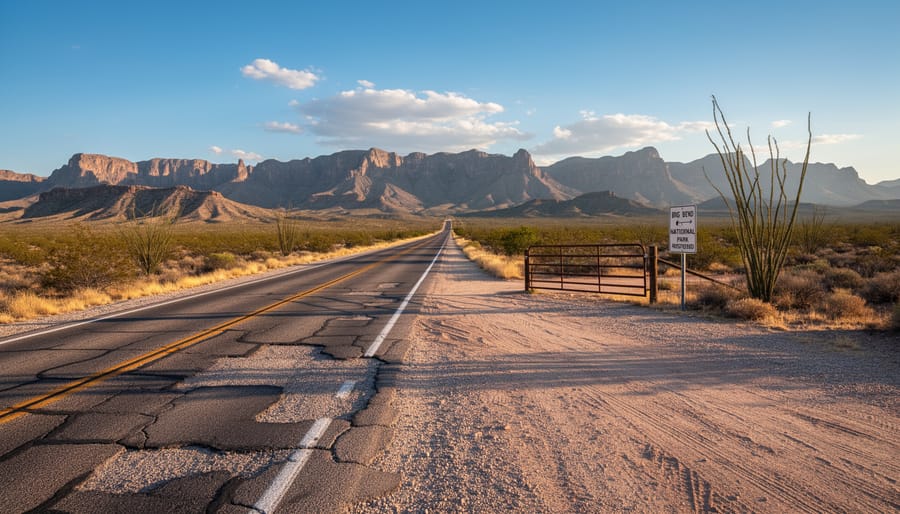
Here’s what’s actually happening at Big Bend right now. The National Park Service issued a temporary closure order on August 10, 2026, but it applies only to two specific backcountry roads: Old Ore Road and Black Gap Road. Both routes sustained damage from flash flooding and remain unsafe for vehicle traffic until further notice. That’s it. Those two roads.
Everything else you’d want to see is completely accessible. The scenic drive to Chisos Basin? Open. The stunning vistas along Ross Maxwell Scenic Drive leading to Santa Elena Canyon? Open. All visitor centers where you can grab maps and chat with rangers? Open. Popular hiking trails like Lost Mine Trail and Window Trail? Open. Developed campgrounds? Open and operating normally.
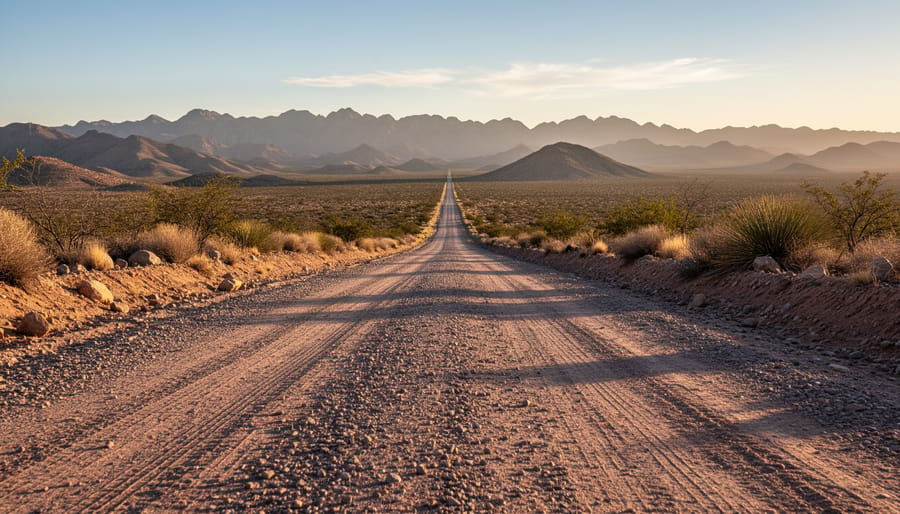
Old Ore Road and Black Gap Road are primitive backcountry routes that most visitors, especially those making their first Big Bend trip from Canada, wouldn’t tackle anyway. They’re rugged, remote tracks requiring high-clearance vehicles and serious off-road experience. Think dusty, rocky paths through the absolute middle of nowhere, not paved scenic drives.
I remember feeling frustrated during that Yosemite situation because the headlines made me question whether my 20-hour drive would be wasted. The reality was that 95% of what I wanted to experience remained accessible. Big Bend’s current situation is similar. The closure affects a tiny fraction of the park’s road network, leaving the iconic landscapes, major hiking opportunities, and visitor infrastructure completely untouched. You’re not losing the Big Bend experience; you’re just missing two adventurous backcountry detours that weren’t on most itineraries anyway.
How the Temporary Road Closures Affect Your Trip
Here’s the truth: unless you were specifically planning a rugged, high-clearance 4×4 adventure into Big Bend’s most remote backcountry, the current road closures probably won’t touch your itinerary at all.
Old Ore Road and Black Gap Road are primitive backcountry routes that even experienced off-roaders tackle cautiously. They’re the kind of rough, unpaved tracks where you need serious ground clearance, multiple spare tires, and the skills to handle washboard surfaces and sudden weather changes. Most rental car agreements explicitly forbid driving these roads. If your trip plan didn’t include “hire a rugged 4×4 and spend two days bouncing through the Chihuahuan Desert wilderness,” you haven’t lost anything essential to your Big Bend experience.
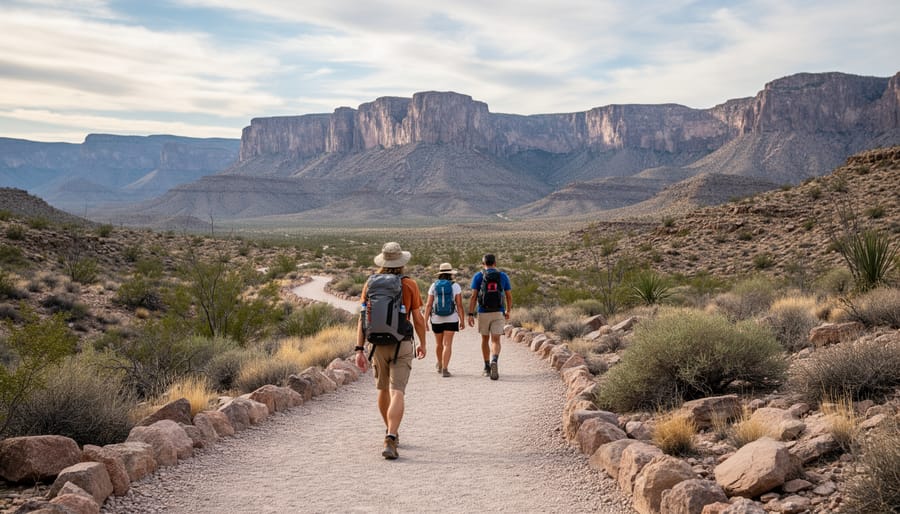
Everything that draws first-time visitors remains completely open. Santa Elena Canyon’s towering limestone walls? Still there, still stunning, and the road to reach it is fully accessible. The Hot Springs along the Rio Grande, where you can soak in natural thermal pools with Mexico visible across the river? Open. The Lost Mine Trail, one of the park’s most beloved hikes with panoramic Chisos Mountain views? Ready for you. The scenic Ross Maxwell Drive and the entire Chisos Basin loop, where most visitors spend the bulk of their time? All operating normally.
I learned this lesson during a past trip to Glacier National Park when Going-to-the-Sun Road was partially closed. I panicked initially, only to discover the closure affected a segment I wouldn’t have driven anyway, while all the trails and viewpoints I actually wanted were perfectly accessible.
The insider reality: Big Bend is enormous, and these closed roads serve a tiny fraction of visitors seeking extreme solitude and challenge. Your classic Big Bend road trip stays intact.
Planning Your Visit: Entry Requirements and Current Logistics
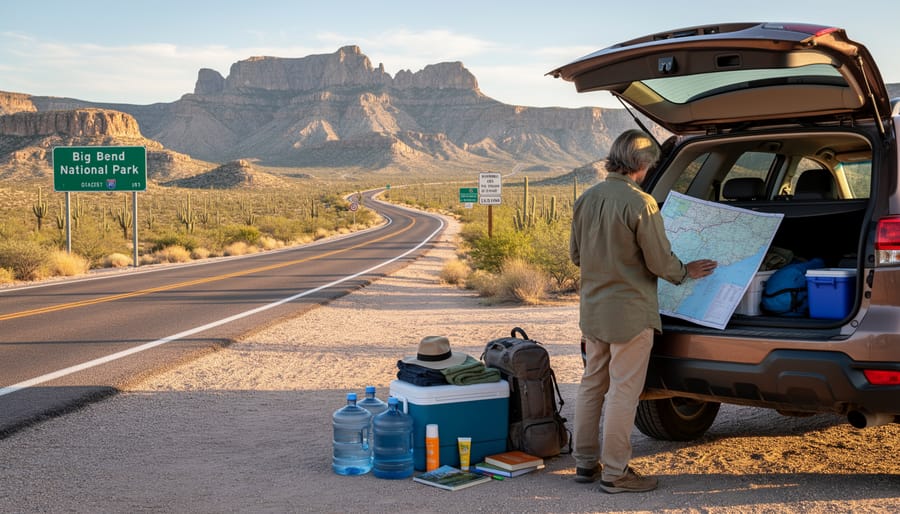
Good news for spontaneous travelers: Big Bend doesn’t require advance reservations or timed entry tickets. You can show up whenever your road trip schedule allows, which makes planning significantly easier when you’re driving from Canada and dealing with unpredictable travel days.
That said, you’ll need to budget for the entrance fee and bring the right payment method. The park stopped accepting cash, so make sure you’ve got a credit or debit card ready when you reach the entrance station.
| Vehicle Type | Entrance Fee | Valid For |
|---|---|---|
| Private Vehicle | $30 USD | 7 days |
| Motorcycle | $25 USD | 7 days |
| Per Person (walking/cycling) | $15 USD | 7 days |
Here’s where you can save some money: if you’re planning a bigger Southwest road trip hitting multiple national parks, the America the Beautiful Annual Pass costs $80 and covers entrance fees at all U.S. national parks for a full year. We drove from Alberta to Big Bend, then continued to Carlsbad Caverns and Guadalupe Mountains on the same trip. That pass paid for itself by park number three.
The lack of a visitor cap means you won’t get turned away at the gate, but it also means popular areas can fill up during peak times. There’s no daily limit on how many people enter, so arrive early if you want first pick of parking spots at trailheads.
Check out these money-saving tips for more ways to stretch your travel budget on cross-border road trips. The long drive from Canada makes every dollar count, and small savings add up over a multi-week journey.
Making the Long Drive Worth It: A Canadian’s Perspective
I’ve made the drive from Canada to Big Bend twice now, and I’ll be straight with you: it’s a commitment. From Vancouver, you’re looking at roughly 36 hours of driving spread across three days. From Toronto or Montreal, it’s slightly less brutal but still a solid 30-plus hours. This isn’t a weekend getaway, and the remoteness is real. The nearest major airport is in El Paso, still three hours away, and you’ll spend the last few hours of your approach wondering if you’ve driven off the edge of civilization.
So is it worth it with the current road closures? Honestly, yes. Here’s why: those two closed roads were never part of the classic Big Bend experience most first-time visitors have anyway. The bucket-list moments, Santa Elena Canyon’s towering walls, the sunrise view from Lost Mine Trail, soaking in Hot Springs beside the Rio Grande, the jaw-dropping vistas along Ross Maxwell Scenic Drive, are all completely accessible right now. You’re not missing the heart of the park.
That said, I’d only make this journey if you’re building a broader Southwest road trip around it. Combine Big Bend with Carlsbad Caverns in New Mexico (about four hours north), or swing through Austin and San Antonio on your way to or from the park. Guadalupe Mountains National Park is also nearby and dramatically undervisited. Think of Big Bend as the spectacular anchor of a 10-14 day adventure rather than the sole destination, much like you might approach Canadian travel destinations when planning a cross-country trip.
The payoff for that long drive is experiencing one of America’s least crowded national parks with genuinely otherworldly desert landscapes. Just make sure you’ve got the time to do it justice.
What to Expect When Conditions Change
When you’re planning a trip from Canada with days of driving ahead, you need reliable information about what’s actually open when you arrive. I learned this the hard way during a 2024 road trip to Glacier National Park when a sudden wildfire closure meant rerouting 800 kilometers after we’d already crossed the border. For Big Bend, start by checking the National Park Service’s official alerts page before you leave home, then check the weather and park conditions again the day before you arrive in Texas. The “until further notice” timeline for Old Ore Road and Black Gap Road depends on engineering assessments and repair crews, not a fixed schedule.
Flash flooding in West Texas follows seasonal patterns, typically more common during late summer monsoon season and spring storms, but the repair timeline for damaged roads involves inspections, budget approvals, and contractor availability that extend well beyond the weather itself. Rather than trying to predict when these specific roads will reopen, focus on the reality that Big Bend’s main attractions remain accessible right now. Sign up for park alerts through the NPS website if you want email notifications about changes, and follow Big Bend’s official social media accounts for real-time updates during your journey south. The beauty of visiting a park without reservation requirements is that you can adapt your plans based on current conditions without losing deposits or bookings.
Don’t let the closure headlines scare you off. Big Bend National Park is absolutely open and ready for your visit right now, despite what confusing news reports might suggest. Yes, two backcountry roads are temporarily closed due to flash flooding damage, but that’s a tiny fraction of what makes this place extraordinary. The Chisos Mountains, Santa Elena Canyon, Hot Springs, and all the main trails and campgrounds are fully accessible and just as stunning as they’ve always been.
I’ll be honest: the drive from Canada is no joke. You’re looking at several days on the road to reach one of the most remote national parks in the United States. But here’s the thing, Big Bend rewards that effort like few other places can. The park sees a fraction of the crowds that pack Banff or Jasper, which means you’ll have those incredible desert vistas and starry skies largely to yourselves. That alone makes it special.
If you’ve been dreaming about experiencing the Chihuahuan Desert, hiking through dramatic canyons, or seeing landscapes completely different from what we have back home in Canada, now is actually a great time to go. The core Big Bend experience remains intact, and you won’t be fighting crowds for parking or campsites. Pack your sense of adventure, build in some flexibility for the long haul, and get ready to discover why this remote Texas treasure belongs on every Canadian road tripper’s bucket list.