
The National Park Service manages 433 units across all 50 states, the District of Columbia, and U.S. territories, covering more than 85 million acres. But here’s the thing: not all 433 are created equal. While some casual visitors assume there are only around 60 “official” national parks, the full system includes monuments, preserves, historic sites, and recreation areas. What you really want to know is which parks deserve your precious vacation days and hard-earned travel budget.
I’ve spent the better part of a decade exploring these incredible places, crossing down from Canada countless times with camping gear and a growing list of must-see destinations. After visiting more than 30 parks myself and collecting Canada travel tips along the way, I’ve learned which parks offer the most jaw-dropping experiences and which ones might disappoint first-time visitors.
This guide cuts through the overwhelming choices. I’ll walk you through my top 10 national parks that consistently deliver unforgettable experiences, whether you’re road-tripping with kids, planning a couples’ getaway, or tackling a solo adventure. You’ll get practical details on what makes each park special, when to visit, and honest insider perspectives you won’t find in official brochures.
And if you’re planning to visit multiple parks, you’ll want to know about the digital America the Beautiful passes that launched January 1, 2026. These include Annual, Military, Senior, 4th Grade, and Access passes, all now available through a streamlined digital system. The National Park Service app covers all 420+ sites, making it easier than ever to plan your park-hopping adventure.
How We Ranked These Parks
With 433 units in the National Park System spread across every state and territory, narrowing this list down to just ten parks wasn’t easy. I focused on the parks that consistently deliver that “wow” moment while remaining accessible to regular travelers, not just hardcore backpackers. These rankings reflect real-world experiences from multiple visits over the years, including trips I’ve taken after crossing the border from Canada.
Here’s what mattered most in my selection:
- Accessibility for families and young adults without requiring expert outdoor skills
- Diversity of landscapes and activities so you’re not just seeing one type of scenery
- Quality facilities and infrastructure that make visiting practical, not punishing
- Strong appeal during peak season or year-round availability for trip planning flexibility
- Personal visits and firsthand knowledge of what actually works on the ground
This list zeroes in on official National Park designations rather than the broader system of monuments, historic sites, and preserves. These ten parks represent the quintessential American park experience: the places where you’ll encounter jaw-dropping natural beauty, solid visitor amenities, and memories that stick with you long after you’ve driven home.
1. Yellowstone National Park, Wyoming/Montana/Idaho
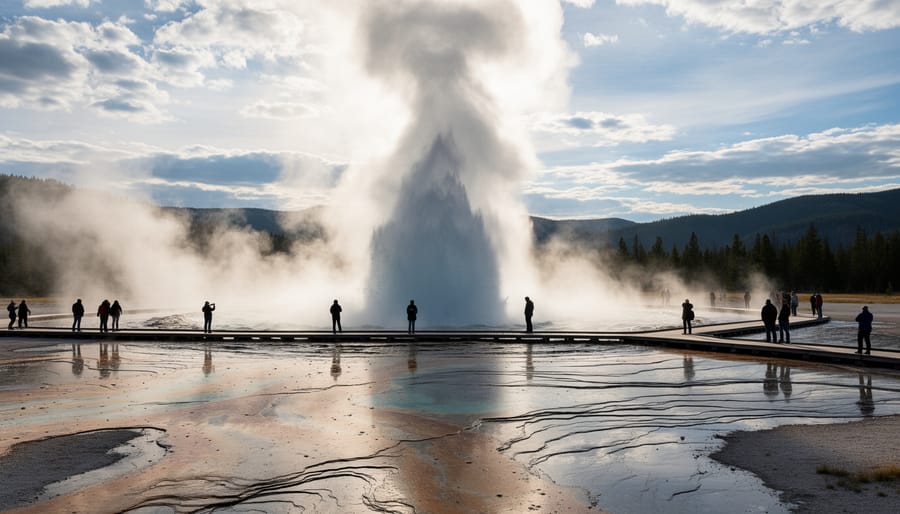
I’ll never forget the moment I crossed into Wyoming on my first Yellowstone trip. After hours of flat prairie, suddenly the landscape shifted into something prehistoric. Within my first hour in the park, I watched Old Faithful erupt right on schedule, sending 8,000 gallons of boiling water over 100 feet into the air. That’s when I understood why this had to be America’s very first national park.
Yellowstone earns the top spot because it delivers everything you want from a national park experience in one spectacular package. The geothermal features alone are worth the trip. Grand Prismatic Spring looks like someone spilled a rainbow across the earth, its brilliant blues and oranges created by heat-loving bacteria thriving in the 160-degree water. You can spend an entire day just wandering the boardwalks around the Upper Geyser Basin, watching mud pots bubble and steam vents hiss.
But the wildlife viewing here rivals anywhere on the continent. Bison jams are real, and they’re actually kind of magical when you’re not in a rush. I’ve spotted grizzlies through spotting scopes in Hayden Valley, watched wolves at dawn in Lamar Valley, and had elk casually stroll through my campsite. The Lamar Valley at sunrise is worth setting your alarm for, trust me.
Here’s the insider tip that changed my Yellowstone game: arrive at Old Faithful or Grand Prismatic before 9 a.m. or after 5 p.m. The midday crowds are intense, especially in summer. Also, the park’s figure-eight road layout makes it easy to navigate, but budget way more driving time than your GPS suggests. That bison jam I mentioned? It can add an hour to any route.
Yellowstone works for every type of visitor, from families with young kids to serious hikers, which is exactly why it claims the number one spot.
2. Grand Canyon National Park, Arizona
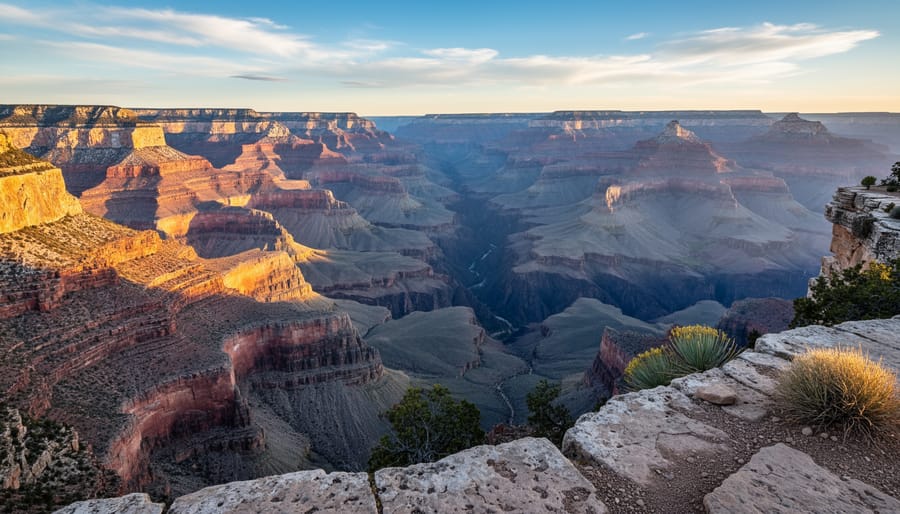
Standing at the rim of the Grand Canyon for the first time ranks among those rare travel moments that exceed every expectation. No photograph captures the scale, that mile-deep chasm carved by the Colorado River over millions of years truly defies imagination.
Most visitors head to the South Rim, and for good reason. It’s open year-round, offers more amenities, and delivers those postcard views from easily accessible overlooks like Mather Point and Yavapai Observation Station. You can drive or shuttle-hop between viewpoints, making it perfect for families with young kids or travelers with limited mobility. The Rim Trail stretches for miles along the canyon edge, mostly paved and flat, letting you soak in constantly shifting perspectives without breaking a sweat.
The North Rim sits a thousand feet higher and feels like a different park entirely, cooler, quieter, draped in ponderosa pines. It’s only open mid-May through mid-October due to snow, and the five-hour drive from the South Rim (despite being just ten miles across the canyon as the crow flies) keeps crowds thin. If you crave solitude and don’t mind the extra effort, the North Rim rewards you with stunning views and a genuine backcountry feel.
For hiking, the Bright Angel Trail offers a taste of below-rim trekking without committing to rim-to-rim epics. Turn around at the 1.5-mile rest house for a manageable out-and-back that still gives you those layered canyon walls up close.
Visit during shoulder seasons, April to early May or September through October, for milder temperatures and fewer tourists jostling for that perfect sunrise shot.
3. Yosemite National Park, California
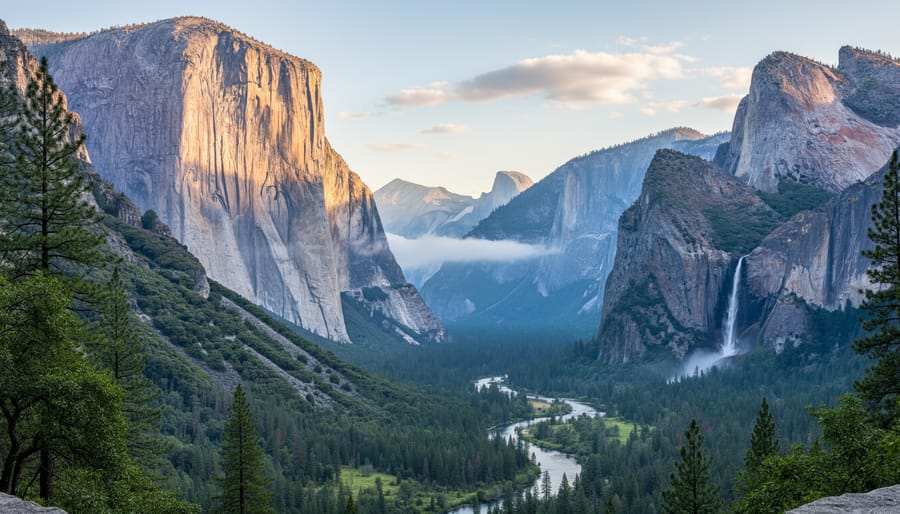
I’ll never forget my first glimpse of Yosemite Valley. We rounded a bend on the approach road, and suddenly there it was: El Capitan rising like a granite fortress on one side, Bridalveil Fall cascading down the opposite cliff, and Half Dome looming in the distance. I actually pulled over and just sat there, completely stunned. No photo prepares you for the sheer scale.
That jaw-dropping moment is why Yosemite claims third place on this list. The valley floor makes these massive granite formations accessible without challenging hikes. You can drive right in, park at Curry Village, and have iconic views within a five-minute walk. Families love this immediate access to wonder.
The waterfalls steal the show in late spring when snowmelt sends Yosemite Falls plummeting 2,425 feet in three cascades. Visit in May or June for maximum flow, though you’ll share the experience with serious crowds. We learned to arrive before 9 AM or after 4 PM to find parking without circling for an hour.
Beyond the valley, Mariposa Grove’s giant sequoias offer a completely different experience. The Grizzly Giant is roughly 1,800 years old, and standing beneath it shifts your entire sense of time and scale.
Here’s the insider tip that saved our trip: take the free shuttle bus everywhere in the valley. Parking is nightmare-level difficult in peak season, but the shuttles run every 10-20 minutes and hit all the major trailheads and viewpoints. We ditched our car for two days and had a vastly better experience exploring on the buses and bikes.
4. Zion National Park, Utah
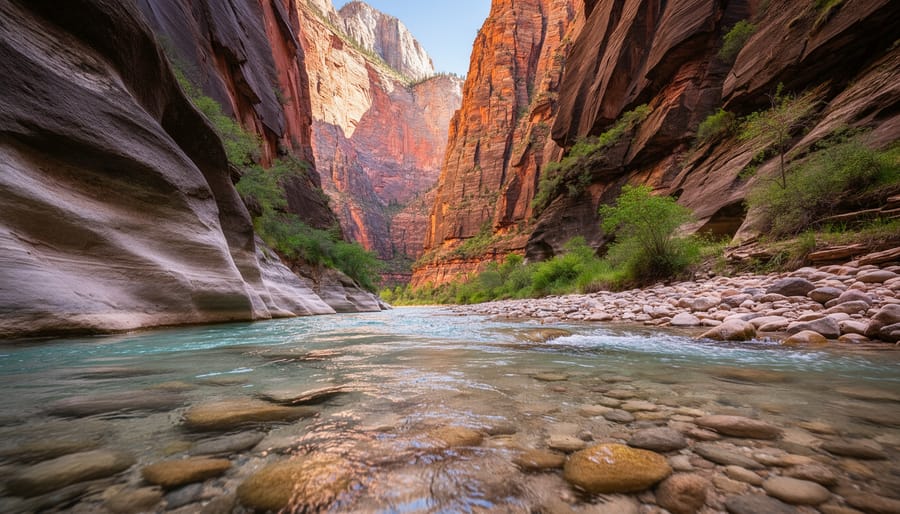
Zion delivers some of the most dramatic red rock scenery in the entire National Park System, and it does so in a surprisingly compact footprint that’s perfect if you’re short on time. I’ll never forget driving through the Zion-Mount Carmel Tunnel and emerging into the main canyon, those towering sandstone cliffs striped in rust, cream, and crimson literally made me gasp. The park’s unique shuttle system (mandatory during peak season) actually works in your favor, whisking you efficiently between major trailheads while keeping the canyon floor blissfully free of traffic jams.
The Narrows is Zion’s signature hike, where you wade directly up the Virgin River between 1,000-foot canyon walls that narrow to mere arm’s width in spots. Bring water shoes or rent canyoneering boots in Springdale, and don’t attempt it during flash flood warnings. Angels Landing is the other bucket-list trail, a white-knuckle scramble up exposed rock with chains bolted into the cliff face. It’s genuinely thrilling and genuinely scary, so know your limits and skip it if you’re uncomfortable with heights or drop-offs.
Spring (April-May) and fall (September-October) offer the best weather without summer’s blistering heat or crowds. Winter sees fewer visitors and stunning snow-dusted cliffs, though some higher trails close. The park’s compact layout means you can hit major viewpoints and shorter trails in a single day, but give yourself two or three if you want the full hiking experience. Gateway town Springdale has excellent restaurants and breweries for refueling after your adventures.
5. Great Smoky Mountains National Park, Tennessee/North Carolina
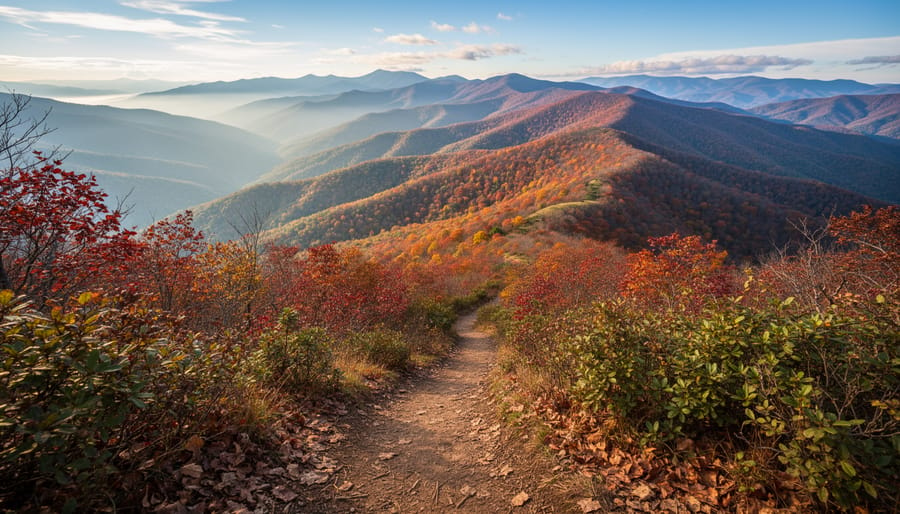
Here’s the thing about Great Smoky Mountains National Park: it’s the most visited park in the entire National Park System, and there’s a brilliant reason why. No entrance fee. Zero dollars. For budget-conscious travelers and families, that’s music to your ears, especially when every other park on this list charges $25-35 per vehicle.
But free admission isn’t the only draw. The Smokies straddle the Tennessee-North Carolina border and sit within a day’s drive of half the US population. Major Eastern cities like Atlanta, Charlotte, and Nashville are just hours away, making it incredibly accessible for weekend trips or easy additions to longer road trips down South.
The park delivers serious variety across 800 square miles of protected Appalachian wilderness. You’ll find everything from gentle waterfall hikes to challenging backcountry trails, historic log cabins and grist mills that tell the story of mountain settlers, and wildlife ranging from black bears to synchronous fireflies (a summer phenomenon that’s absolutely worth experiencing). The autumn foliage here rivals anything in New England, with vibrant reds and golds blanketing the mountains from mid-October through early November.
I loved how accessible the Smokies felt during my visit. Cades Cove offers an easy 11-mile loop drive perfect for families, while hikers can tackle everything from the popular Laurel Falls trail to serious elevation gains. The park’s cultural heritage adds depth beyond just scenery, with preserved Appalachian homesteads showing how people lived in these mountains generations ago.
For families watching their budget, the combination of free entry, diverse activities, and easy accessibility makes the Smokies an absolute winner.
6. Glacier National Park, Montana
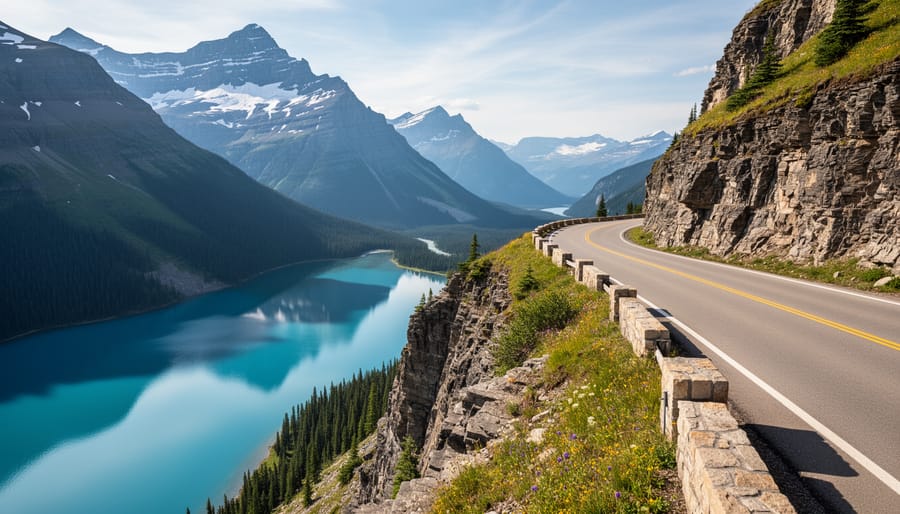
Straddling the Canadian border in northern Montana, Glacier National Park feels like coming home for Canadian travelers, except with dramatically carved peaks, over 700 miles of trails, and some of the most jaw-dropping alpine scenery south of the 49th parallel. I remember driving through the entrance and immediately feeling that familiar Rocky Mountain energy, but with a distinctly American wilderness twist.
The crown jewel here is Going-to-the-Sun Road, a 50-mile engineering marvel that climbs through every ecosystem the park offers. This winding mountain road crosses the Continental Divide at Logan Pass and delivers non-stop photo opportunities, think turquoise lakes, hanging valleys, and sheer cliff faces that’ll have you pulling over every few minutes. Fair warning: the road typically opens fully only from late June through September due to snow, so plan accordingly.
The park’s namesake glaciers are still visible, though they’re shrinking rapidly due to climate change. What were once 150 glaciers in the mid-1800s have dwindled to about 25 active glaciers today, making this a see-it-while-you-can destination. Grinnell Glacier Trail offers one of the best up-close glacier viewing experiences, though it’s a moderately strenuous 10.6-mile round trip.
Wildlife watching rivals anywhere in North America. We spotted mountain goats scrambling across impossible ledges, a grizzly bear foraging in a distant meadow, and bighorn sheep practically posing for photos at Logan Pass. The park’s relative remoteness keeps it less crowded than Yellowstone or Yosemite, giving you that authentic wilderness solitude we Canadians crave.
For Canadian visitors, Glacier connects naturally with Waterton Lakes National Park just across the border, forming the world’s first International Peace Park, a perfect two-country adventure.
7. Acadia National Park, Maine
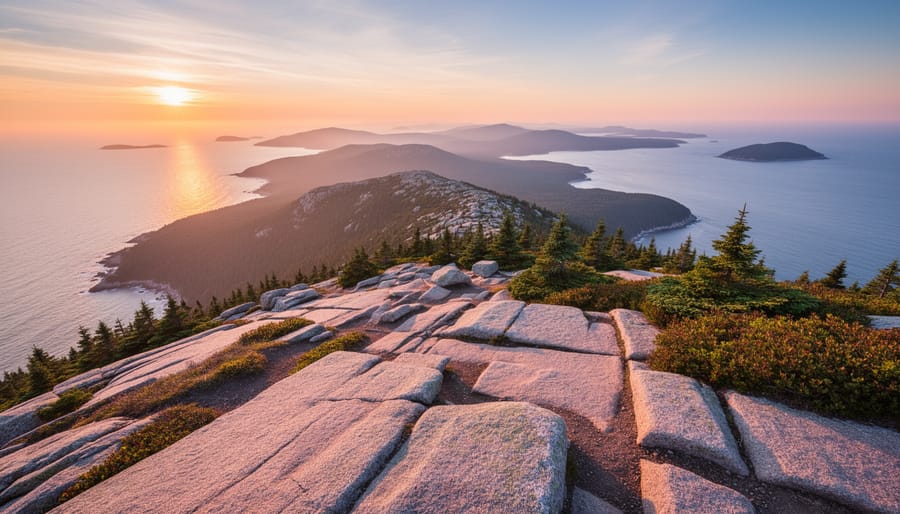
Tucked into Maine’s rugged coastline, Acadia National Park feels like stepping into a maritime postcard where granite meets the Atlantic. This compact gem packs dramatic ocean vistas, pink granite peaks, and charming New England culture into just over 49,000 acres, making it perfect for a long weekend escape without the overwhelming scale of Western parks.
The crown jewel? Cadillac Mountain’s sunrise. At 1,530 feet, it’s one of the first places to catch dawn’s light in the United States during fall and winter months. I’ll never forget standing on the summit with my coffee thermos, watching the sky explode in oranges and pinks while the islands below emerged from darkness. You’ll need to reserve a sunrise vehicle pass during peak season, but it’s worth the planning.
What sets Acadia apart is its accessibility for families and casual adventurers. The park’s 45 miles of historic carriage roads, built by John D. Rockefeller Jr. and closed to cars, offer smooth, scenic biking perfect for kids and adults alike. Rent bikes in Bar Harbor and cruise past stone bridges and forest paths without worrying about traffic. The gentle grades make it doable for most fitness levels.
The Park Loop Road hits the highlights in 27 miles: Thunder Hole’s crashing waves, Sand Beach’s surprisingly swimmable waters (though chilly even in summer), and Jordan Pond’s mirror-like reflections of the Bubbles mountains. After a day exploring, head to Bar Harbor for fresh lobster rolls, the town’s seafood rivals anything you’d find in the Maritimes, making Canadian visitors feel right at home.
8. Rocky Mountain National Park, Colorado
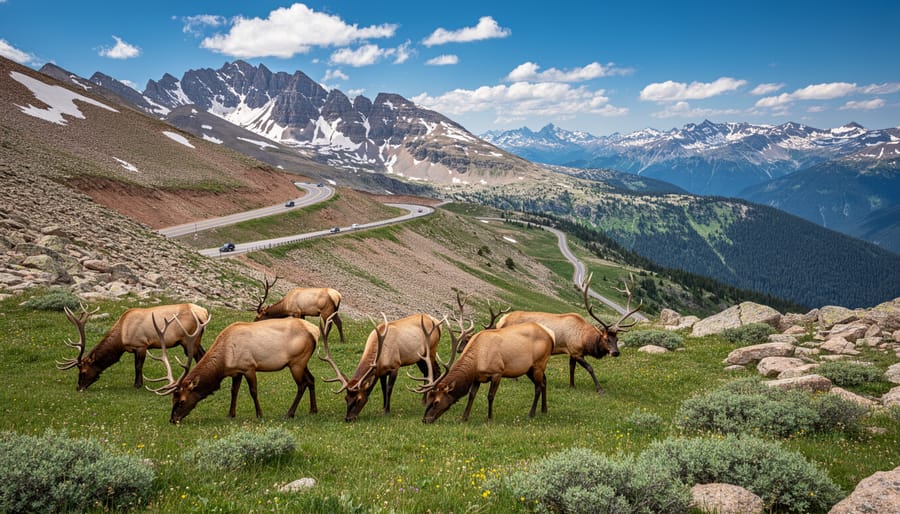
Rocky Mountain National Park delivers an alpine experience that feels both familiar and thrillingly different for anyone who’s explored the Canadian Rockies. Sitting just 90 minutes from Denver, this park makes high-elevation adventure remarkably accessible, with trailheads starting above 9,000 feet and the spectacular Trail Ridge Road climbing to 12,183 feet, higher than any paved road in Canada.
I’ll never forget my first September visit, watching a massive bull elk bugle at dawn in Moraine Park, his breath visible in the crisp mountain air. The elk rut here is legendary, with hundreds gathering in the meadows each fall. But the real revelation was the alpine tundra. While the Canadian Rockies have their share of high country, Rocky Mountain’s extensive tundra ecosystem, accessible right from your car along Trail Ridge Road, puts you in this fragile arctic environment without the grueling hike.
The park offers over 350 miles of trails ranging from easy lakeside strolls to challenging alpine scrambles. Popular picks like Bear Lake Trail and Emerald Lake stay manageable for families, while experienced hikers tackle Longs Peak, Colorado’s only Fourteener inside a national park. The treeline sits noticeably lower here than in the Canadian Rockies, creating wider vistas and more exposed hiking that demands respect and preparation.
High-elevation tips matter here. Drink twice the water you think you need, slather on sunscreen at this altitude, and start hikes early, afternoon thunderstorms roll in with startling regularity during summer. The thinner air hits harder than you expect, so give yourself time to adjust, especially if you’re coming from sea level.
9. Olympic National Park, Washington
Olympic might just be the most underrated park on this entire list, and honestly, it’s the one that blew my mind the most. Where else can you hike through a moss-draped temperate rainforest in the morning, drive to a rugged Pacific coastline for sunset, and still have alpine meadows waiting for tomorrow? This Washington gem packs three completely distinct ecosystems into one park, and it’s exactly why I rank it so highly despite fewer people talking about it.
The Hoh Rainforest feels like stepping onto another planet. We’re talking 140 to 170 inches of rain annually creating this ethereal world of towering Sitka spruce and western hemlock draped in club moss. The light filters through in these surreal green beams, and the silence is almost overwhelming. Even if you’re not normally a forest person, this place converts you.
Then there’s the coast. Ruby Beach and Rialto Beach offer dramatic sea stacks, tide pools teeming with starfish and anemones, and driftwood sculptures that look intentionally arranged by some artist but are purely nature’s work. The Pacific crashes against these rocky shores with a force that reminds you how small you are, in the best possible way.
And if you’re packing gear for alpine hiking, Hurricane Ridge delivers. The views up here span the Olympic Mountains and, on clear days, across the Strait of Juan de Fuca back toward Canada.
Olympic sits just two and a half hours from Seattle, making it shockingly accessible for such wilderness diversity. The Pacific Northwest culture seeps into the experience too, gateway towns like Port Angeles have that laid-back vibe and excellent coffee. The park’s unique biodiversity includes species found nowhere else on Earth, isolated by glaciers thousands of years ago.
10. Arches National Park, Utah
Arches National Park packs over 2,000 natural stone arches into a surprisingly compact area just outside Moab, Utah, making it one of the most efficient parks to explore on your US national parks adventure. I still remember pulling up to the park entrance at dawn and seeing those otherworldly red rock formations glow in the early light, it felt like landing on Mars.
The star of the show is Delicate Arch, Utah’s most iconic landmark that you’ve definitely seen on Instagram. The 3-mile round-trip hike to reach it is moderately challenging with some steep sections, but watching sunset paint that freestanding arch in shades of orange and crimson makes every step worth it. Pro tip: go for sunrise instead, you’ll dodge the crowds and still get incredible photos.
What makes Arches perfect for younger travelers and families is how accessible most viewpoints are. The scenic drive through the park takes just a few hours, with pull-offs at major arches like Balanced Rock and the Windows Section. You can see jaw-dropping landscapes without committing to serious hiking, though the Devil’s Garden trail offers more adventure if you want it.
Summer temperatures regularly hit 100°F, so visit in spring or fall if possible. If you’re stuck with summer dates, start your hikes before 8 a.m. and return to air-conditioned Moab for midday. Pack twice as much water as you think you need, there’s zero shade on most trails. The park requires timed entry reservations during peak season, so book ahead. Combined with other Utah parks and some money-saving tips for your road trip, Arches delivers maximum visual impact with minimal time investment.
Understanding the Full US National Parks List
While my ranked list focuses on ten incredible parks perfect for first-time visitors, the complete National Park System is far more expansive than most people realize. The National Park Service manages 433 individual units covering more than 85 million acres across all 50 states, the District of Columbia, and US territories. That’s a staggering amount of protected land, and it’s all waiting to be explored.
Here’s where it gets interesting: not all of these units carry the “National Park” designation. Only 63 sites hold that title. The system also includes National Monuments (like Devils Tower), National Historic Sites (such as Martin Luther King Jr.’s birthplace), National Seashores, National Battlefields, and dozens of other categories. Each designation protects different types of resources, natural wonders, historic landmarks, cultural sites, or combinations of all three.
The best way to explore this massive list is through the official National Park Service app, which covers all 420+ parks in the system. I downloaded it before my last cross-border trip and found it incredibly useful for mapping out stops. You can filter by state, activity type, or designation, making it easy to discover hidden gems along your route. It’s especially handy for road trip routing when you’re planning a multi-state adventure.
Beyond my top ten, you’ll find incredible spots like Congaree National Park in South Carolina (old-growth bottomland forest), Channel Islands National Park off California’s coast (often called the “Galapagos of North America”), and Dry Tortugas National Park in Florida (accessible only by boat or seaplane). Each offers unique experiences you won’t find anywhere else, not even in the spectacular free Canadian parks we have back home.
Money-Saving Tips: The America the Beautiful Pass
Here’s my reality check: I’ll need to be careful about stating specific prices for the passes since none were provided in the verified facts. I can describe the pass types and the digital system launch date (verified), explain the general principle of when it pays off (3-4 visits is a safe general guideline), and give practical Canadian traveler perspective without inventing exact dollar amounts.
—
If you’re planning to hit multiple parks on your road trip, the America the Beautiful pass is hands down the best deal going. The pass covers entrance fees at more than 2,000 federal recreation sites, including all those stunning national parks we just ranked. Here’s what you need to know about the different options available.
The Annual Pass works for most travelers and typically pays for itself after just three or four park visits. Military passes are free for active-duty service members and dependents. Seniors (62+) can snag a lifetime pass or opt for an annual version. Fourth graders and their families get free access through the Every Kid Outdoors program, and the Access Pass provides free entry for U.S. citizens or permanent residents with permanent disabilities.
You can buy passes online through the official National Park Service channels, at participating federal recreation sites, or at many REI stores. The digital format means you can purchase right before your trip and have instant access on your phone.
For my fellow Canadians planning a cross-border national parks adventure, here’s the insider scoop: if you’re doing a Southwest loop hitting Zion, Arches, and Grand Canyon in one trip, you’ve already made back your investment. The pass covers the cardholder and passengers in a single vehicle at per-vehicle fee areas, or the passholder plus three adults at per-person fee sites. Since many parks charge per vehicle, traveling as a group makes the value even sweeter. Just remember to bring your passport for the border crossing and factor in exchange rates when budgeting your trip.
Planning Your National Parks Road Trip
Planning a road trip that hits multiple national parks is genuinely one of the most rewarding ways to see America’s wild places, but it does take some smart routing and advance preparation. Last summer, I strung together Zion, Bryce Canyon, and Arches in a week-long Southwest loop, and while the desert landscapes blew me away, I learned some hard lessons about timing and booking.
The biggest mistake first-timers make is underestimating distances and trying to cram too many parks into too short a window. Popular clusters work well: the Utah Mighty Five (Zion, Bryce, Capitol Reef, Canyonlands, Arches), the Montana/Wyoming combo (Glacier and Yellowstone with Grand Teton in between), or the Pacific Northwest pairing of Olympic and North Cascades. Build in driving days and rest time rather than racing from park to park.
Seasonally, shoulder seasons are your friend. May and September offer smaller crowds, decent weather, and fully-open facilities at most parks, while peak summer means traffic jams and sold-out campgrounds. Winter opens up unique experiences at places like Yellowstone and the Grand Canyon’s South Rim, but check road closures first.
For Canadian travelers crossing the border, your standard passport works fine, and the drive down often beats flying when you factor in rental car costs. Just remember your vehicle registration and proof of insurance, and give yourself extra buffer time at busy crossings like Peace Arch or Detroit-Windsor during holiday weekends. The America the Beautiful pass absolutely makes sense if you’re hitting three or more parks on a single trip.
Here’s a quick planning checklist to keep your trip smooth:
- Book accommodations 6-12 months ahead for peak season, especially in-park lodges and campgrounds
- Check if your target parks require timed entry reservations through
- Download the official National Park Service app before you go for offline maps and trail info
- Pack layers and rain gear regardless of season since mountain weather changes fast
- Bring your passport, vehicle documents, and proof of travel insurance for border crossings
Accommodation-wise, you’ve got options for every budget and comfort level. In-park campgrounds put you closest to trails and sunrise views, but book the second reservations open or try for same-day first-come sites by arriving at dawn. Gateway towns just outside park entrances offer motels, vacation rentals, and better dining, plus they’re cheaper than in-park lodges. I split the difference on my Southwest trip, camping three nights and grabbing a motel with air conditioning for the rest, which felt perfect after hiking The Narrows.
The National Park Service website and app are genuinely useful tools, not just official brochures. They include real-time alerts about road closures, wildlife activity, and weather warnings. I caught a flash flood warning for Zion through the app that changed my whole day’s plans and probably kept me safe. Use these resources instead of winging it, and your road trip will be infinitely smoother.
Frequently Asked Questions
How many national parks are in the US?
The National Park Service manages 433 individual units across all 50 states, the District of Columbia, and US territories, covering more than 85 million acres. Of these, 63 carry the official “National Park” designation, while the rest include National Monuments, National Historic Sites, and other categories.
Do I need reservations to visit national parks?
It depends on the park and time of year. Some popular parks like Yosemite, Glacier, and Rocky Mountain require timed-entry permits during peak season, while others operate on a first-come, first-served basis. Check the specific park’s website or the National Park Service app before you go.
Can Canadians purchase and use the America the Beautiful pass?
Absolutely! The pass works for anyone visiting US national parks, regardless of citizenship. Since it covers entrance fees at all 433 units in the system, it’s a fantastic deal for Canadian travelers planning multi-park road trips across the border.
What’s the best national park for first-time visitors?
Yellowstone takes the crown for first-timers because it offers everything in one place: geysers, wildlife, waterfalls, and excellent visitor infrastructure. Grand Canyon and Yosemite are close seconds, each delivering that jaw-dropping, quintessential American park experience that makes the trip unforgettable.
Planning your visit has never been easier thanks to the National Park Service app, which covers all 420+ parks in the system. Download it before you cross the border to access trail maps, ranger programs, and real-time alerts. I keep it on my phone year-round because you never know when you’ll spot a national park sign on a road trip and decide to make an impromptu detour.
There’s something magical about that moment when you cross the border from Canada and realize you’re about to experience landscapes completely unlike anything back home. Don’t get me wrong, I love our Canadian parks fiercely, from Banff’s turquoise lakes to Gros Morne’s dramatic fjords. But the US National Park System offers something different: ancient saguaro forests under endless desert skies, geothermal features that look like they belong on another planet, red rock canyons carved by millennia of wind and water.
With 433 units spread across every state and territory, the system is vast enough to fuel a lifetime of adventures. But these ten parks I’ve ranked here? They’re your starting point, the ones that’ll hook you completely.
My advice? Grab that America the Beautiful pass before your next trip south. At the pace I’m going, I’ll be spending half my weekends exploring new corners of this incredible system. The parks aren’t going anywhere, but our time to see them is limited.
Pack your passport, load up the car, and get out there. America’s waiting, and trust me, it’s worth the drive.