
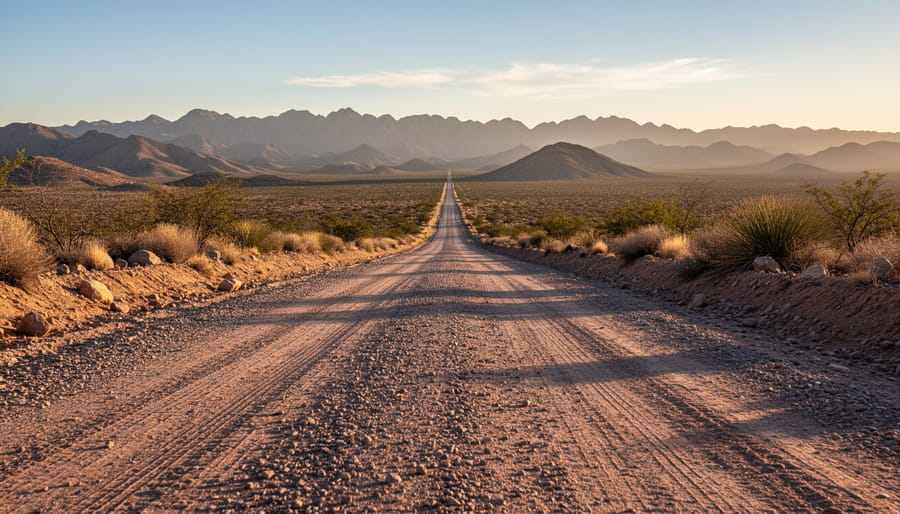
Big Bend National Park doesn’t require a reservation to enter, and there’s no daily visitor cap, so you can plan a trip without competing for a timed slot.
Before you go, check the park’s current road and closure status directly, because conditions in remote desert country can shift, and I can’t confirm what’s open on any given day. That’s especially true of the backcountry routes. Flash flooding is a real factor out here, and unpaved roads are usually the first to be affected.
If you’re coming from Canada, the long drive through Texas is the real commitment. I’ve made that trip myself, and the answer to whether it’s worth it depends on what you want from the park. Big Bend rewards people who come for the big, quiet landscapes: the Chisos Mountains, the desert, the river canyons, and some of the darkest night skies you’ll find anywhere.
Before you finalize plans, brush up on general Canadian travel tips for crossing into the United States. Entry to the park itself is simple. Every vehicle pays an entrance fee, and the park accepts credit or debit cards only, so leave the cash in your wallet. There are no day passes issued, and nobody is turned away because the park hit a daily limit.
Fees depend on the pass you choose:
- Standard Pass: $15.00 to $30.00
- Annual Pass: $55.00
- America the Beautiful Pass, including Senior Passes: free to $250.00, depending on the pass type
If you’re planning more than one national park stop on a big U.S. road trip, the annual and America the Beautiful options are worth a look.
What’s Actually Closed at Big Bend (And What’s Still Open)
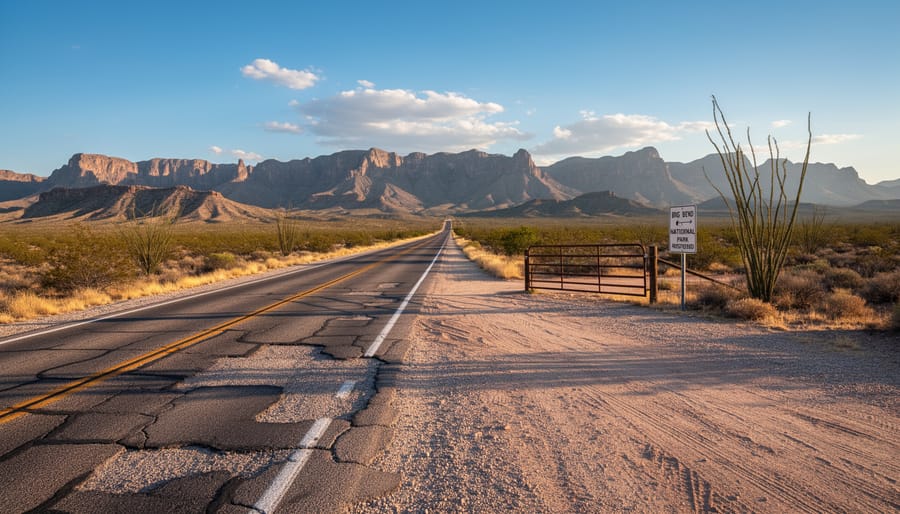
When I first saw the headline about Big Bend closures, I’ll admit my heart sank a bit. I’d experienced something similar a few years back when news about Yosemite closures made it sound like the entire park was off-limits, only to discover the actual restrictions were limited to one valley area. That taught me to dig deeper before canceling travel plans.
Here’s what’s actually happening at Big Bend right now. The National Park Service issued a temporary closure order on August 10, 2026, but it applies only to two specific backcountry roads: Old Ore Road and Black Gap Road. Both routes sustained damage from flash flooding and remain unsafe for vehicle traffic until further notice. That’s it. Those two roads.
Everything else you’d want to see is completely accessible. The scenic drive to Chisos Basin? Open. The stunning vistas along Ross Maxwell Scenic Drive leading to Santa Elena Canyon? Open. All visitor centers where you can grab maps and chat with rangers? Open. Popular hiking trails like Lost Mine Trail and Window Trail? Open. Developed campgrounds? Open and operating normally.
Old Ore Road and Black Gap Road are primitive backcountry routes that most visitors, especially those making their first Big Bend trip from Canada, wouldn’t tackle anyway. They’re rugged, remote tracks requiring high-clearance vehicles and serious off-road experience. Think dusty, rocky paths through the absolute middle of nowhere, not paved scenic drives.
I remember feeling frustrated during that Yosemite situation because the headlines made me question whether my 20-hour drive would be wasted. The reality was that 95% of what I wanted to experience remained accessible. Big Bend’s current situation is similar. The closure affects a tiny fraction of the park’s road network, leaving the iconic landscapes, major hiking opportunities, and visitor infrastructure completely untouched. You’re not losing the Big Bend experience; you’re just missing two adventurous backcountry detours that weren’t on most itineraries anyway.
How the Temporary Road Closures Affect Your Trip
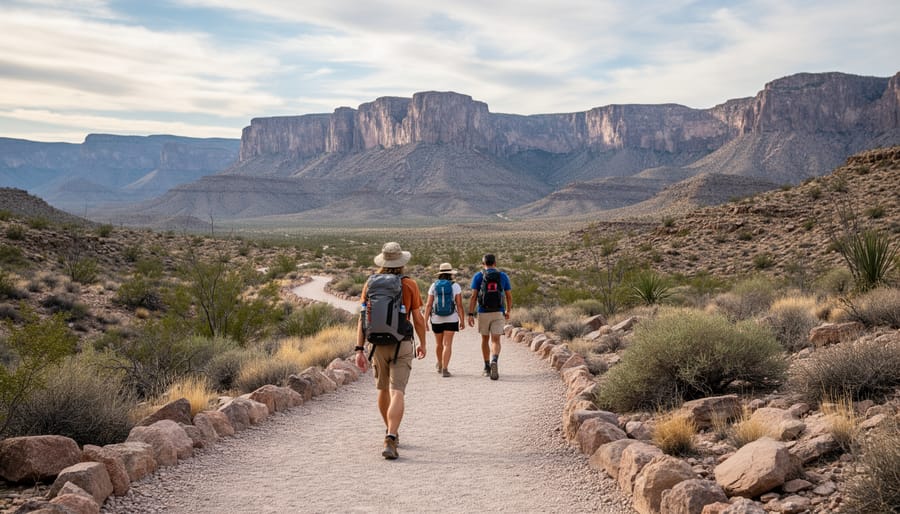
Here’s the truth: unless you were specifically planning a rugged, high-clearance 4×4 adventure into Big Bend’s most remote backcountry, the current road closures probably won’t touch your itinerary at all.
Old Ore Road and Black Gap Road are primitive backcountry routes that even experienced off-roaders tackle cautiously. They’re the kind of rough, unpaved tracks where you need serious ground clearance, multiple spare tires, and the skills to handle washboard surfaces and sudden weather changes. Most rental car agreements explicitly forbid driving these roads. If your trip plan didn’t include “hire a rugged 4×4 and spend two days bouncing through the Chihuahuan Desert wilderness,” you haven’t lost anything essential to your Big Bend experience.
Everything that draws first-time visitors remains completely open. Santa Elena Canyon’s towering limestone walls? Still there, still stunning, and the road to reach it is fully accessible. The Hot Springs along the Rio Grande, where you can soak in natural thermal pools with Mexico visible across the river? Open. The Lost Mine Trail, one of the park’s most beloved hikes with panoramic Chisos Mountain views? Ready for you. The scenic Ross Maxwell Drive and the entire Chisos Basin loop, where most visitors spend the bulk of their time? All operating normally.
I learned this lesson during a past trip to Glacier National Park when Going-to-the-Sun Road was partially closed. I panicked initially, only to discover the closure affected a segment I wouldn’t have driven anyway, while all the trails and viewpoints I actually wanted were perfectly accessible.
The insider reality: Big Bend is enormous, and these closed roads serve a tiny fraction of visitors seeking extreme solitude and challenge. Your classic Big Bend road trip stays intact.
Planning Your Visit: Entry Requirements and Current Logistics
A traveler preparing for the long drive reinforces the practical side of planning a Big Bend trip, while the dramatic desert scenery welcomes visitors to the park’s main areas.
Good news for spontaneous travelers: Big Bend National Park has reservations not needed for entry, and there are no timed entry tickets or day passes to chase. You can show up whenever your road trip schedule allows, which makes planning much easier when you’re driving from Canada and dealing with unpredictable travel days.
You will still pay to get in. Every vehicle entering the park is subject to an entrance fee, and the park doesn’t accept cash. Bring a credit or debit card and have it ready when you reach the entrance station.
| Pass Type | Price |
|---|---|
| Standard Pass | $15.00 to $30.00 |
| Annual Pass | $55.00 |
| America the Beautiful Pass (including Senior Passes) | Free to $250.00 |
Here’s where you can save some money. If you’re planning a bigger Southwest road trip that hits several national parks, an America the Beautiful Pass is worth a close look. We drove from Alberta to Big Bend, then continued on to Carlsbad Caverns and Guadalupe Mountains on the same trip, and a multi-park pass makes far more sense than paying at every gate. The price range is wide because the pass covers different categories, including senior passes, so check which one fits you before you go.
There’s also no limit on the number of visitors who can enter each day. That means you won’t get turned away at the gate, but popular areas can still fill up at busy times. Arrive early if you want first pick of parking at trailheads.
Check out these money-saving tips for more ways to stretch your travel budget on cross-border road trips. The long drive from Canada makes every dollar count, and small savings add up over a multi-week journey.
Making the Long Drive Worth It: A Canadian’s Perspective
I’ve made the drive from Canada to Big Bend twice now, and I’ll be straight with you: it’s a commitment. From Vancouver, you’re looking at roughly 36 hours of driving spread across three days. From Toronto or Montreal, it’s slightly less brutal but still a solid 30-plus hours. This isn’t a weekend getaway, and the remoteness is real. The nearest major airport is in El Paso, still three hours away, and you’ll spend the last few hours of your approach wondering if you’ve driven off the edge of civilization.
So is it worth it with the current road closures? Honestly, yes. Here’s why: those two closed roads were never part of the classic Big Bend experience most first-time visitors have anyway. The bucket-list moments, Santa Elena Canyon’s towering walls, the sunrise view from Lost Mine Trail, soaking in Hot Springs beside the Rio Grande, the jaw-dropping vistas along Ross Maxwell Scenic Drive, are all completely accessible right now. You’re not missing the heart of the park.
That said, I’d only make this journey if you’re building a broader Southwest road trip around it. Combine Big Bend with Carlsbad Caverns in New Mexico (about four hours north), or swing through Austin and San Antonio on your way to or from the park. Guadalupe Mountains National Park is also nearby and dramatically undervisited. Think of Big Bend as the spectacular anchor of a 10-14 day adventure rather than the sole destination, much like you might approach Canadian travel destinations when planning a cross-country trip.
The payoff for that long drive is experiencing one of America’s least crowded national parks with genuinely otherworldly desert landscapes. Just make sure you’ve got the time to do it justice.
What to Expect When Conditions Change
When you’re planning a trip from Canada with days of driving ahead, you need reliable information about what’s actually open when you arrive. I learned this the hard way during a 2024 road trip to Glacier National Park when a sudden wildfire closure meant rerouting 800 kilometers after we’d already crossed the border. For Big Bend, start by checking the National Park Service’s official alerts page before you leave home, then check the weather and park conditions again the day before you arrive in Texas. The “until further notice” timeline for Old Ore Road and Black Gap Road depends on engineering assessments and repair crews, not a fixed schedule.
Flash flooding in West Texas follows seasonal patterns, typically more common during late summer monsoon season and spring storms, but the repair timeline for damaged roads involves inspections, budget approvals, and contractor availability that extend well beyond the weather itself. Rather than trying to predict when these specific roads will reopen, focus on the reality that Big Bend’s main attractions remain accessible right now. Sign up for park alerts through the NPS website if you want email notifications about changes, and follow Big Bend’s official social media accounts for real-time updates during your journey south. The beauty of visiting a park without reservation requirements is that you can adapt your plans based on current conditions without losing deposits or bookings.
Don’t let the closure headlines scare you off. Big Bend National Park is absolutely open and ready for your visit right now, despite what confusing news reports might suggest. Yes, two backcountry roads are temporarily closed due to flash flooding damage, but that’s a tiny fraction of what makes this place extraordinary. The Chisos Mountains, Santa Elena Canyon, Hot Springs, and all the main trails and campgrounds are fully accessible and just as stunning as they’ve always been.
I’ll be honest: the drive from Canada is no joke. You’re looking at several days on the road to reach one of the most remote national parks in the United States. But here’s the thing, Big Bend rewards that effort like few other places can. The park sees a fraction of the crowds that pack Banff or Jasper, which means you’ll have those incredible desert vistas and starry skies largely to yourselves. That alone makes it special.
If you’ve been dreaming about experiencing the Chihuahuan Desert, hiking through dramatic canyons, or seeing landscapes completely different from what we have back home in Canada, now is actually a great time to go. The core Big Bend experience remains intact, and you won’t be fighting crowds for parking or campsites. Pack your sense of adventure, build in some flexibility for the long haul, and get ready to discover why this remote Texas treasure belongs on every Canadian road tripper’s bucket list.
What changed
If you’ve been following Big Bend National Park coverage this year, the practical picture comes down to a few points. Entry rules are simple and haven’t been complicated by the closures covered above. Every vehicle entering the park pays an entrance fee, and payment is by credit or debit card only. The park does not accept cash, so don’t count on having bills ready at the gate.
There are no reservations required to enter, no day passes issued, and no cap on how many visitors come in each day. You can decide to go on short notice without hunting for a timed-entry slot, which is a real difference from some of the busier Canadian parks.
Here’s what the fee options look like:
- Standard Pass: $15.00 to $30.00
- Annual Pass: $55.00
- America the Beautiful Pass (including Senior Passes): free to $250.00
Pick the pass that fits your trip length and budget. A single visit usually points to the standard option, while a longer southwestern loop through several U.S. parks may justify the America the Beautiful pass.
What hasn’t been settled is closure status and day-to-day logistics. Those can shift, so confirm the latest details with the park before you leave and again once you arrive.
Key developments
Before you load the car, the practical picture for 2026 is simple: getting into Big Bend National Park is straightforward, and the rules are consistent for every visitor.
- Entry is by vehicle fee. All vehicles entering the park are subject to an entrance fee. A standard pass runs from $15.00 to $30.00, and an annual pass is $55.00.
- Passes cover more than one park. The America the Beautiful Pass, including Senior Passes, ranges from free to $250.00 depending on eligibility. If your route takes you through other U.S. national parks, price it out before you buy a single-park pass.
- Bring a card. Big Bend does not accept cash. Credit or debit only, so leave the loonies and greenbacks in the glovebox.
- No reservations, no day passes, no daily cap. You don’t book an entry slot, and there’s no limit on how many visitors can enter each day.
That last point matters for planning. You can adjust your arrival day on short notice without losing a booking, which pairs well with the flexible buffer day suggested above. Closure status and on-the-ground logistics can shift, so confirm those through official NPS alerts rather than relying on any fixed assumption.
Why it matters
Big Bend National Park is still a straightforward trip to plan, even with a couple of backcountry roads out of commission. That’s the real takeaway here. The headline closures sound bigger than they are, and the things most visitors drive that far to see haven’t changed.
Entry is simple. Every vehicle pays an entrance fee, and there are no reservations required to get in. No day passes are issued, and the park doesn’t cap how many visitors can enter each day. You won’t lose a trip because a timed-entry slot sold out three weeks ago, which is a different story from some of the busier parks up north.
Budget for the gate, though. Big Bend does not accept cash, so bring a credit or debit card.
- Standard Pass: $15.00 to $30.00
- Annual Pass: $55.00
- America the Beautiful Pass (including Senior Passes): free to $250.00
If you’re already planning a few national park stops this year, run the numbers on a pass before you pay at the gate. For a long road trip from Canada, it can change the math.
So why does any of this matter? Because the practical risk isn’t getting turned away. It’s showing up unprepared for what’s open and what isn’t, so confirm current conditions before you commit to a route.
What to watch
Three things are worth keeping an eye on as you finalize plans for Big Bend National Park in 2026, and none of them involve a reservation system.
Closure updates. The status of the washed-out backcountry roads can change as repairs and assessments progress, so treat any reopening rumor as unconfirmed until the park posts it. Check the official alerts the morning you leave and again the day you head into the park.
Entry costs and payment. Every vehicle that enters pays a fee, and the park takes cards only. Cash won’t work at the gate, so don’t count on a stash of bills getting you through. Here’s what to expect:
- Standard Pass: $15.00 to $30.00
- Annual Pass: $55.00
- America the Beautiful Pass, including Senior Passes: free to $250.00
If you’re visiting more than one US national park this year, the America the Beautiful Pass can be worth pricing out before you arrive.
Crowd rules that don’t exist. There are no day passes and no cap on how many visitors enter daily. That’s good news for flexibility, but it also means nothing is holding a spot for you. Plan your arrival time around the sights you care most about, not around a ticket window.