
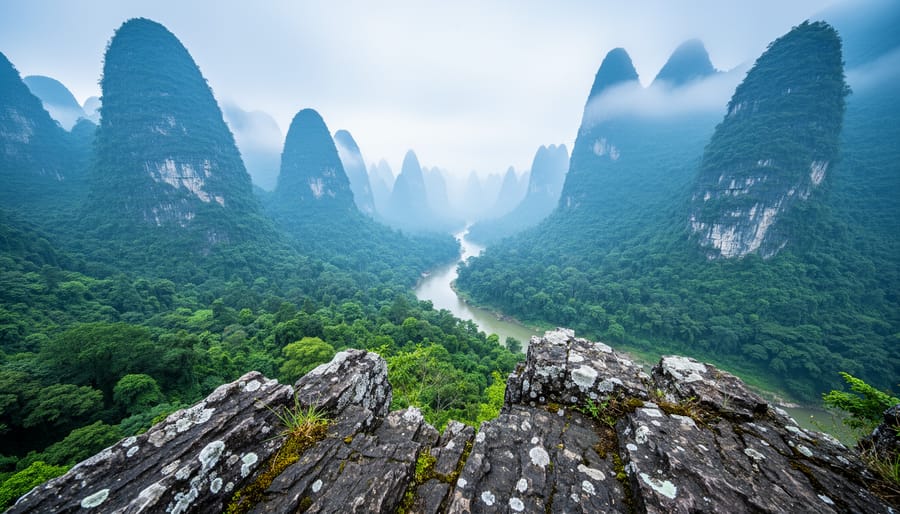
China’s national park system launched its first five flagship parks in 2021, and by 2035, the country plans to protect 49 parks spanning its most spectacular landscapes, from the soaring peaks where the Yangtze, Yellow, and Mekong rivers begin to the misty tropical rainforests of Hainan Island. If you’ve been following conservation news or scrolling through images of those jaw-dropping mountains that inspired Avatar, you’ve caught wind of what’s become the world’s largest coordinated national park initiative. Unlike the century-old systems in North America that many of us grew up visiting, China’s approach is brand new, ambitious, and still taking shape.
I’ll be honest: planning a trip to these parks isn’t as straightforward as booking a cabin in Banff or hopping on a shuttle in Yosemite. Tourism infrastructure is evolving, access policies vary widely, and practical details like seasonal closures and permit requirements can be tough to pin down from abroad. But that’s exactly why this moment is so exciting. You’re getting a first look at landscapes that have been off-limits or underdeveloped for decades, now opening up with a conservation-first mandate that prioritizes wildlife corridors and ecosystem health over souvenir shops.
What makes China’s national parks worth your attention? These aren’t just pretty backdrops. Sanjiangyuan protects the headwaters that feed a billion people downstream. Giant Panda National Park links 67 isolated nature reserves into one massive habitat where pandas can actually thrive. The Northeast Tiger and Leopard park is bringing wild big cats back from the brink. And yes, places like Zhangjiajie and Jiuzhaigou offer scenery so surreal you’ll question whether your camera is working properly.
What Makes China’s National Parks Different
China’s approach to national parks flips the script on what many North American travelers expect. Since 2012, the country has been building the world’s largest national park system from the ground up, prioritizing conservation over recreation in a way that feels refreshingly deliberate. The first batch of 5 parks was established recently, with an ambitious plan to expand to 49 parks by 2035. These aren’t retrofitted tourist attractions, they’re massive protected zones where nature gets the spotlight and human activity takes a back seat.
What sets these parks apart is their scale and integration. We’re talking about ecosystems that span entire watersheds and mountain ranges, often incorporating cultural and historical sites within their boundaries. The designation process is rigorous, drawing from 55 candidate national-level nature reserves of at least 1,000 hectares each. Unlike the well-trodden paths of Yellowstone or Banff, visitor infrastructure in China’s parks is still developing. Some areas remain quite remote with limited facilities, while others balance accessibility with strict conservation protocols. You won’t find the same density of campgrounds or visitor centers, but you will encounter landscapes that feel genuinely wild and protected for the long haul.
How We Ranked These Parks
Ranking these parks wasn’t about choosing the “best” in absolute terms, each protected landscape offers something remarkable. Instead, I focused on what matters most to travelers exploring China’s emerging national park system.
Landscape diversity topped my criteria. Does the park showcase a unique ecosystem you won’t find elsewhere? The source of three major rivers hits differently than another mountain range, no matter how beautiful.
I weighted accessibility for international visitors heavily. Some of these parks are still developing infrastructure, so I considered how realistic a visit is right now versus three years from nothing. Photographic appeal mattered too, let’s be honest, we all want those jaw-dropping shots, but I balanced that against conservation significance and overall experience quality.
Here’s the catch: China’s national park system is evolving as we speak. Details like exact entry fees, seasonal closures, and permit processes are still taking shape across many parks. I’ve ranked based on what’s verifiable now, but treat this as your starting framework rather than gospel. Always research current conditions before booking flights.
1. Sanjiangyuan National Park: Where Three Rivers Begin
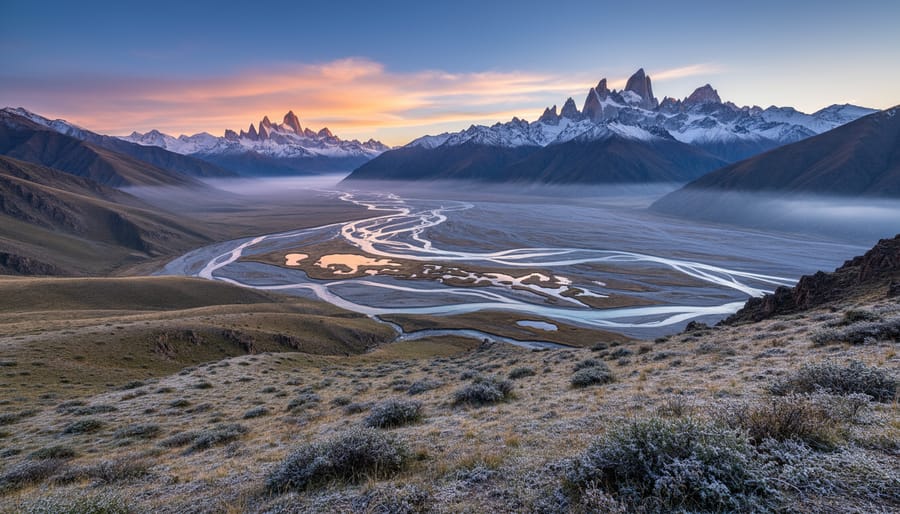
Standing at 4,500 meters above sea level across the Qinghai-Tibet Plateau, Sanjiangyuan National Park earns the top spot not just for its staggering scale, it’s roughly the size of the entire United Kingdom, but for a fact that resonates across continents: this is where the Yangtze, Yellow, and Mekong rivers all begin their journeys. The Tibetan name translates to “Source of Three Rivers,” and when you’re standing in this vast wilderness of alpine meadows, glacial peaks, and turquoise lakes, you can actually trace the headwaters that eventually nourish billions of people downstream. It’s the kind of place that makes you recalibrate your understanding of landscape importance.
What sets Sanjiangyuan apart is the sheer drama of high-altitude wilderness combined with profound ecological significance. You’ll find Tibetan antelope migrating across windswept grasslands, snow leopards prowling remote valleys, and nomadic herders maintaining traditions that have sustained this ecosystem for centuries. The park protects not just the water sources but an entire functioning plateau ecosystem that’s increasingly rare in our crowded world.
The landscape shifts constantly, one moment you’re surrounded by rolling grasslands dotted with wildflowers, the next you’re facing snow-capped peaks reflected in crystalline lakes. For travelers who’ve explored well-trodden mountain destinations elsewhere, Sanjiangyuan offers something genuinely different: a chance to witness one of Earth’s most critical water systems at its pristine source, in a landscape that feels both ancient and urgent to protect.
2. Giant Panda National Park: Conservation Meets Wonder

Spanning across Sichuan, Shaanxi, and Gansu provinces, Giant Panda National Park protects over 27,000 square kilometers of mountainous bamboo forest, home to roughly 1,800 wild pandas, nearly 80% of the world’s entire population. This isn’t just a park; it’s a lifeline for one of the planet’s most beloved species, and walking these misty forests feels like stepping into a living conservation success story.
What sets this park apart is how it connects dozens of previously fragmented panda reserves into one massive protected corridor. Pandas can now roam freely between habitats, which is crucial for genetic diversity and long-term survival. The park’s ecosystem supports far more than pandas, though, you’ll find golden snub-nosed monkeys, takins, red pandas, and an incredible diversity of plant life thriving in these temperate forests.
The landscape itself is breathtaking: steep river valleys draped in clouds, bamboo groves that whisper in the wind, and ancient trees towering overhead. Spring brings wildflowers carpeting the forest floor, while autumn turns the mixed forests into a patchwork of gold and crimson. The elevation shifts dramatically, creating distinct climate zones that support different species at different heights.
Visiting Giant Panda National Park means supporting conservation that works. China’s approach here balances protection with sustainable tourism, allowing travelers to witness these incredible animals in their natural environment rather than just in captivity. While spotting a wild panda requires patience and luck, simply knowing you’re walking through the world’s most important panda habitat makes every trail magical. This is conservation you can feel in your bones.
3. Northeast China Tiger and Leopard National Park: Wild Frontiers
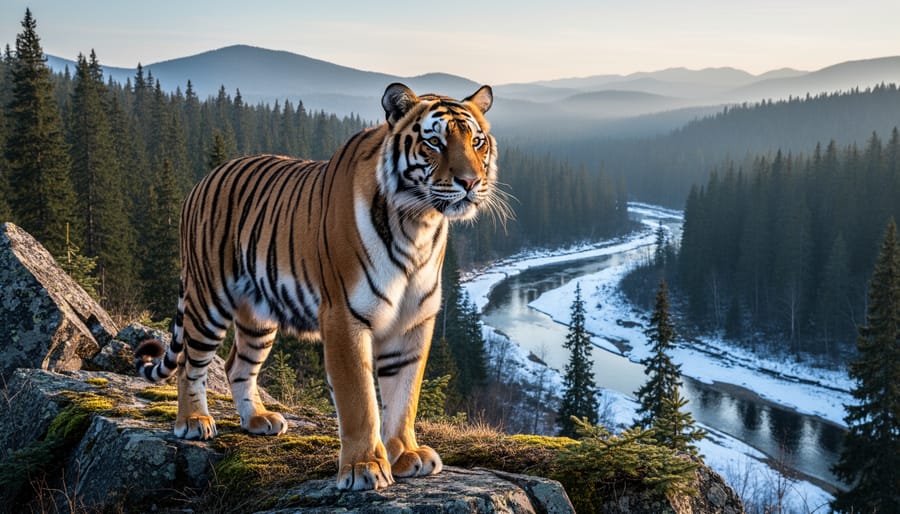
Straddling the border between China and Russia, Northeast China Tiger and Leopard National Park protects one of the world’s most endangered predators in landscapes that feel genuinely untamed. This is frontier territory in every sense, dense temperate forests blanketing rugged mountains where Siberian tigers and Amur leopards still roam free.
What puts this park at number three is the sheer thrill of being in big cat country. While sightings remain rare (these are apex predators with enormous territories), knowing you’re walking through forests where wild tigers hunt creates an electric sense of possibility that few parks anywhere can match. The northeastern landscape itself delivers drama: ancient Korean pine forests give way to rocky ridges and river valleys that change dramatically with the seasons, from snow-laden winter silence to lush summer green.
The conservation story here matters tremendously. China shares this ecosystem with Russia, and the park represents genuine hope for species that numbered in the single digits just decades ago. By protecting vast corridors of habitat, the park allows these magnificent cats the space they need to recover. For visitors, that means experiencing wilderness on a scale that’s increasingly rare, you’re not just seeing scenery, you’re standing in functioning predator habitat.
Expect serious adventure here rather than polished tourist infrastructure. The park’s remote location and conservation priorities mean access remains limited, which honestly adds to the appeal if you’re after authentic wilderness. The forests feel primeval, the wildlife (even without spotting a tiger) includes everything from wild boar to sika deer, and the sense of wildness is palpable. This isn’t a park you casually drop into, it’s one you deliberately seek out because you want that frontier experience.
4. Hainan Tropical Rainforest National Park: China’s Jungle Paradise
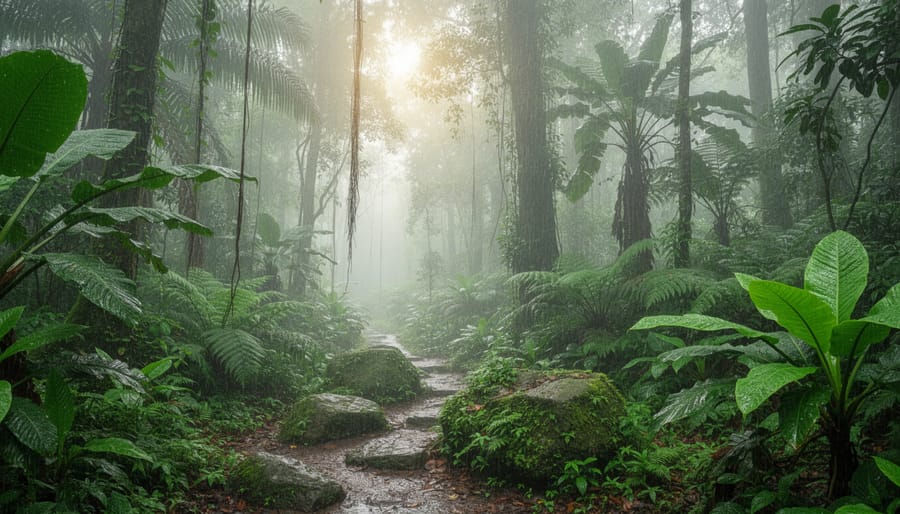
If you’ve been craving something completely different from the alpine peaks and grasslands of China’s other national parks, Hainan Tropical Rainforest is your answer. Tucked into the mountainous heart of Hainan Island in the far south, this park brings you as close to equatorial jungle as China gets, a world of dense canopy, cascading humidity, and wildlife you won’t encounter anywhere else in the country.
The contrast hits you immediately. Where the northern parks offer big skies and sweeping vistas, Hainan wraps you in green from every angle. Towering dipterocarp trees form a living cathedral overhead, vines twist through the understory, and the air thrums with insect life and bird calls. This is one of China’s most biodiverse regions, home to the critically endangered Hainan gibbon, fewer than 40 individuals remain, making any glimpse of these acrobatic primates an extraordinary privilege.
What makes this park special isn’t just the tropical scenery. It’s the verticality. The rainforest climbs from lowland valleys up steep mountain slopes, creating distinct elevation zones you can experience in a single hike. You’ll move from humid jungle floors thick with ferns and palms into misty cloud forest where moss coats every surface and orchids cling to branches overhead.
The island setting adds another layer of appeal. After days in the forest, you’re never far from Hainan’s coastline, creating a rare combination of jungle exploration and beach recovery that few national parks anywhere can match. It’s hot, it’s humid, and it’s utterly unlike the rest of China’s protected landscapes, which is exactly why it ranks fourth on this list.
5. Wuyi Mountain National Park: Ancient Peaks and Tea Culture
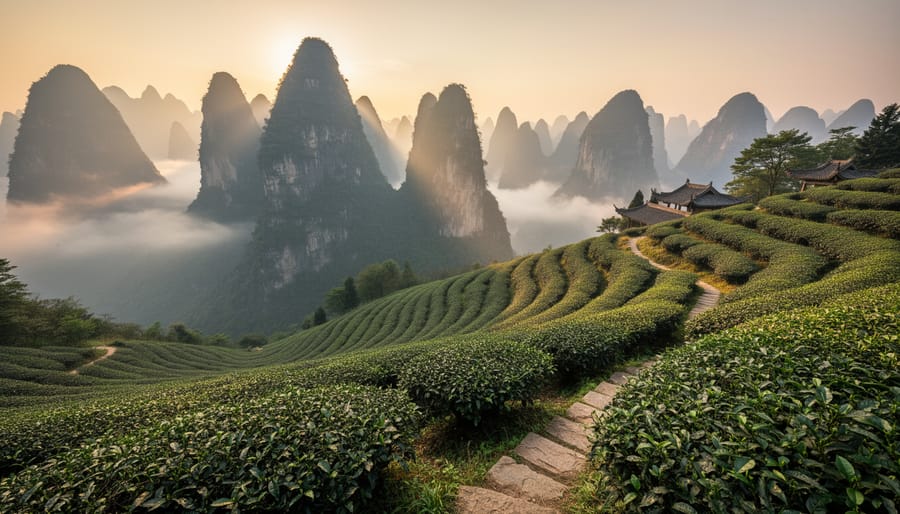
Wuyi Mountain earns its spot on this list by offering something truly special: a place where China’s dramatic natural landscapes and deep cultural roots intertwine seamlessly. Located in Fujian Province, this UNESCO World Heritage site combines towering sandstone peaks, crystal-clear streams winding through bamboo forests, and some of the world’s oldest tea-growing traditions. You’re not just visiting another mountain range here, you’re stepping into a landscape that’s been shaping Chinese philosophy and culture for thousands of years.
The park’s signature Danxia landforms create red-tinged cliffs and pillars that rise sharply from the green valleys below, offering some of the best hiking trails among China’s protected areas. What makes Wuyi Mountain different from purely wilderness parks is how nature and human heritage coexist. Ancient pathways lead to cliff-side temples, and terraced tea gardens cascade down mountainsides where Wuyi rock tea, one of China’s most prized varieties, has been cultivated for centuries. You might spend your morning scrambling up rocky trails to panoramic viewpoints, then your afternoon learning about traditional tea processing from farmers whose families have worked these slopes for generations.
The Nine-Bend River that snakes through the park offers a gentler way to experience the landscape, with bamboo raft trips revealing hidden grottoes and clifftop monasteries. For travelers who appreciate cultural depth alongside natural beauty, Wuyi Mountain delivers both in equal measure. Just remember that blending adventure with cultural exploration requires different gear and packing considerations, and checking current travel planning tips along with trip planning essentials helps you make the most of this layered experience.
6. Zhangjiajie National Forest Park: Avatar Mountains in Reality
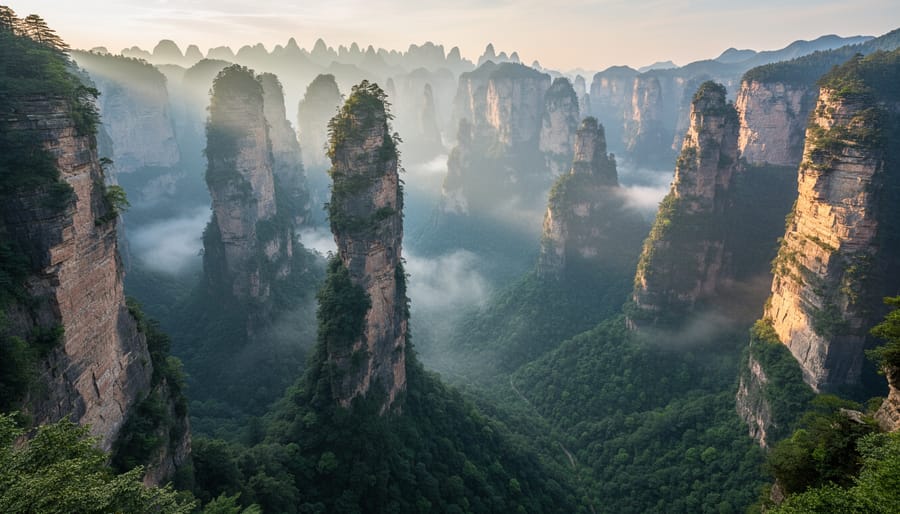
Zhangjiajie might have seemed like pure fantasy when you first glimpsed those towering stone pillars in Avatar, but these otherworldly formations are absolutely real. Rising over 1,000 meters from the forest floor like nature’s own skyscrapers, the park’s quartzite sandstone columns create a landscape that genuinely feels plucked from another planet. The sheer vertical scale is what catches your breath first, then the realization that mist wraps around these peaks most mornings, making the whole scene drift between dream and reality.
Walking through Zhangjiajie is like stepping onto an alien film set where everything has been scaled up and painted in impossible greens and grays. The park’s famous glass walkway suspended around Tianmen Mountain adds a modern thrill to ancient geology, though honestly, the main attraction remains those stone pillars themselves. Each viewpoint reveals a different forest of vertical rock, some standing alone like sentinels, others clustered together in what looks like a giant’s abandoned city.
What makes Zhangjiajie rank sixth is how it combines jaw-dropping natural architecture with genuine accessibility for travelers. The cable car system means you don’t need to be a mountaineer to witness these formations up close, and the network of walkways brings you right among the pillars. Yes, you might encounter weather-related flight delays getting to Hunan Province, but once you’re standing on that glass bridge with a thousand-meter drop beneath your feet and stone columns piercing the clouds around you, the journey feels worth every hour.
7. Jiuzhaigou Valley: Turquoise Lakes and Waterfalls
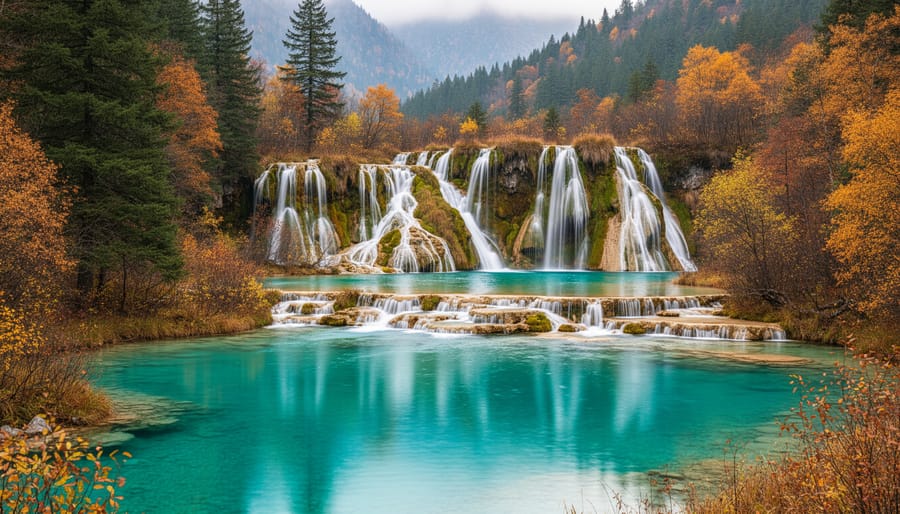
Jiuzhaigou Valley feels like someone took every fantasy illustration of an enchanted forest and made it real, then dialed up the color saturation beyond what seems possible in nature. I’ve seen hundreds of photos from this UNESCO World Heritage site, and every single one made me question whether the water could actually be that shade of turquoise. The answer, remarkably, is yes.
This Sichuan alpine valley sits at altitudes between 2,000 and 4,500 meters, where a complex system of travertine formations creates natural dams that fill with mineral-rich water. The result is a series of terraced lakes in shades that shift from deep sapphire to electric turquoise depending on the minerals, algae, and light conditions. Pearl Shoal Waterfall cascades 40 meters wide across these formations, creating that classic postcard image of white water tumbling over golden travertine into impossibly blue pools below.
What sets Jiuzhaigou apart photographically is how dramatically it transforms through the seasons. Autumn paints the surrounding forests in gold and crimson that reflect in the still waters, creating mirror images that confuse the eye. Winter brings a quieter magic when portions of the waterfalls freeze mid-cascade while the lakes remain liquid and vivid beneath a dusting of snow. Spring explodes with wildflowers and rushing meltwater that turns every waterfall into a roaring spectacle.
The valley earned its name from the nine Tibetan villages historically scattered throughout, though conservation efforts have relocated most residents to protect the watershed. That cultural heritage adds depth to the natural spectacle, this isn’t just pretty scenery, it’s a living landscape where people and nature have coexisted for generations. The accessible boardwalk system means you don’t need serious hiking skills to witness the magic, making this one of the most family-friendly options on our list despite its dramatic beauty.
Planning Your China National Parks Adventure

Planning a trip to China’s national parks takes more preparation than a typical vacation, but don’t let that intimidate you. Think of it as laying the groundwork for an extraordinary experience in landscapes that few international travelers have explored.
Start by researching each park’s current access policies well before you book flights. Since China’s national park system is still developing toward its 2035 expansion goal, visitor infrastructure and permit requirements vary significantly between parks and continue to evolve. Check official tourism sources and recent traveler reports to understand what’s actually open and how access works. Some parks require advance permits or have seasonal closures for conservation, while others welcome drop-in visitors.
Language barriers are real, so download translation apps and save key phrases offline. Learning basic Mandarin greetings and courtesy expressions goes a long way in remote park areas where English isn’t common. Consider hiring local guides through reputable agencies, especially for parks in wilderness regions where signage may be limited and trails less established than what you’re used to.
Your planning checklist should cover:
- Valid passport with appropriate visa, secured well in advance of travel
- Layered clothing for dramatic elevation and climate changes within single parks
- Cash in yuan, as card payment isn’t universal in remote areas
- Respect for conservation rules, which may be stricter than North American parks
- Travel insurance covering medical care and potential itinerary changes
Pack for versatility. China’s parks span tropical rainforests to alpine plateaus, sometimes within the same trip. Quality hiking boots, weather-appropriate layers, and a reliable daypack are non-negotiables. Bring any specialized gear you need, as outdoor equipment in remote Chinese towns may not meet your standards or fit Western body sizes.
Respect the conservation mission driving these parks. Stay on designated trails, follow wildlife viewing guidelines, and pack out everything you bring in. These protected areas represent China’s commitment to preserving biodiversity for future generations, and visitors play a role in that success. The rules exist to protect landscapes you’re privileged to witness.
Set realistic expectations about amenities. You’re exploring a system that’s prioritizing ecological protection over visitor convenience, which means fewer lodges, restaurants, and paved paths than you’d find in established North American parks.
Frequently Asked Questions
The big questions come up every time we talk about China’s national parks with friends planning trips. The system is so new compared to what we’re used to in Canada that it’s natural to wonder how it all works and whether these destinations fit your travel style.
How many national parks does China actually have?
China established its first batch of 5 national parks and is building toward 49 parks by 2035 as part of the world’s largest national park system. The government has been working on this ambitious project since 2012, with 55 candidate parks identified from nature reserves covering at least 1,000 hectares.
What’s the difference between China’s national parks and other protected areas?
National parks represent the highest tier in China’s nature reserve system, chosen for their exceptional ecological importance and biodiversity. While China has thousands of protected areas, only the most significant landscapes with strict conservation standards earn national park designation.
Are these parks suitable for families with kids?
Many parks like Giant Panda National Park and Jiuzhaigou Valley offer family-friendly experiences with developed trails and facilities. However, some destinations like Sanjiangyuan sit at extreme elevations or in remote areas that require more preparation and physical readiness, so research your specific park choice carefully.
How does China’s system compare to North American national parks?
China’s parks prioritize conservation and ecological protection first, sometimes limiting visitor access more strictly than Western parks. You’ll find less developed infrastructure in many locations, fewer services, and a stronger emphasis on preserving wilderness over creating visitor amenities, which honestly makes for more authentic nature experiences.
The fitness question really depends on which park you’re considering. Wuyi Mountain and Zhangjiajie offer accessible trails with cable cars and walkways that work for moderate fitness levels, while high-altitude destinations like Sanjiangyuan demand serious physical preparation for the thin air. Most parks fall somewhere in between, with options for different ability levels, though I’d say overall they skew toward requiring more stamina than your average Canadian provincial park.
Keep in mind that visitor infrastructure is still developing across the system. What you can access this year might expand by next year as China builds out facilities and opens new areas. The trade-off for visiting during this growth phase is that you’ll see these landscapes in a more pristine state, before they become well-worn tourist destinations. Some practical details like exact entry fees and seasonal access windows are still being finalized for newer parks, so building flexibility into your plans and checking current information before you go will save you headaches.
China’s journey toward building the world’s largest national park system by 2035 represents something bigger than just conservation. It’s a promise to future generations that these landscapes, from the river sources of Sanjiangyuan to the turquoise pools of Jiuzhaigou, will remain wild and protected. Having explored parks around the world, there’s something uniquely exciting about witnessing a system in its formative years, you’re not just visiting protected lands, you’re experiencing conservation ambition on a scale we haven’t seen before.
The first five parks have laid the foundation, but 49 are coming over the next decade. That means more access points, more stories, and more chances to explore landscapes that blend China’s incredible biodiversity with its cultural depth. These aren’t just destinations, they’re front-row seats to one of the biggest environmental commitments of our time.
So keep watching as this system unfolds. Whether you start with the panda forests or the Avatar peaks, you’ll be part of something rare: discovering protected wilderness that’s being shaped for centuries to come. That’s a journey worth taking.