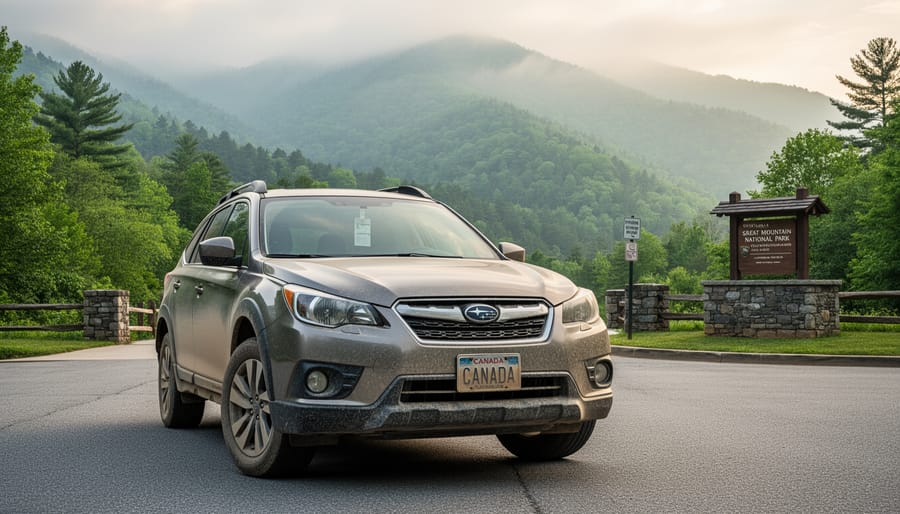
Visiting Great Smoky Mountains from Canada in 2026 requires a passport or other approved travel document, a physical parking tag for your vehicle, and an understanding that while there’s no park entrance fee, you’ll pay between $5 and $40 for mandatory parking access depending on your length of stay. I learned this distinction the hard way on my first trip down: the park itself is free to enter, but you absolutely cannot leave your car anywhere inside the Smokies without displaying a printed parking tag in your windshield.
The confusion around fees trips up countless Canadian visitors every year. You won’t pay to walk through the gates or hike the trails, but the moment you want to park and explore, that parking tag becomes non-negotiable. Digital versions on your phone won’t cut it either. You need the physical paper displayed where rangers can see it, and you can grab one online before you leave home for $5 (daily), $15 (weekly), or $40 (annual). Print it before you cross the border and save yourself the scramble at a visitor center.
For Canadians making the journey south, the drive itself can take anywhere from 12 to 16 hours depending on your starting point in Ontario or Quebec, but the payoff is worth every kilometer. The park straddles the Tennessee-North Carolina border and offers more than 800 miles of trails, waterfalls that’ll make you forget Niagara exists, and wildlife encounters you simply can’t replicate back home.
What You Need Before You Go: Essential Documents and Permits
I still remember the sinking feeling when I pulled up to a park entrance on my first cross-border national park trip and realized I’d left my vehicle registration sitting on my kitchen counter back home. Learn from my mistake: getting your documents sorted before you leave Canada saves you stress and potential delays at the border.
Here’s what you need to have ready before you head south to the Smokies. Your passport is non-negotiable for crossing into the United States. If you’re a frequent border-crosser, a NEXUS card speeds things up considerably. I’ve used mine dozens of times, and it’s cut my wait time in half on busy weekends. Make sure your passport won’t expire within six months of your travel dates, because border agents can turn you away if it’s too close to expiration.
Your vehicle registration and proof of insurance must come with you. Border officials often ask to see these documents, and you’ll want them handy if anything unexpected happens on the road. Speaking of insurance, check with your provider about coverage in the United States. Many Canadian policies include limited US coverage, but it’s worth confirming before you go rather than discovering gaps after an accident.
Now for the parking situation, which trips up a lot of first-time visitors. Great Smoky Mountains doesn’t charge an entrance fee to enter the park itself, but you absolutely need a parking tag to leave your vehicle anywhere within park boundaries. Think of it like paying for a parking spot, not paying to visit. You’ve got three options: a daily tag costs $5, a weekly tag runs $15, and an annual pass is $40. If you’re planning more than three days in the park, the weekly tag makes the most sense financially.
You can purchase daily and weekly parking tags online before your trip and print them at home, or buy any tag type once you arrive at the park. Here’s the critical part: you must display a physical printed tag in your vehicle. Digital versions on your phone won’t cut it, and rangers do check. I learned this watching a family get ticketed at Cades Cove because they thought showing the confirmation email would work.
- Valid passport or NEXUS card (check expiration date)
- Vehicle registration and insurance documents
- Parking tag: $5 daily, $15 weekly, or $40 annual (physical copy required)
- Travel health insurance confirmation (optional but recommended)
- Driver’s license and any additional ID
Round out your what to know before you go checklist with travel health insurance. Your provincial health plan likely won’t cover medical emergencies south of the border, and US healthcare costs can be staggering. A three-day policy costs less than dinner out and buys serious peace of mind. Tuck your policy documents in with your other papers so you can find them quickly if needed.
Finally, think through your gear and packing strategy. US dollars work everywhere near the park, so exchange some cash before you leave or plan to use ATMs once you cross. Credit cards work fine, but having $50-100 in American bills covers parking tag purchases, tips, and small vendors who don’t take cards.
Important Restrictions and Rules Canadian Visitors Should Know
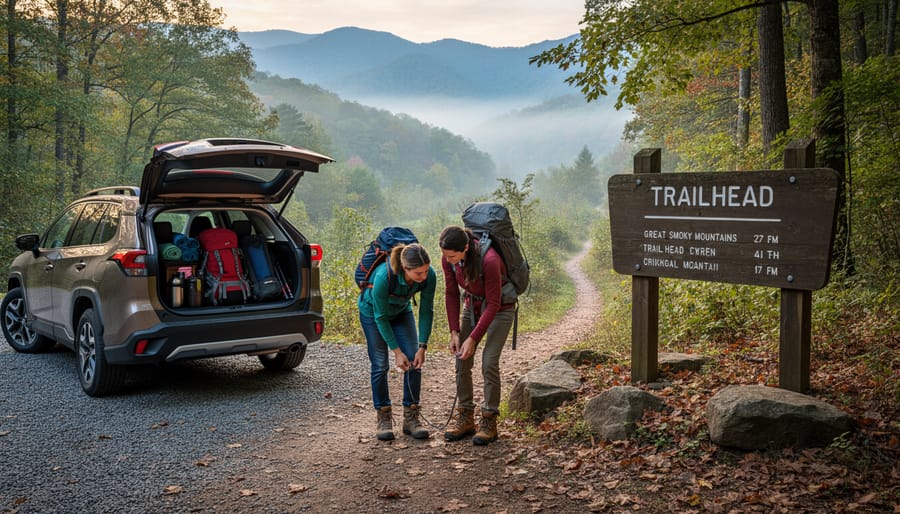
Here’s the thing about crossing the border to visit an American national park: the rules change the moment you leave Canada, and a few surprises catch even experienced travelers off guard.
Parking Tag Rules Are Strict and Physical
Great Smoky Mountains requires a parking tag to park anywhere within park boundaries, and they mean it. You need a physical tag displayed on your windshield or dashboard. I learned this the hard way when I watched a ranger issue a citation to someone who’d screenshot their digital receipt on their phone. That doesn’t count here.
If you purchase your tag online (daily for $5 or weekly for $15), print it before you cross the border. Some Canadian visitors assume they can show proof on their phone like at home, but enforcement is consistent. Each vehicle needs its own tag, even if you’re traveling in a convoy with family or friends.
Border Re-Entry Documentation
Bring your valid passport or NEXUS card for both directions of travel. U.S. Customs wants to see it going south, and Canadian Border Services wants it coming home. Keep your vehicle registration handy too, border agents sometimes ask for it. If you’re driving a rental car, carry the rental agreement showing you’re authorized to take it across the border.
Driving Differences You’ll Notice
Speed limits in Tennessee and North Carolina are posted in miles per hour, not kilometers. The highways around the park often run 55-65 mph (roughly 90-105 km/h), and mountain roads drop to 25-35 mph (40-55 km/h) with sharp curves. Right turns on red are legal here after stopping, and you’ll see more four-way stop signs than traffic lights in rural areas.
Weather Shifts Fast in the Mountains
Before you leave Canada, check the weather for both Gatlinburg and Cherokee, conditions can vary dramatically between the Tennessee and North Carolina sides. Mountain weather changes quickly, and summer afternoons often bring sudden thunderstorms. I’ve experienced 15-degree temperature drops within an hour when fog rolls in at higher elevations. Pack layers, even in summer, and carry rain gear in your vehicle year-round.
Winter and early spring bring ice on shaded roads, and some routes close temporarily during severe weather. The park doesn’t salt roads like Canadian highways do, so check road status before heading to higher elevations.
Step-by-Step: Getting to Great Smoky Mountains from Canada
I’ve made this drive three times now, and each trip taught me something new about getting from Canada to the Smokies smoothly. The journey takes planning, but it’s absolutely doable as a road trip, and honestly, half the fun is watching the landscape shift from Canadian forests to Appalachian ridges.
Here’s exactly how to make the trip happen:
- Map out your route and realistic driving times. From Toronto, you’re looking at roughly 11 to 13 hours depending on which park entrance you’re aiming for. Montreal adds another hour or two. Vancouver? That’s a multi-day drive, so most folks from the West Coast fly into Knoxville and rent a car. I always build in extra time for border delays and meal stops, because you don’t want to arrive at dusk trying to find your way around unfamiliar mountain roads. Pick your entrance now: Gatlinburg and Pigeon Forge on the Tennessee side offer more tourist infrastructure, while Cherokee on the North Carolina side feels quieter and gives you access to different trails.
- Buy your parking tag before you leave home. Head to the official park website and purchase either a daily tag for $5 or a weekly one for $15 if you’re staying longer. The critical part: you must print the physical tag. I learned this the hard way on my second trip when I assumed showing the confirmation email on my phone would work. It doesn’t. The park requires an actual printed tag displayed on your dashboard, and digital versions aren’t accepted. Print it at home, tuck it in your travel folder with your passport, and you’re set. If you forget, you can buy tags onsite at visitor centers, but the online option saves you a stop when you’re eager to start exploring.
- Cross the border with your documents ready. You need a valid passport or NEXUS card, your vehicle registration, and honestly, it helps to have a clear answer when the border officer asks about your plans. I just say “road trip to Great Smoky Mountains National Park in Tennessee” and mention how many days I’m staying. Most crossings are straightforward for Canadian tourists heading to well-known destinations. Keep any camping or accommodation confirmations handy in case they ask, and make sure you’re not bringing prohibited items like certain foods or too much alcohol.
- Navigate to your chosen entrance and get oriented. If you’re heading to the Tennessee side, follow signs for Gatlinburg, then look for park entrance signs leading to Sugarlands Visitor Center. For the North Carolina entrance, route through Cherokee and head toward Oconaluftee Visitor Center. Both entrances have clear signage once you’re close, but GPS can get quirky in the mountains, so I always download offline maps as backup. The drive into the park itself is stunning, all winding roads and sudden valley views, so take it slow and enjoy the approach.
- Display your parking tag the moment you park anywhere in the park. This means every single time, whether you’re pulling into a trailhead, a scenic overlook, or a visitor center lot. The tag goes on your dashboard, visible through the windshield. Rangers do check, and the fine for not displaying it properly isn’t worth the risk. I clip mine to my sun visor so it’s easy to flip down whenever I park, then flip back up while driving so it doesn’t distract me on those twisty mountain roads.
The whole process becomes second nature after your first trip. What surprises most Canadian visitors is how different the driving feels once you’re in Tennessee and North Carolina: the speed limits are posted in miles per hour, the highways are wider and faster than many Ontario routes, and southern drivers have their own rhythm. Give yourself grace to adjust, especially on the mountain roads where locals zip around curves they’ve driven a thousand times.
One thing I always tell friends planning this trip: don’t rush the drive itself. The journey from the border down through the Appalachian states is gorgeous, and those little roadside diners serve biscuits and gravy that you just can’t get back home. Build in time to stop, stretch, and soak up the fact that you’re on an adventure.
Where to Buy Your Parking Tag and How the System Works
I learned this the hard way on my first trip down from Ontario: the parking tag system at Great Smoky Mountains isn’t like the Parks Canada passes I’m used to. You’ve got three options, daily tags at $5, weekly at $15, or annual at $40, and you need one displayed in your vehicle anywhere you park within park boundaries. Here’s what threw me: this is strictly a parking fee. Great Smoky Mountains doesn’t charge an entrance fee to drive through or visit the park itself, which makes it unique among major U.S. national parks. The parking tag is only required when you leave your vehicle, not just for showing up.
The easiest route is buying your daily or weekly tag online before you leave Canada and printing it at home. The system’s straightforward, and having that physical tag ready means one less thing to worry about after crossing the border. You can also purchase tags onsite at visitor centers and various spots around Gatlinburg, Pigeon Forge, and Cherokee, but I’d grab mine in advance during peak summer months when lines form. One critical detail: digital versions won’t cut it. You need the actual printed tag displayed on your dashboard, park staff are strict about this, and I’ve watched them ticket vehicles with screenshots pulled up on phones.
If you’re planning multiple visits or staying a week or longer, the weekly tag pays for itself by day four. Annual tags make sense if you’re within driving distance and might return, though most Canadian visitors I’ve met stick with weekly tags for their single trip south.
Making the Most of Your Visit: What to See and Do
Once you’ve sorted your parking tag and crossed the border, the real adventure begins. I’ll admit, my first time pulling into the park I felt a bit overwhelmed by the sheer size of it, over 500,000 acres straddling Tennessee and North Carolina. But here’s what I learned: start simple, and you’ll find your rhythm quickly.
Cades Cove Loop Road became my absolute favorite. It’s an 11-mile one-way scenic drive where I spotted deer, wild turkeys, and even a black bear from the safety of my car. Go early in the morning or late afternoon for the best wildlife viewing, and bring binoculars. The loop takes about two to three hours if you stop at the historic buildings along the way. Remember to stay in your vehicle if you see bears, they’re beautiful but wild, and approaching them is both illegal and dangerous.
For trails, Laurel Falls Trail offers a paved 2.6-mile round trip to a stunning 80-foot waterfall. It’s busy but manageable, and perfect if you’re traveling with kids or want something less strenuous. If you’re up for more challenge, Alum Cave Trail rewards you with incredible mountain views after about five miles round trip. Whatever trail you choose, carry water, wear sturdy shoes, and tell someone your plans before heading out.
Newfound Gap and Clingmans Dome provide jaw-dropping panoramic views without much hiking. Clingmans Dome, the highest point in the park, has a half-mile paved trail to an observation tower where you can see for miles on clear days.
If you’re camping, reserve your spot well in advance through the official park reservation system, sites fill up fast, especially during summer and fall. The park has several developed campgrounds, but backcountry camping requires a separate permit if that’s your style.
Apply the same national parks planning tips you’d use at home, and you’ll see why this ranks among the must-see US parks for good reason. The Smokies genuinely live up to the hype.
Frequently Asked Questions
Planning a trip from Canada to Great Smoky Mountains raises plenty of practical questions. Here are the answers to what Canadian visitors ask most often before heading south.
Do I need a visa to visit Great Smoky Mountains from Canada?
Canadian citizens don’t need a visa for tourism visits to the United States under six months. You’ll need a valid passport or NEXUS card to cross the border, and border agents may ask about your trip purpose and duration.
Can I use Canadian currency at the park?
No, you’ll need US dollars. Exchange currency before you leave Canada or use ATMs once you cross the border, as businesses in Tennessee and North Carolina don’t typically accept Canadian money.
How far is the drive from major Canadian cities?
From Toronto, it’s roughly 11-12 hours of driving (about 900 km). Montreal sits around 14-15 hours away, while Vancouver drivers face a multi-day journey of 40+ hours, making flights the more practical choice from the west coast.
Will my cell phone work in the park?
Coverage is spotty throughout Great Smoky Mountains, with many trails and remote areas having no signal at all. Download offline maps and share your itinerary with someone before heading into the backcountry.
The weather question comes up constantly. Great Smoky Mountains sits much further south than most Canadian cities, so expect milder winters and hotter, more humid summers. Spring and fall offer the most comfortable temperatures, though you’ll want layers regardless of season since elevation changes create cooler pockets throughout the park.
As for pets, dogs are allowed but only in very limited areas: campgrounds, picnic areas, and along roads. They’re not permitted on most trails, which catches many Canadian visitors by surprise since our national parks often have more generous pet policies. If you’re bringing your dog, plan activities around these restrictions or arrange pet care before hiking.