
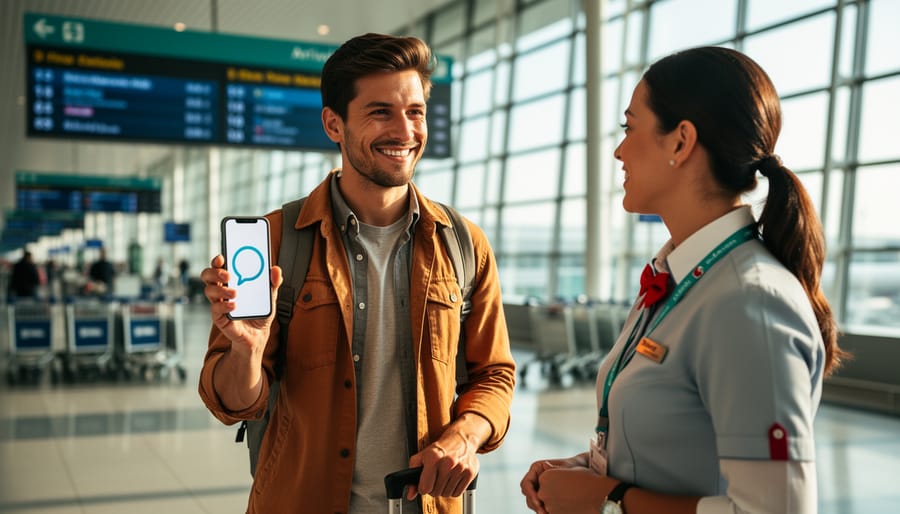
Looking for a quick translation? “Hello” in Spanish is “hola” (pronounced OH-lah). It’s the single most useful word you’ll need when visiting Spanish-speaking destinations from Canada, whether you’re landing in Mexico, Costa Rica, or Spain.
I remember my first trip from Toronto to Puerto Vallarta, standing in the airport customs line, nervously practicing that simple greeting under my breath. That one word opened doors, sparked genuine smiles, and transformed awkward tourist moments into real connections. Even if “hola” is the only Spanish word you master before your trip, you’ll immediately signal respect for the local culture and set a friendly tone for every interaction that follows.
But here’s what most travelers don’t realize: knowing how to say “hola” is just the starting point. The real value comes from understanding when to use it versus more formal greetings like “buenos días” (good morning), how to pronounce it naturally so locals actually understand you, and what response you should expect in return. Getting these details right makes the difference between sounding like a textbook and actually communicating.
In this guide, I’ll walk you through everything you need to confidently greet people in Spanish during your travels, from basic pronunciation tools to cultural nuances that’ll help you avoid common pitfalls. You’ll learn exactly how to verify your accent, when to switch between casual and formal greetings, and how to use simple translation resources to build on this foundation before you board your flight south.
What You Need to Get Started
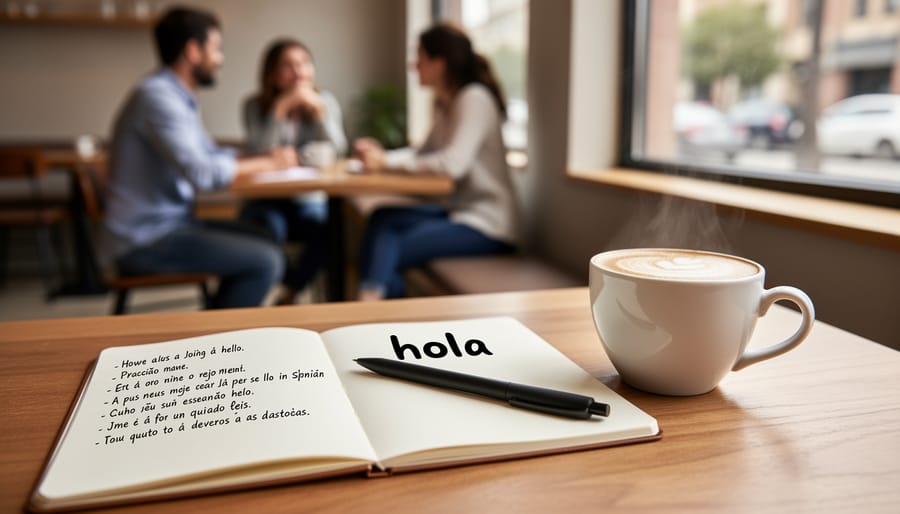
You don’t need much to start learning ‘hola’ and other Spanish basics before your next adventure south from Canada. The beauty of picking up essential greetings is that the barrier to entry is practically zero, you likely own everything already.
Here’s what you’ll use:
- Your smartphone, the tool you’re already bringing anyway, perfect for quick lookups and pronunciation checks
- A free translation service like, which offers 500 free characters monthly for account holders and works great for verifying spelling and exploring variations
- A small notebook or notes app to jot down phrases as you learn them (bonus: fits right in with your packing tips for organized travel)
- Optional language learning apps if you want to go deeper, but honestly not necessary for basic greetings
I’ve learned my best Spanish phrases without spending a dime on courses. When I was preparing for a trip to Mexico from Toronto, I used my phone’s notes app during my subway commute to practice five new words each morning. No fancy subscriptions, no pressure. The goal isn’t fluency, it’s showing respect and opening doors to genuine connections when you land in places like Cancún, Barcelona, or Buenos Aires. Start simple, practice often, and you’ll be greeting locals with confidence before you know it.
Understanding Before You Speak: Context Matters
While hola as Spanish hello works beautifully in most situations, understanding when to shift gears shows genuine cultural awareness. Think of it like basic travel tips you would apply anywhere: knowing context makes the difference between being polite and being memorable.
Time-specific greetings carry more weight in Spanish-speaking cultures than you might expect. Buenos días works until about noon, buenas tardes takes you through late afternoon and early evening, and buenas noches kicks in once the sun sets. I learned this the hard way in Mexico City when I breezed into a café at 10 PM with a cheerful hola, only to receive polite but clearly amused looks from the staff. A local customer gently corrected me with buenas noches, and suddenly the warmth in the room changed. That small adjustment opened up a genuine conversation about where I was from and what brought me to Mexico.
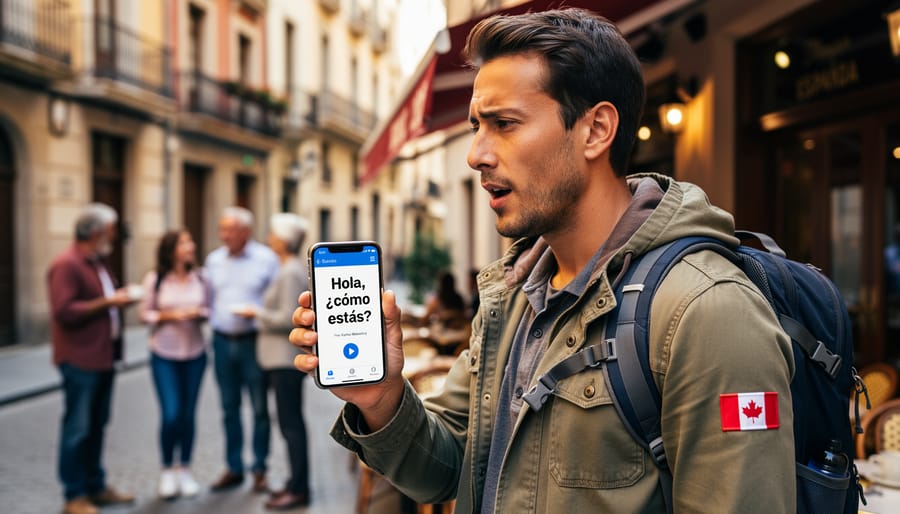
Here’s another crucial point: translation apps are fantastic learning tools, but they make terrible conversation partners. Use them to verify spelling, check pronunciation, and build your phrasebook before you leave Canada. But when you’re face-to-face with someone, put the phone away. Fumbling through a greeting with a smile beats perfectly pronouncing something your app generated while you stare at a screen. Real connection happens when you’re present, even if your Spanish is shaky.
Step-by-Step: Translating and Using ‘Hola’ Correctly
Here’s how I learned to confidently use “hola” during my travels from Canada to Mexico, and how you can master it before your next adventure south of the border.
- Learn the translation. “Hola” means “hello” in Spanish. It’s the most common and versatile greeting you’ll use, working in virtually any situation from casual to semi-formal encounters. I remember feeling relieved when I realized one simple word would carry me through so many interactions during my trip to Playa del Carmen.
- Master the pronunciation. Say it like “OH-lah” with the emphasis on that first syllable. The ‘h’ is completely silent, which threw me off at first since we pronounce our h’s in English. Practice it a few times right now, OH-lah, OH-lah. Don’t overthink it. The beauty of this word is that even if your pronunciation isn’t perfect, Spanish speakers will understand what you mean.
- Check the context. While “hola” works any time of day, you’ll sound more culturally aware if you also know the time-specific greetings. Before noon, “buenos días” (good morning) is preferred. From noon until evening, switch to “buenas tardes” (good afternoon). After dark, use “buenas noches” (good evening/night). That said, if you forget which one to use, “hola” will never steer you wrong.
- Practice saying it aloud. Stand in front of your bathroom mirror before your trip and just say it. Say it while you’re making coffee. Say it to your cat. I practiced in my car during my Toronto commute for a week before flying to Cancun, and it made all the difference when I actually needed it. The physical act of forming the sound builds muscle memory.
- Use a translation tool to verify and explore. Head to and type in “hello” to confirm the spelling and see variations. Account holders get 500 free characters of translation every month, which is plenty for learning basic greetings and their context. I used it to explore related phrases like “hola, ¿cómo estás?” (hello, how are you?) and saved a few favorites in my phone notes for quick reference.
- Try it in a low-pressure situation. Your first real-world test doesn’t need to be a high-stakes business meeting. Start small. Order a coffee at a café, greet your tour guide, or say hello to the hotel receptionist. When I finally said “hola” to the woman at the taco stand in Tulum, she smiled and responded in Spanish, which felt like a tiny victory. That confidence snowballed throughout the rest of my trip.
The key is repetition without pressure. I found that each successful “hola” made the next one easier, and within a couple of days, I wasn’t even thinking about it anymore. The word just flowed naturally when I met someone new. You might stumble the first time or two, I definitely did, once even saying “ola” like the English word “Ola!” which got a confused laugh, but native speakers appreciate the effort far more than they notice the imperfection.
One thing I learned quickly: don’t reach for your translation app mid-conversation as a crutch. Use it beforehand to learn and verify, then put the phone away and engage like a human. People respond to eye contact and a genuine smile just as much as they respond to correct pronunciation. Your willingness to try, even imperfectly, opens doors that staying silent never will.
How to Know You’ve Got It Right
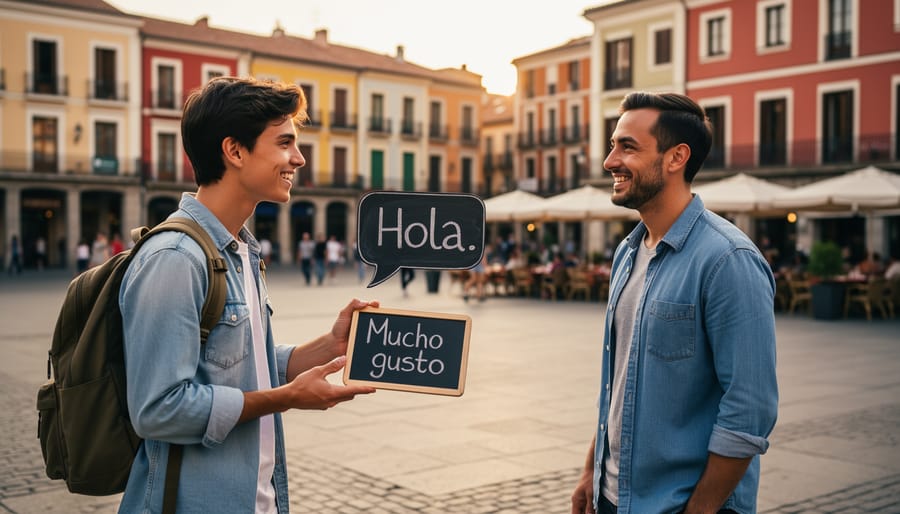
You’ll know you’re nailing ‘hola’ when native speakers smile, respond warmly, and continue the conversation in Spanish instead of switching to English. That’s the golden sign, they recognize you’re making a genuine effort and meet you where you are. Pay attention to body language too: relaxed eye contact, a nod, maybe even a friendly follow-up question. If someone immediately replies in English, don’t take it personally. They might be practicing their English or trying to be helpful, but it doesn’t mean your Spanish was wrong.
Another confidence booster is when you stop second-guessing yourself before speaking. I remember standing outside a café in San Miguel de Allende, rehearsing ‘hola’ in my head like it was a speech. The moment I finally said it to the server, she launched into rapid Spanish about the daily specials, treating me like any other customer. I caught maybe thirty percent of what she said, but that interaction felt like a win, I’d opened the door.
Once you’re comfortable with ‘hola’, your next move is ‘¿cómo estás?’ (how are you?). These two phrases together create a real exchange, not just a one-word greeting. Start building a compact travel phrasebook: ‘gracias’ (thank you), ‘por favor’ (please), ‘¿dónde está…?’ (where is…?), and ‘la cuenta, por favor’ (the bill, please). Write them in a pocket notebook or save them in your phone’s notes app.
Before you even leave Canada, practice with Spanish-speaking communities right here at home. Toronto’s Kensington Market, Montreal’s Latin Quarter, and Vancouver’s Commercial Drive all have vibrant Latin American neighborhoods where you can test your skills ordering empanadas or chatting with shopkeepers. They’ll appreciate the effort, and you’ll gain confidence in a low-stakes setting. Every small conversation is practice for your next adventure beyond Canada’s borders.
Common Questions About Saying Hello in Spanish
Is ‘hola’ formal or informal?
‘Hola’ sits comfortably in the middle, it works equally well with taxi drivers, hotel staff, or business contacts. I’ve used it with everyone from street vendors in Playa del Carmen to border officials, and it’s always been well-received.
What if I mispronounce it?
Native speakers appreciate the effort far more than they notice slight pronunciation slips. The silent ‘h’ trips up many Canadians at first, but even if you accidentally add a breathy sound, people will understand your greeting and respond warmly.
Do I need to know Spanish grammar to say hello?
Not at all, ‘hola’ requires zero grammar knowledge. It doesn’t change for gender, time of day, or formality level, making it the perfect starting point for Canadian travelers who haven’t studied Spanish since high school.
How does knowing ‘hola’ help Canadian travelers specifically?
When you travel from Canada to Mexico, Spain, or Central America, starting conversations in Spanish, even just a simple greeting, signals respect and often unlocks better service, friendlier interactions, and local recommendations you wouldn’t get otherwise. It’s a small investment before you go that pays dividends throughout your trip.
These questions come up constantly in my conversations with fellow Canadians planning their first trips to Spanish-speaking countries. The beauty of ‘hola’ is its simplicity, you don’t need perfect pronunciation or cultural expertise to make a positive impression. I’ve watched travelers transform their experiences simply by leading with this one word instead of defaulting to English. The key is confidence, not perfection.
Learning to say “hola” might seem like a tiny detail when you’re planning adventures beyond our beautiful Canadian borders, but it’s one of those small gestures that transforms your entire travel experience. I’ve found that making the effort to greet people in Spanish, whether you’re exploring Mexico’s beaches, wandering through Spain’s cobblestone streets, or discovering Central America’s hidden gems, shows respect and genuine interest in the cultures you’re visiting.
Before your next trip south from Canada, spend a few minutes practicing. Say “hola” out loud while you’re making coffee, try it with Spanish-speaking friends in Toronto or Vancouver, or test it out at your favorite Latin American restaurant. The pronunciation is simple, the word is short, and the doors it opens are worth far more than the minimal effort required.
You’ve already mastered traveling across Canada’s diverse regions. Now take that same adventurous spirit and apply it internationally. Learning this single greeting is your first step toward more authentic connections, richer stories, and experiences that go deeper than typical tourist moments. Pack your sense of curiosity alongside your passport, practice your pronunciation, and get ready to explore the Spanish-speaking world with confidence.