

The fastest way to check your Newark Liberty (EWR) flight right now is to open the airport’s live departures page or your airline’s app. Most delays at Newark are caused by air traffic congestion, weather rolling through the New York metro area, or FAA ground stops that ripple across the entire Northeast corridor. As of today, the FAA reports general departure delays at EWR with gate holds and taxi delays of 15 minutes or less, plus arrival delays with airborne holds of similar length. If you’re flying between Newark and a Canadian city, you’re navigating one of the busiest cross-border routes in North America, and even short delays can cascade into missed connections or disrupted plans.
I’ve spent enough time at Newark to know that the airport earns its reputation for delays honestly. It’s sandwiched between LaGuardia and JFK, sharing some of the most congested airspace in the world, and summer thunderstorms or winter ice can ground dozens of flights in minutes. For Canadian travelers, Newark often serves as a connector hub or a budget-friendly alternative to flying directly into Toronto or Montreal. That convenience comes with trade-offs, especially during peak travel windows when a single weather system can turn a smooth two-hour hop into an all-day ordeal.
This guide walks you through exactly how to triage your delay in real time, understand what’s causing the holdup, and take concrete steps to protect your itinerary and your rights as a passenger.
Is Your Newark Flight Actually Delayed? How to Check Right Now
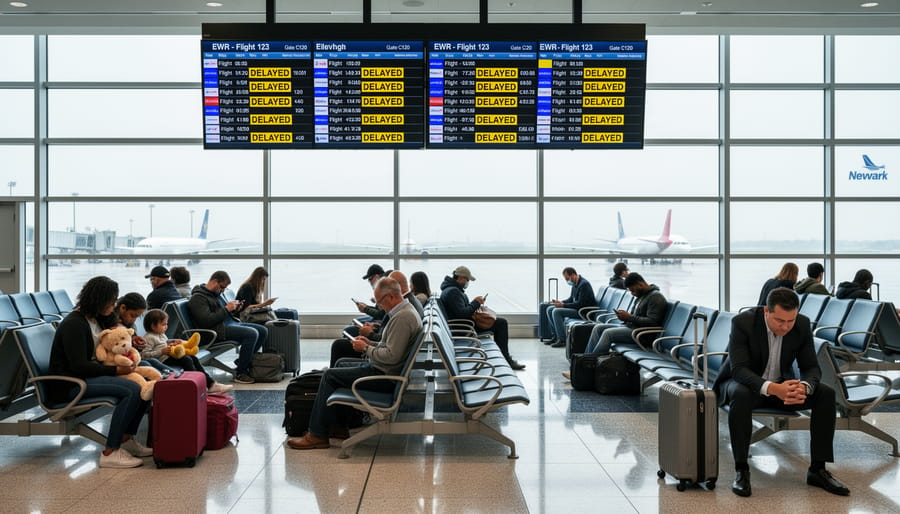
If you’re reading this with your boarding pass in hand and a gnawing feeling that something’s off, you need answers fast. The good news? You can confirm whether your Newark flight is actually delayed in just a few minutes using official sources, no endless hold music required.
Here’s your quick verification checklist, in order of reliability:
- Start with the FAA NAS dashboard to see if Newark has system-wide delays right now. Look for EWR in the list, if it’s there, you’ll see what type of delays are happening (arrivals, departures, or both) and how long they’re running. As of this morning, for example, Newark showed general departure delays with gate hold and taxi delays of 15 minutes or less, plus arrival delays with airborne holds in the same range.
- Check EWR’s official departures page for your specific flight number. This page shows real-time flight status, current security wait times, and check-in details, it’s more granular than the FAA view.
- Confirm directly with your airline through their app or website. This step is crucial because the FAA explicitly states their status information isn’t flight-specific. What shows as a minor delay system-wide might mean your particular flight is fine, or conversely, your flight could be significantly delayed even when overall airport operations look normal.
Here’s what those delay numbers actually mean for you. A 15-minute gate hold means aircraft are waiting at the gate before being cleared for pushback. Taxi delays refer to the crawl between gate and runway. Airborne delays mean inbound planes are circling or slowing down before landing. These often stack, if arrivals are delayed, your departing plane might not even be at the gate yet.
I’ve learned to check U.S. delays the moment I wake up on travel days, especially for Newark connections. The FAA dashboard updates constantly (the last Newark update was at 1:02 AM UTC today), but your airline has the final word on whether you’re boarding or waiting.
One insider tip: set up flight notifications through your airline’s app before you even leave for the airport. You’ll get alerts about gate changes and delays before they’re announced overhead, giving you a head start on rebooking if things go sideways.

Why Newark Flights Get Delayed: The Most Common Causes
Understanding why Newark flights get delayed helps you plan smarter and keep perspective when you’re stuck at the gate. From my years of flying through EWR on Canada-U.S. routes, I’ve learned that delays aren’t random, they follow patterns you can anticipate.
Weather’s Outsized Role in the Northeast Corridor
Newark sits squarely in one of North America’s most weather-sensitive flight paths. Summer thunderstorms roll through the region with little warning, forcing air traffic controllers to reroute planes around dangerous cells. Winter brings its own challenges: snow, ice, and low visibility can ground departures for hours. Even fog that wouldn’t faze airports out west creates bottlenecks here because EWR operates so close to its capacity limits. Spring nor’easters? Those can ripple through schedules for days.
Air Traffic Congestion at a Major Hub
EWR handles over 1,200 flights daily, sharing airspace with JFK and LaGuardia. This congestion means small hiccups cascade quickly. When you hear delay terminology, here’s what’s actually happening:
- Gate hold
- Your plane is ready but waiting for clearance to push back from the gate, usually due to runway or airspace congestion.
- Taxi delay
- The aircraft has left the gate but is waiting in line on the taxiway for its turn to take off.
- Airborne delay
- Planes already in the air are circling or flying holding patterns before they’re cleared to land at Newark.
- Ground stop
- The FAA has temporarily halted all departures to or from Newark, typically due to severe weather or equipment issues.
- Air traffic control restrictions
- Controllers limit the number of flights entering Newark’s airspace to prevent dangerous overcrowding.
Airline and Airport-Specific Factors
Sometimes delays stem from the airlines themselves, mechanical issues, crew scheduling problems, or late-arriving aircraft that need to turn around for your flight. Newark’s aging infrastructure occasionally contributes too, with equipment malfunctions or construction projects temporarily reducing operational capacity.
The good news? Knowing these patterns means you can build buffer time for connections, choose less weather-vulnerable travel dates when possible, and understand that most delays aren’t personal failures of service, they’re safety measures keeping you protected.
Your Action Plan: What to Do When Your EWR Flight Is Delayed

What Canadian Travelers Need to Know About Compensation
Here’s the frustrating part about delays at Newark: Canadian passenger protection rules depend entirely on which direction you’re flying. If your flight departs from Canada, even if it’s bound for Newark, you’re covered by Canada’s Air Passenger Protection Regulations (APPR). That means you’re entitled to compensation for delays within the airline’s control, plus food, drinks, and hotel accommodations if you’re stranded overnight.
But here’s the catch: if your flight departs from Newark heading to Canada, U.S. airline policies govern your rights, and those are generally much less generous. Most U.S. carriers, including United, aren’t required to compensate you for delays, they’ll typically rebook you on the next available flight, but monetary compensation isn’t automatic like it is under APPR.
I always tell friends to check two things the moment a delay hits: first, where your flight originates (that determines which rules apply), and second, what your specific airline’s policy says. United’s Travel alerts page is actually helpful for understanding what the carrier will do during disruptions, but it’s not a substitute for knowing your legal rights.
For flights leaving Canada, you’ll want to understand your Air Canada rights or check the official Canadian Transportation Agency website for APPR details, the rules vary by delay length and cause. There’s detailed guidance on Canada delay compensation worth reviewing before your trip, so you know exactly what to ask for if things go sideways.
Tools and Resources Every Newark Traveler Should Bookmark
Having the right bookmarks saved can transform a stressful delay situation into a manageable inconvenience. I learned this the hard way before I started keeping these resources at my fingertips. Now, checking flight status takes seconds instead of frantic minutes scrolling through unreliable search results.
Start with the FAA’s National Airspace System dashboard at nasstatus.faa.gov. This shows you real-time airport-wide conditions at Newark, including general departure and arrival delays, ground stops, and weather impacts. However, remember that this information isn’t flight-specific, so you’ll need to cross-reference with your airline.
Next, bookmark EWR’s official departures page on the Newark Liberty International Airport website. This gives you security wait times alongside flight status updates, helpful when you’re deciding whether to rush through breakfast or take your time.
| Resource | What It Shows | When to Use It |
|---|---|---|
| FAA NAS Dashboard (nasstatus.faa.gov) | Airport-wide delays, ground stops, weather conditions | First check to see overall Newark status |
| EWR Departures Page | Flight status, gate info, security wait times | Confirm your specific flight details |
| Your Airline’s App | Gate changes, delays, rebooking options | Most reliable for flight-specific updates |
| Airline Travel Alerts Page | Policy waivers, system-wide disruptions | Check for fee-waiver opportunities |
Your airline’s mobile app deserves a spot on your home screen. Enable push notifications for gate changes and delays, they often know before the airport displays update. Airlines like United maintain dedicated Travel alerts pages where they post policy waivers during major disruptions, which can save you rebooking fees.
Set up these tools before you leave for the airport. That way, when delays happen, you’re already equipped to check status and explore options rather than scrambling to find reliable information.
How to Prevent Delay Headaches on Future Newark Trips
After dealing with my fair share of Newark delays on trips between Toronto and destinations south, I’ve learned that a little prevention goes a long way. Here are the strategies that have saved me hours of stress and helped me navigate EWR more smoothly.
Book the First Flight Out
Early morning flights are your best friend at Newark. The first departure of the day hasn’t yet been touched by the cascading delays that pile up as the day progresses, weather clears overnight, crew rest issues are resolved, and air traffic congestion hasn’t built up yet. I aim for anything departing before 8 AM when possible. Yes, it means a painfully early wake-up, but I’ve found my on-time rate jumps dramatically compared to afternoon departures.
Build Generous Connection Buffers
If you’re connecting through Newark rather than ending there, give yourself at least two hours between flights, more if you’re arriving internationally and need to clear customs. EWR’s layout means terminal changes can eat up time, and those 15-minute taxi delays the FAA reports can quickly turn into missed connections when you’re cutting it close. I learned this the hard way rushing between terminals.
Pack Smart for Potential Delays
Always carry essentials in your personal item, phone charger, medications, a change of clothes, and snacks. Following solid delay packing tips means you’re prepared whether you’re stuck at the gate for two hours or need to overnight unexpectedly. I keep a small toiletry kit and an extra shirt in my backpack on every Newark trip.
Consider Trip Delay Insurance
For important trips, trip delay insurance can be a lifesaver. Many credit cards offer this as a perk, covering meal and hotel costs if your delay exceeds a certain threshold (usually six hours). Check what your card already includes before buying separate coverage, you might already be protected.
Key Details to Know
Newark delays don’t have to derail your travel plans if you know what to expect and where to look for real-time updates. These key details will help you stay ahead of delays and make informed decisions when your flight status changes.
- FAA delay reports show general trends, not flight-specific status, always confirm with your airline directly before heading to the airport.
- Newark’s departures page includes security wait times alongside flight status, helping you time your arrival even when delays shift your schedule.
- Gate hold and taxi delays of 15 minutes can cascade into longer waits during peak travel periods, so monitor status frequently once you’re at EWR.
- Canadian passenger rights under APPR apply to flights departing from or arriving in Canada, but different rules govern U.S. domestic segments, check which regulation covers your specific route.
- United’s Travel alerts page provides carrier-specific guidance during major disruptions, often before general delay trackers reflect the full impact.
- Booking morning flights reduces your exposure to cascading delays that build throughout the day at busy hubs like Newark.
- Download your airline’s app before traveling, push notifications often alert you to gate changes and delays faster than airport monitors.
These practical touchpoints give you the foundation to navigate Newark’s delays with confidence rather than stress. The difference between a minor inconvenience and a travel nightmare often comes down to having the right information at the right moment, so treat these resources as your first line of defense when flight schedules start shifting.
Common Questions About Newark Flight Delays
How do I check Newark Airport flight status?
Visit the FAA’s National Airspace System dashboard at nasstatus.faa.gov for overall airport delay information, then check EWR’s official departures page for security wait times and flight status. Always confirm with your airline directly, as FAA status information is not flight-specific.
What delays are being reported at EWR?
Current FAA reports show general departure delays with gate hold and taxi delays of 15 minutes or less, plus arrival delays with airborne delays of 15 minutes or less. These figures change throughout the day, so check nasstatus.faa.gov for the latest updates.
Should I check with my airline even if FAA shows minimal delays?
Absolutely. The FAA status page explicitly states its information is not flight-specific, so your particular flight might be significantly delayed even when overall airport delays appear minimal due to crew scheduling, mechanical issues, or connections from other delayed flights.
Why are flights delayed or canceled at Newark?
Newark experiences delays primarily due to weather patterns affecting the Northeast corridor, air traffic congestion at one of the country’s busiest hubs, airline operational challenges, and airport-specific factors. Many East Coast delays ripple through Newark given its role as a major connection point.
What should Canadians know about compensation for delays?
Canadian Air Passenger Protection Regulations (APPR) apply to flights departing from or arriving in Canada, but not to U.S. domestic segments. Check the official APPR regulations and your airline’s specific policies for compensation eligibility, as amounts vary based on delay length and cause.
These questions reflect what I hear most often from fellow travelers dealing with Newark disruptions. The key takeaway is that multiple sources give you the complete picture, FAA data shows the big-picture airport status, EWR’s departures page adds security and gate details, but your airline holds the final word on your specific flight.
I always recommend setting up flight notifications through your airline’s app as a first line of defense. That way, you’ll know about changes before you even leave for the airport, giving you more time to explore rebooking options or adjust your plans. For Canadian travelers specifically, understanding which passenger protection rules apply to which segment of your journey makes a huge difference in knowing what compensation you might be entitled to claim.
Newark delays happen, that’s just the reality of one of North America’s busiest airports. But here’s the thing: they don’t have to derail your entire trip. Armed with the right tools and a solid game plan, you can navigate delays like a seasoned traveler instead of a stressed one.
Bookmark the FAA’s dashboard and EWR’s departures page right now. Keep your airline’s app notifications turned on. Know where to check your passenger rights before you need them. These simple steps transform you from helpless to informed when those departure boards start showing red.
I’ve learned that the best travelers aren’t the ones who never face delays, they’re the ones who handle them with grace and practical know-how. Whether you’re heading home to Canada after an amazing adventure or just starting your journey south, don’t let a few extra hours at Newark steal your travel joy. The destination is still waiting, and you’ve got this. Safe travels, friends!