
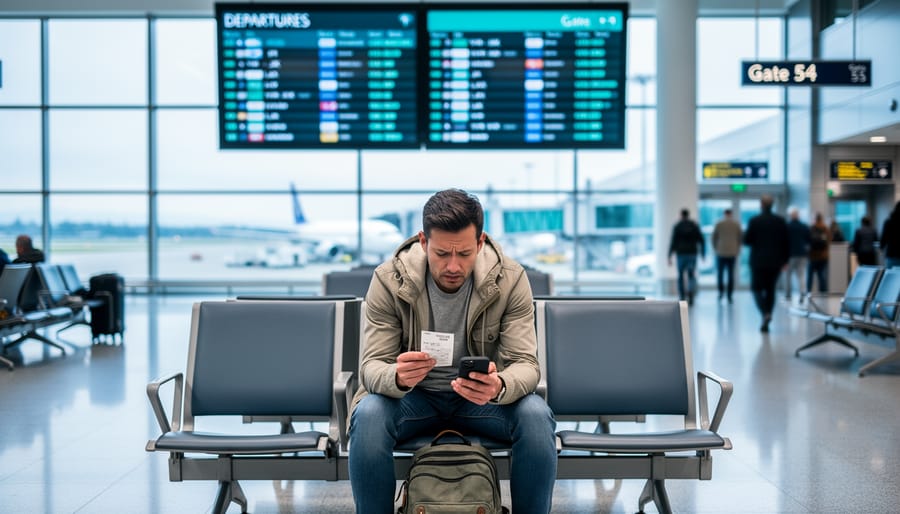
Picture this: you’re sitting at YVR, staring at the departures board as your flight status flips from “on time” to “delayed.” Your first move? Check if weather or crew shortages caused the delay, because that distinction determines whether you’re entitled to up to $1,000 in compensation under Canada’s Air Passenger Protection Regulations.
I’ve been stuck at Vancouver International more times than I’d like to admit, and through those frustrating experiences, I learned something most travelers don’t realize: not all delays are created equal. If your flight is delayed three hours or more due to something within the airline’s control (think overbooking, maintenance issues, or operational problems), you’ve got rights. But if it’s weather, air traffic control, or a security threat? You’re out of luck on the compensation front, though you still deserve care and rebooking options.
The good news is that Vancouver travelers are protected by some of the strongest passenger rights legislation in the world. The tricky part? Airlines aren’t always upfront about what you’re owed, and the process can feel deliberately confusing.
Over the next few minutes, I’ll walk you through exactly how to diagnose your delay situation, determine what compensation you qualify for, and actually get the money you’re entitled to. We’ll also cover immediate strategies for when you’re stuck at the airport right now, plus prevention tips to minimize future headaches at YVR. Whether you’re currently stranded or planning ahead, you’ll know exactly what to do when those dreaded delays hit.
Understanding What’s Happening: Common YVR Delay Scenarios
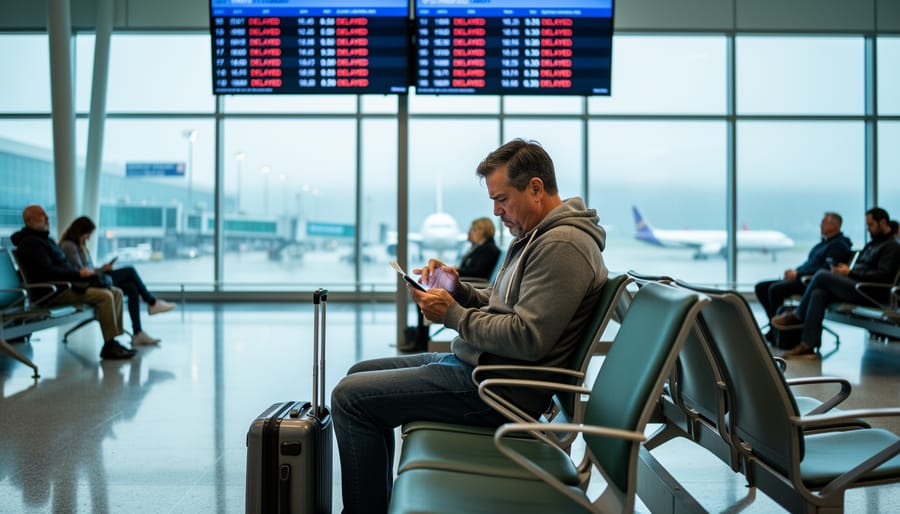
When the departure board flashes “DELAYED” next to your flight number at YVR, the first thing you need is to figure out what’s actually causing the holdup. Understanding your specific situation makes all the difference in knowing what to expect, what you’re entitled to, and how long you might be waiting.
Vancouver’s airport deals with a unique mix of delay triggers that you won’t necessarily see at other Canadian hubs. I’ve learned to recognize the patterns after enough trips through YVR, and spotting the cause early helps you plan your next move instead of just sitting there frustrated.
Here’s what you’re most likely dealing with:
- Weather delays, Vancouver’s notorious fog rolls in from October through March, particularly during morning hours, reducing visibility for takeoffs and landings. Heavy rain and occasional snow can also ground flights temporarily.
- Mechanical issues, Aircraft maintenance problems that need fixing before departure, often discovered during pre-flight checks. These can range from minor technical glitches to more serious equipment failures requiring part replacements.
- Crew shortages, Pilots or flight attendants timing out on their duty hours, calling in sick, or stuck on delayed inbound flights. Post-pandemic staffing challenges have made this more common across all airlines.
- Air traffic control restrictions, Flow control measures when US airspace gets congested or when Pacific routes face capacity constraints. YVR’s position as a major transpacific gateway means ripple effects from overseas delays hit hard here.
- Airline operational issues, Problems with connecting passengers, baggage loading complications, gate availability conflicts, or schedule compression where airlines pack flights too tightly to recover from earlier delays.
The gate agent’s announcement usually gives you clues, but they won’t always spell out the full story immediately. Weather delays are typically obvious since you can look outside, but mechanical and crew issues often start vague with “brief delay” messages that stretch longer. If you’re connecting through YVR from an international flight, you’re especially vulnerable to cascading delays where one problem triggers another. Pay attention to whether other flights to your destination are also delayed, which suggests systematic issues rather than aircraft-specific problems.
Why Vancouver Flights Get Delayed: The Real Causes
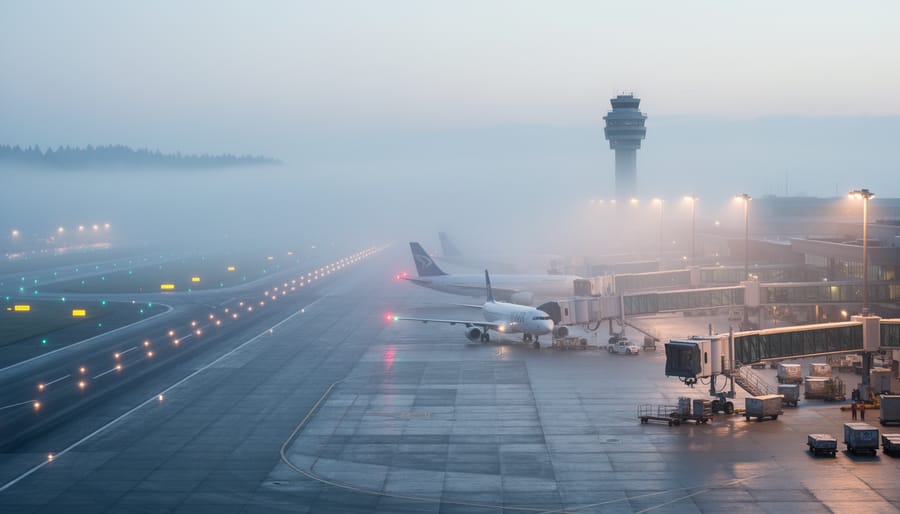
I’ve been stuck on the tarmac at YVR enough times to develop a genuine curiosity about what actually causes these delays. Understanding the why behind your delay won’t get you home faster, but it does help make sense of the situation, and knowing whether it’s weather, mechanical issues, or something else directly affects your compensation rights.
Vancouver’s location makes it particularly vulnerable to certain types of delays. Perched on the Pacific coast with mountains backing the airport, YVR deals with unique weather challenges that other Canadian airports don’t face. The notorious coastal fog that rolls in during fall and winter can ground flights for hours, while sudden wind shifts off the ocean require last-minute runway changes that cascade through the schedule. I’ve watched perfectly clear mornings turn into delay nightmares when low cloud suddenly blankets the airfield.
As an international hub connecting North America to Asia, YVR handles complex scheduling that’s inherently fragile. When an aircraft arrives late from Tokyo or Seoul, it doesn’t just affect that one flight, it ripples through every subsequent leg that plane was supposed to operate. Airlines pack their schedules tightly to maximize efficiency, which means there’s little buffer when things go wrong. One mechanical issue with a widebody aircraft can strand hundreds of passengers across multiple flights.
Understanding airline terminology helps you know what you’re dealing with:
- Controlled Delay
- Issues within the airline’s control, like maintenance, crew scheduling, or operational decisions. These delays typically qualify you for compensation under Canadian regulations.
- Uncontrolled Delay
- Situations outside the airline’s control, such as weather, air traffic restrictions, or security threats. Compensation usually doesn’t apply, though the airline still owes you care like meals and accommodation.
- IROP (Irregular Operations)
- Industry term for any disruption to normal flight operations, whether delays, cancellations, or diversions. When you hear staff mention IROP, they’re acknowledging something’s gone sideways with the schedule.
- Minimum Connection Time
- The shortest layover officially allowed for connecting flights. When your incoming flight eats into this buffer, you risk missing your connection even if the delay seems minor.
Crew availability presents another challenge specific to Vancouver. Federal rules strictly limit how many hours pilots and flight attendants can work, and YVR’s position as a long-haul hub means crew often max out their duty time. I’ve had flights delayed simply because the crew flying in from Shanghai legally couldn’t turn around and take us back out, they’d exceeded their hours and a replacement crew needed time to get to the airport.
Air traffic congestion plays a bigger role than most passengers realize. YVR shares airspace with smaller regional airports and seaplane routes, creating a complex dance that air traffic control manages minute by minute. During peak travel times, planes stack up waiting for takeoff slots or landing clearance. That 20-minute delay might not be your airline’s fault at all, it could be simple congestion in the sky.
Your Passenger Rights Under Canadian Law
Here’s something I learned the hard way after spending six hours at YVR during a mechanical delay: most travelers have no idea they’re legally entitled to cash compensation, not just apologies and snack vouchers. Canada’s Air Passenger Protection Regulations (APPR) give you specific rights that airlines aren’t exactly eager to advertise, and understanding what you’re legally owed can turn a frustrating experience into a situation where you at least get fairly compensated.
The regulations establish clear compensation and assistance rules based on how long your flight is delayed and whether the airline controlled the situation. Airlines must pay between $400 and $1,000 for delays they could have prevented, with amounts increasing based on your arrival time at your final destination. Weather and air traffic control issues fall under “outside airline control,” meaning no compensation but you still get meals and accommodation if needed.
| Delay Length at Arrival | Airline Controlled | Outside Airline Control |
|---|---|---|
| 3-6 hours | $400 compensation | No compensation, assistance only |
| 6-9 hours | $700 compensation | No compensation, assistance only |
| 9+ hours | $1,000 compensation | No compensation, assistance only |
What many people miss is that compensation depends on when you actually arrive, not when you depart. If your flight leaves three hours late but makes up time in the air and you land only two hours behind schedule, you’re not entitled to cash compensation. The airline must explain the delay reason in writing within 30 days if you request it.
Your what you’re owed extends beyond money. Once a delay hits two hours, airlines must provide food and drink. At four hours overnight, they owe you hotel accommodation and ground transport. I’ve watched travelers accept a $50 voucher when they were legally owed $700 cash simply because the gate agent didn’t mention the regulations.
Here’s my insider tip: Canadian flight delay rights apply to all flights departing from Canadian airports, regardless of the airline’s home country. Your YVR delay is covered whether you’re flying Air Canada, United, or a budget carrier. The regulations also cover international flights arriving in Canada on Canadian airlines, giving you protection even when traveling abroad.
How to Claim Your Compensation: Step-by-Step Process
What to Document at the Airport
The moment you realize your flight’s delayed, start building your paper trail. I learned this the hard way after a fog-related delay at YVR when I couldn’t prove half my expenses because I’d tossed receipts thinking I’d never need them.
Grab your boarding pass, both the original and any reissued ones if they rebook you. Take clear photos of the departure board showing your flight number and delay status. Screenshot every text, email, or app notification from the airline about the delay. If there’s an announcement over the PA system, jot down the time and what was said, especially if they mention specific causes.
Keep every single receipt: airport meals, that emergency phone charger, parking extensions, even the coffee you bought while waiting. If they put you up overnight, save the hotel documentation and ground transportation costs.
Here’s my travel hack: I keep a zippered pouch in my carry-on specifically for delay documentation. The second something goes wrong, everything goes in that pouch. It’s saved me hundreds in compensation claims, and when you’re stressed and exhausted at 11pm in an airport, you don’t want to be fishing through bags for that one crucial receipt you know you saved somewhere.
Filing Your Claim With the Airline

Once you’ve gathered your documentation, it’s time to submit your claim directly to the airline. I’ve found this process surprisingly straightforward when you know what to include.
Start by visiting the airline’s website and locating their customer relations or compensation claim section, most Canadian and international carriers operating from YVR have dedicated online forms. If you’re uncomfortable with digital submissions, you can mail a written claim, though I’d recommend keeping things online for faster processing.
Your claim should include your full name as it appears on your booking, confirmation number, flight number and date, a clear statement that you’re requesting compensation under Canada’s Air Passenger Protection Regulations, and a brief explanation of what happened. Attach copies of your boarding pass, photos of delay announcements, and any expenses you incurred.
Here’s template language that works: “I am writing to request compensation for a [length] delay on flight [number] from Vancouver on [date]. Under the Air Passenger Protection Regulations, I am entitled to $[amount] compensation as this delay was within the airline’s control and not related to safety.”
Airlines have 30 days to acknowledge your claim and must provide a final response within a reasonable timeframe, though in my experience, expect 6-8 weeks for resolution. Keep copies of everything you submit, you’ll need them if you escalate later.
When and How to Escalate to the CTA
I’ve been there, staring at an airline’s generic rejection email after waiting weeks for a response, feeling completely powerless. Here’s the truth: if your airline denies your claim or ignores you for 30 days, it’s time to escalate to the Canadian Transportation Agency. This isn’t giving up; it’s using the system designed specifically to protect passengers like us.
First, don’t escalate too early. The CTA requires you to give airlines a full 30 days to respond to your initial claim. I learned this the hard way when my first complaint got bounced back because I’d only waited three weeks. Use that time wisely, organize your documentation, keep all email threads, and screenshot everything.
When you’re ready, visit the CTA website and use their online complaint form. The Complaint Resolution Office process is surprisingly straightforward. You’ll need your airline claim reference number, all correspondence proving you contacted the airline first, your flight details, and those receipts and photos you collected at the airport.
Here’s what strengthens your case: be specific, stick to facts, and cite the regulation you believe was violated. Instead of “the delay was terrible,” write “my flight was delayed 4.5 hours due to crew scheduling, qualifying under APPR section 12.” The CTA reviews thousands of complaints, clarity wins.
Expect the process to take several months, but the CTA’s decisions are binding. Airlines must comply or face serious penalties.
What to Do While You’re Stuck at YVR
The moment you realize your flight’s delayed, head straight to the airline counter or gate. Don’t wait for them to find you, you need to understand what’s really happening and what they’ll provide. Ask specific questions: Is this delay weather-related, mechanical, or within the airline’s control? How long are they estimating? What compensation are they offering? The answers determine your rights and next steps.
If your delay stretches beyond two hours and it’s the airline’s fault, they owe you meals. Beyond three hours, you’re entitled to compensation. Don’t be shy about asking for vouchers, most airlines at YVR won’t volunteer them unless you speak up. I learned this the hard way during a four-hour mechanical delay when the family beside me got dinner vouchers simply because they asked, while I sat there with my empty stomach and my pride.
For meal vouchers, hit the domestic terminal’s food court or grab something from Tim Hortons near the gates. The international terminal has better options, I’m partial to the Fresh Slice Pizza when I’m hangry and just need something quick. If you’ve got time and want proper food, White Spot’s a solid choice for something more substantial.
While you wait, find a comfortable spot away from the gate chaos. The international terminal’s observation area offers great views of the runway and mountains, perfect for keeping kids entertained or just clearing your head. The yoga room near gate C46 is a hidden gem if you need quiet. Both terminals have free WiFi, so you can monitor your flight status through the airline app while answering those “where are you?” texts.
Download FlightStats or the YVR app to track your flight in real-time and watch for gate changes. Airlines sometimes rebook passengers on different flights without clear announcements, so stay alert. If your delay means you’ll miss a connection, ask about rebooking immediately, don’t wait until you’ve actually missed it. Being proactive means better flight options and sometimes skipping the line when everyone else realizes the problem simultaneously.
Should you breeze through YVR security and then face a delay, at least you’ve got the whole terminal to explore rather than being stuck in the pre-security area.
Prevention Strategies: Protecting Yourself From Future Delays
After dealing with my share of YVR delays over the years, I’ve learned that smart planning makes all the difference. You can’t eliminate delays entirely, but you can absolutely minimize their impact on your trips.
The most effective strategy I’ve discovered is booking morning flights whenever possible. Airlines typically run tighter schedules as the day progresses, meaning delays compound throughout the afternoon and evening. That 7am departure might require an early alarm, but it’s far less likely to cascade into a multi-hour mess. I also avoid booking the last flight of the day on any route, if something goes wrong, you’re stuck overnight with limited rebooking options.
For connections through YVR, give yourself serious buffer time. I now insist on at least three hours between international arrivals and domestic departures, especially during October through March when weather delays spike. Yes, it’s a long layover, but I’ve spent too many stressed-out hours sprinting through terminals only to watch my connection door close. The extra time also lets me grab decent food and actually enjoy YVR’s facilities rather than treating the airport like an obstacle course.
Travel insurance has saved me more than once. Look for policies that specifically cover delay-related expenses like meals and hotels, not just trip cancellation. The relatively small upfront cost becomes incredibly valuable when you’re facing an unexpected overnight stay. Read the fine print about what delay duration triggers coverage, some policies only kick in after six or twelve hours.
One practical tip from my Canada travel tips experience: research airline performance records for specific routes. Some carriers consistently perform better on certain Vancouver routes than others. Flight tracking websites publish this data publicly, and spending fifteen minutes reviewing it before booking has steered me away from chronically delayed flights.
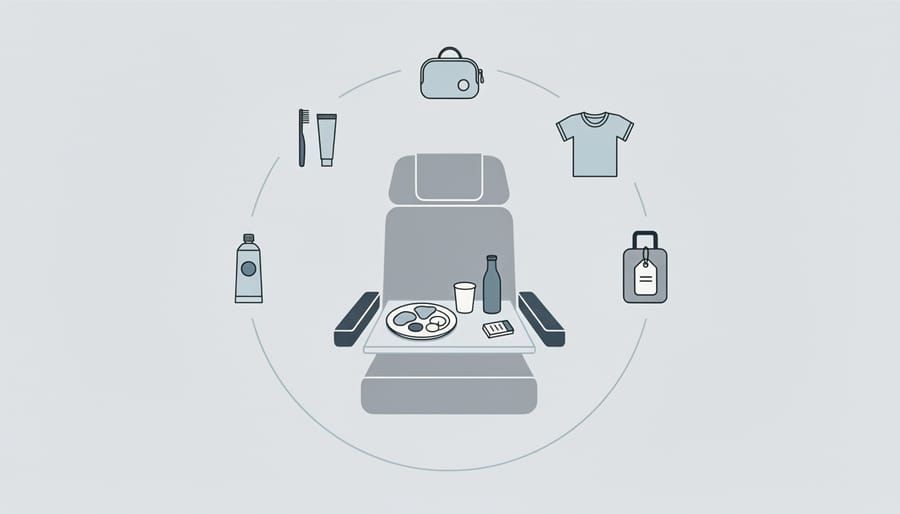
Finally, embrace delay-proof packing strategies. Keep medications, a change of clothes, phone chargers, and essential toiletries in your carry-on. I learned this the hard way when a mechanical delay separated me from my checked bag for two days. Having those basics accessible transforms a delay from a crisis into merely an inconvenience. Pack snacks too, airport food gets expensive during long waits, and having your own supplies provides both comfort and cost savings.
Common Questions About YVR Flight Delays and Compensation
I’ve fielded so many questions from fellow travelers about compensation after delays, it’s honestly one of the most confusing parts of air travel. Here are the answers to what I get asked most often when someone’s stuck at YVR or just landed after a nightmare journey.
How long does it actually take to get my compensation money?
Airlines have 30 days to respond to your initial claim, and if they agree to pay, they must do so within that timeframe. If you escalate to the Canadian Transportation Agency, the process typically takes several months, sometimes up to a year for complex cases.
I accepted a travel voucher at the airport, can I still claim cash compensation?
Yes, absolutely. Accepting a voucher for immediate expenses like meals or hotels doesn’t waive your right to statutory compensation under Canadian law. The airline still owes you the cash amount for the delay itself.
Do the compensation rules apply to international flights leaving Vancouver?
Canadian Air Passenger Protection Regulations cover all flights departing from YVR, regardless of destination, and flights arriving in Canada on Canadian carriers. Foreign airlines operating into Vancouver follow their own countries’ rules for inbound flights.
My flight was delayed but I eventually got to my destination, can I still claim?
Yes, if you arrived three or more hours late at your final destination. The compensation amount depends on the total delay time, not whether you eventually made it.
One thing that surprises people: you can claim even if the airline rebooked you on another flight. What matters is when you actually arrived compared to your original scheduled arrival time. I’ve successfully claimed compensation for a six-hour delay even though I was put on a different aircraft partway through.
The voucher question comes up constantly because airlines often offer them at the gate, and travelers worry they’ve signed away their rights by accepting. You haven’t. Those vouchers cover immediate needs, the meal while you wait, the hotel if it’s overnight. The compensation is separate, a fixed amount based on delay length that you’re legally entitled to regardless of what immediate assistance you received.
Look, I won’t pretend flight delays are fun, they’re not. That four-hour wait at YVR I mentioned? It was exhausting, expensive, and I nearly missed a family reunion. But here’s what changed everything: knowing my rights turned frustration into empowerment. I got my compensation, learned what to document, and now I travel smarter because of it.
You don’t have to accept delays as just “part of travel.” Canadian passenger protection laws exist specifically to help you, and airlines count on travelers not knowing about them. Whether you’re stuck at YVR right now or planning your next Canadian adventure, you’ve got the tools to handle whatever comes your way.
The next time a departure board shows “DELAYED” beside your Vancouver flight, take a breath. You know what you’re entitled to, how to claim it, and what steps to take while you wait. You’re not powerless, you’re an informed traveler who can turn a rough situation into a story about standing up for your rights.
Safe travels, and may all your Vancouver flights depart on time.