
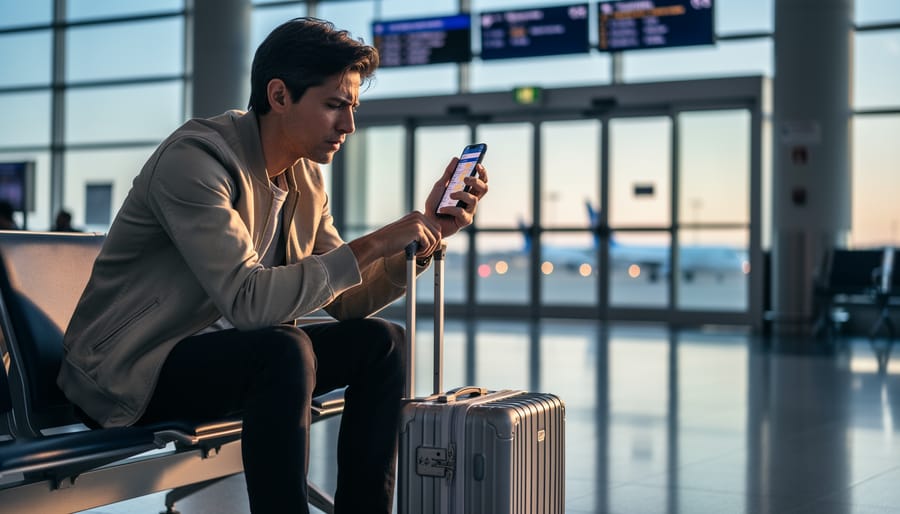
The fastest way to handle a JFK delay is to check your flight status right now on your airline’s app or the JFK Airport live flight tracker. Most delays at JFK stem from a handful of predictable causes: air traffic congestion (JFK is one of the busiest airports in the country), weather rolling through the New York metro area, ongoing construction projects (particularly in Terminal 4), and the ripple effect when an earlier flight in your aircraft’s schedule runs late. If you’re staring at a departure board wondering whether your connection to Toronto or Montreal is doomed, you’re not alone, and there are concrete steps you can take right now to protect your plans.
I’ve flown through JFK more times than I can count on my way to visit family in Vancouver, and I’ve learned the hard way that sitting passively at the gate rarely helps. The good news? You have more control than you think. Whether your delay is already announced or you’re just trying to avoid one on your upcoming trip, understanding the why behind JFK’s notorious delays and knowing exactly what to do in the moment can save you hours of frustration and potentially salvage your travel day. This guide will walk you through checking your status, diagnosing what’s causing the holdup, taking immediate action to minimize the damage, and planning smarter for your next JFK departure.
Is Your Flight Actually Delayed? Quick Status Check
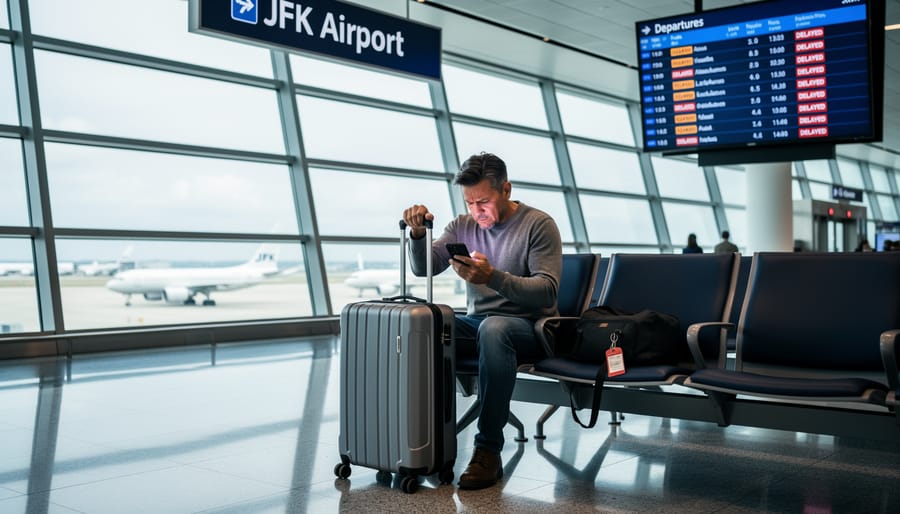
Before you panic or sprint to the airport, take a breath and confirm what’s actually happening with your flight. I learned this the hard way after rushing through Queens traffic only to discover my “delay” was just a gate change from B12 to B14.
Start with the most reliable sources for real-time updates. JFK Airport’s official flights page shows current arrivals, departures, and delays as they happen, not the outdated snapshot you might see on a third-party site. Your airline’s app is equally crucial because it often knows about delays before the airport displays update. Delta, for instance, lets you track specific flights and set up text or email alerts so you’re not constantly refreshing screens.
Here’s your quick checklist for confirming your flight status:
- JFK Airport’s official flights page for real-time departure information
- Your airline’s mobile app for flight-specific updates
- Email and text notifications if you’ve enrolled in alerts
- Airport terminal monitors once you’re on-site
Now, distinguish between minor hiccups and actual problems. A gate change or ten-minute pushback isn’t a delay that requires action. But if you see “delayed” with no new departure time, or the estimated time keeps sliding later, that’s when you need to check flight delays more thoroughly and start executing your backup plan. Most airlines open check-in three to four hours before departure and close 45 to 60 minutes before, so timing matters when you’re deciding whether to head to the airport or wait for updates at home.
What’s Really Causing JFK Delays Right Now
JFK sees delays for a handful of recurring reasons, and knowing which one is hitting your flight changes how you should respond. The airport handles over 62 million passengers each year, so even small hiccups ripple into big backups.
Terminal 4 expansion impacts remain one of the most predictable sources of friction. Delta’s ongoing construction adds gates and upgrades facilities, but the work creates bottlenecks during peak travel periods. Expect longer walks, crowded gate areas, and occasional gate reassignments that cascade into boarding delays.
Weather disruption at JFK hits harder than most travelers anticipate. The New York area sits in a corridor where winter storms, summer thunderheads, and dense coastal fog each take their turn shutting down runways. Ground stops triggered by weather can ripple for hours after skies clear because the entire East Coast flight network has to untangle itself.
Air traffic congestion is a constant at JFK. The airport shares airspace with Newark and LaGuardia, and when one slows down, all three feel it. Mechanical issues pop up randomly, but they’re less common than weather or construction delays. Crew availability problems spike during holidays and after weather events strand flight attendants or pilots away from their scheduled routes.
I learned this firsthand on a December trip to Montreal. My connection sat on the tarmac for 90 minutes, and the captain finally explained that a minor hydraulic sensor needed replacement. The part arrived quickly, but by then we’d lost our departure slot and had to wait for air traffic control to work us back into the queue. It wasn’t the mechanical fix that caused the real delay, it was the slot management afterward.
| Delay Cause | Typical Duration | What You Can Do | Compensation Eligible |
|---|---|---|---|
| Weather | 1-6 hours | Monitor updates, request meal vouchers | No |
| Construction | 15-45 minutes | Arrive early, check gate changes | Rarely |
| Mechanical | 30 minutes, 3 hours | Ask about rebooking, document receipts | Often |
| Air Traffic | 30 minutes, 2 hours | Stay near gate, use airline app | Rarely |
| Crew Issues | 1-4 hours | Push for alternative flights | Yes |
Understanding the cause helps you set realistic expectations. Weather delays rarely qualify for compensation, but mechanical and crew problems often do. Construction delays fall somewhere in between, depending on whether the airline built adequate buffer time into its schedule.
Your Step-by-Step Action Plan When Delays Hit
Get Real-Time Updates Set Up
The best defense against delay chaos is knowing about problems before you reach the airport. I learned this the hard way after showing up for what I thought was an on-time flight, only to discover a two-hour delay that had been announced 90 minutes earlier, time I could’ve spent having breakfast instead of pacing the terminal.
Start with your airline’s native notification system. Delta’s flight status page lets you enter your flight number and opt into text or email alerts that ping you the moment anything changes. Most major carriers offer similar services, and signing up takes less than two minutes. Do this when you book, not the night before departure.
JFK’s official departures page provides real-time status updates across all airlines, showing delays, gate changes, and security wait times. Bookmark it and check the morning of your flight, airlines typically open check-in three to four hours before departure, so you’ll know early if trouble’s brewing.
Set a phone reminder to check status 24 hours out and again three hours before your scheduled departure. These two simple checks catch roughly 80% of delay situations while you still have options, whether that’s rebooking, adjusting your airport arrival time, or just mentally preparing for a longer day.
Know Your Rebooking Rights
Here’s what most airlines won’t tell you upfront: they’re only required to rebook you on their own flights when delays are within their control. But that doesn’t mean you can’t ask for more. When you’re stuck at JFK with a delay eating into your connection time, head straight to the gate agent or call the airline’s customer service line (not the automated system, ask for a representative). Politely but firmly request the earliest available flight, even if it means switching to a partner airline or flying through a different hub. I once turned a six-hour delay into a two-hour wait by asking if they could route me through Newark instead.
For travelers heading to Canada, understanding your rights matters even more. If you’re flying Air Canada, check out the specific Air Canada delay rights you’re entitled to under their policies. Many airlines will offer meal vouchers or hotel accommodations for significant delays, but only if you ask, they rarely volunteer these perks.
Your travel insurance can be a lifesaver here. Most policies cover meals, accommodations, and rebooking fees if the delay meets certain thresholds, typically three hours or more. Keep every receipt and boarding pass. Screenshot confirmation numbers and delay notifications. This documentation turns a frustrating delay into potential reimbursement later.
Document for Compensation Claims
Snap photos of the departure boards showing your flight’s delayed status, these time-stamped images prove exactly when you learned about the problem. Keep every boarding pass, meal voucher, hotel receipt, and taxi fare if the airline provides accommodations. Screenshot email confirmations and text alerts from your airline showing the delay notification. If you purchase meals or overnight essentials out-of-pocket, save those receipts too. For travelers heading to Canada or on international routes, you may qualify for compensation for delays under different regulations depending on your routing, so thorough documentation becomes even more valuable. I learned this the hard way after a six-hour delay left me scrambling to recreate my expenses from memory weeks later, now I photograph everything in real time.
How to Prevent JFK Delay Headaches Before They Start
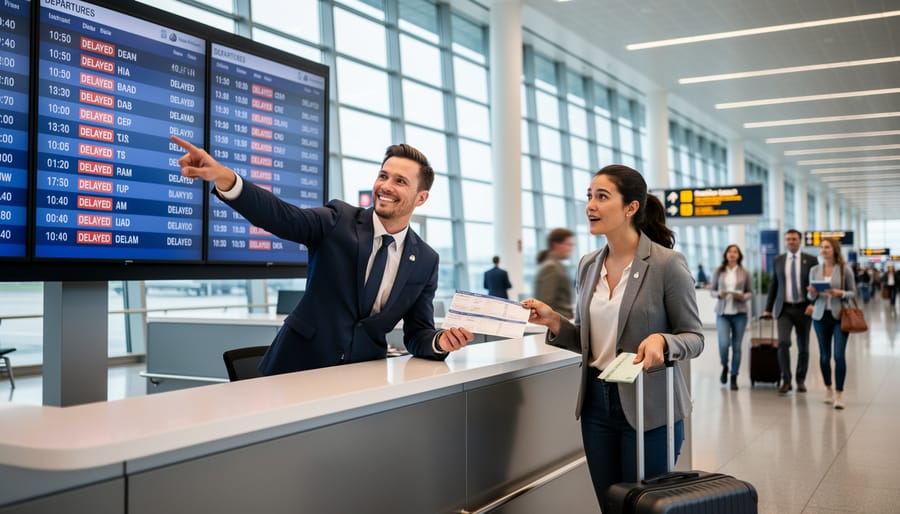
Pick the Right Flight Time
Early morning departures, think 6 to 8 a.m., tend to experience fewer delays at JFK because air traffic hasn’t yet built up, and weather typically causes less disruption in the morning hours. Afternoon and evening flights face higher delay risk as cascading effects from earlier problems compound throughout the day.
Avoid Monday mornings and Friday afternoons when business travel peaks, and be cautious during summer thunderstorm season (June through August) when afternoon heat triggers weather delays. Winter months bring their own challenges with nor’easters and de-icing needs, so morning flights again offer an advantage since crews have had overnight to prepare runways and aircraft.
If you’re connecting to a Canadian destination, choosing a morning JFK departure gives you buffer time to rebook if something goes wrong, rather than scrambling for limited evening options that might leave you stuck overnight in New York.
Plan Ahead for Terminal 4 Construction
Delta’s Terminal 4 construction is ongoing, so if you’re flying through there, expect a bit of extra chaos. I learned this the hard way on a Toronto connection when I assumed “business as usual” and ended up sprinting through temporary corridors.
Give yourself an extra 30 minutes minimum beyond your normal arrival time. Construction means some checkpoints and gates shift around, signage might be outdated, and foot traffic gets funneled into tighter spaces. Delta’s own guidance says to plan ahead, they’re not exaggerating.
Check Delta’s terminal maps online before you leave home. Screenshot the current layout so you’re not wandering with just old memory or confusing airport signs. Know which security checkpoint serves your gate area, because construction sometimes closes alternates without much warning.
If you’re checking bags, arrive closer to the four-hour mark for international flights. Construction slows everything, bag drop lines, security queues, even bathrooms, so that buffer isn’t overkill, it’s survival. And honestly? Grab coffee after security, not before. You’ll have already cleared the worst bottleneck and can actually relax before boarding.
Build Smart Connection Buffers
I learned this lesson the hard way on a December trip to Montreal. I’d booked what looked like a perfectly reasonable 90-minute connection at JFK, thinking that was plenty of time. My inbound flight from Seattle hit a minor delay, just 20 minutes, but that was enough. By the time I cleared customs, grabbed my bags, re-checked them, and ran to the other terminal, my connecting flight was boarding its final passengers. I made it, sweating and breathless, but my luggage didn’t.
For Canadian connections through JFK, I now budget minimum three-hour layovers, and four if I’m arriving internationally. That extra cushion accounts for the realities of JFK’s size, terminal transfers, and the construction delays Delta mentioned for Terminal 4. If you’re connecting to Toronto, Montreal, or Vancouver during winter months, add another 30 minutes, weather delays stack up fast.
The Canada travel tips I wish I’d followed include checking which JFK terminal your connecting airline uses before booking. If you’re switching from Terminal 1 to Terminal 4, that’s an AirTrain ride plus security re-screening. Those “quick” connections advertised by booking engines rarely factor in construction, crowds, or the inevitable gate changes that eat your buffer time.
Jfk Flight Delayed Terms to Know
Understanding airport delay terminology helps you navigate the situation more effectively and know exactly what you’re dealing with. Here are the key terms that frequently appear on JFK status boards and airline communications:
- Tarmac Delay
- When your aircraft is stuck on the ground (either at the gate or on the runway) without taking off, often due to air traffic congestion or weather holds. U.S. regulations require airlines to allow deplaning after three hours for domestic flights and four hours for international.
- Mechanical Delay
- A hold caused by required aircraft maintenance or repairs that must be completed before departure. Airlines prioritize safety over schedule, so these delays can range from minutes to several hours depending on the issue.
- Air Traffic Control (ATC) Delay
- When the FAA slows or stops departures due to congestion, weather systems, or capacity constraints in the airspace. JFK experiences these frequently during peak hours and adverse weather.
- Ground Stop
- A temporary halt of all departures to a specific airport, usually due to severe weather or emergencies. Flights already airborne continue, but nothing new leaves the ground until the stop is lifted.
- Controllable vs. Uncontrollable Delay
- Airlines classify delays as controllable (mechanical issues, crew scheduling, maintenance) or uncontrollable (weather, ATC). This distinction affects what compensation or rebooking assistance you’re entitled to receive.
Knowing these terms lets you ask better questions at the gate and understand what leverage you have for rebooking or compensation. When an agent mentions “ATC delay,” you’ll immediately know it’s weather or congestion-related rather than something the airline could have prevented.
Your JFK Delay Questions Answered
What’s usually causing delays at JFK?
Common culprits include weather patterns affecting the New York area, air traffic congestion, mechanical issues, and ongoing construction projects like the work happening at Terminal 4. Delta specifically advises passengers to plan ahead for departures from Terminal 4 due to construction-related impacts.
How can I check my JFK flight status in real time?
JFK Airport’s official flights page lets you check real-time arrivals, departures, delays, and airline information. Most airlines also offer their own flight status pages, Delta, for example, provides real-time notifications via text or email when you sign up for alerts.
What time should I actually arrive at JFK for my departure?
Most airlines open check-in three to four hours before scheduled departure and close 45 to 60 minutes before. Give yourself extra time during construction periods or if you’re flying internationally to Canada, where customs processing adds another layer.
Am I entitled to compensation if my JFK flight gets delayed?
It depends on the delay cause, length, and whether you’re flying domestically or internationally. Airlines aren’t typically required to compensate for weather delays, but mechanical issues or overbooking might qualify. Check your airline’s contract of carriage and consider travel insurance for broader coverage.
What if I miss my connection to Canada because of a JFK delay?
If you booked both flights on the same ticket, the airline should rebook you on the next available flight at no charge. Document everything, boarding passes, delay notifications, and any expenses, especially since international connections have stricter rules about passenger rights and compensation.
I’ve learned the hard way to screenshot delay notifications the moment they pop up on my phone. That little piece of evidence made all the difference when I was arguing for meal vouchers during a six-hour weather delay that turned into an overnight stay. The airline initially said weather exempted them from providing anything, but showing I’d missed my connecting flight, which was part of the same booking, changed the conversation entirely.
JFK delays will happen, that’s airport life in one of the world’s busiest hubs. But here’s what I’ve learned through my own tight connections and last-minute gate sprints: preparation turns frustration into manageable inconvenience. Set up those flight alerts before you leave home. Know your rebooking rights cold. Build real buffer time into your itinerary, especially when you’re connecting onward to Toronto or Vancouver.
I’ve watched too many travelers panic at departure boards because they didn’t have a backup plan. You don’t need to be one of them. Check JFK’s real-time status pages, understand what Terminal 4 construction means for your timeline, and keep that documentation handy if things go sideways.
The Canadian adventure you’re planning deserves a smooth start, even if it begins by navigating New York’s organized chaos. When you control what you can control, your flight choice, your prep work, your response plan, JFK becomes just another checkpoint on the way to something amazing. I’ll see you on the other side, maple syrup in hand.